


Why Are Closed Circuit Cooling Towers So Popular?
Mar 27, 2026
Leave a message

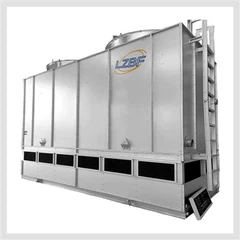
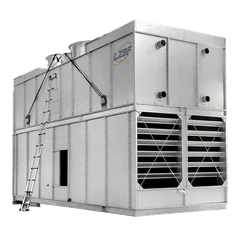
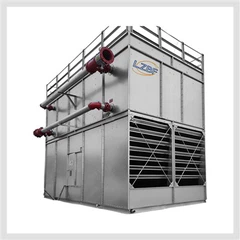
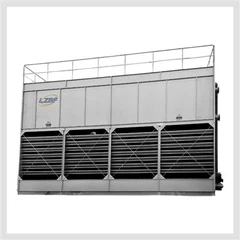
Closed circuit cooling towers have rapidly gained popularity in industrial cooling and HVAC applications due to their comprehensive advantages: stable cooling performance, clean water quality, water and energy savings, long service life, and wide applicability. They have become the preferred solution for many projects, addressing many inherent drawbacks of traditional open cooling towers at their core.


Firstly, they provide clean cooling water without contamination or scaling, protecting key equipment. Closed circuit cooling towers adopt coil-based closed heat exchange: the process medium flows inside the coils in a fully enclosed loop, isolated from outside air and spray water. This prevents dust, insects, sediment, and algae from entering the system. It is critical for precision equipment such as data centers, air compressors, injection molding machines, medium-frequency furnaces, hydraulic systems, and laser devices. It greatly reduces scaling and clogging in pipelines, heat exchangers, and valves, lowers maintenance costs, and maintains stable long-term heat exchange efficiency. Compared with open cooling towers, which are prone to contamination, clogging, and poor water quality control, closed cooling towers achieve zero water contamination in principle-their most essential advantage.

Secondly, they deliver stable cooling performance unaffected by environmental and load fluctuations. Closed circuit cooling towers can automatically switch among three modes: wet, dry, and hybrid wet-dry. In hot seasons, full spray and fans are used for enhanced heat exchange; in spring and autumn, spray can be stopped, with only fans providing dry cooling. Even in winter, they maintain stable temperature control without freezing or efficiency loss. Their heat exchange efficiency is less affected by ambient temperature and humidity, with small fluctuations in outlet water temperature. They meet the strict requirements of precision equipment and continuous production processes for constant temperature, pressure, and flow, ensuring 24-hour stable operation.


Thirdly, they offer outstanding water and energy savings, resulting in lower long-term operating costs. Traditional open cooling towers suffer high evaporation and drift losses, and poor water quality requires frequent blowdown and replacement. Closed cooling towers have almost no drift loss; spray water only evaporates on the outer wall of coils, reducing water consumption by 30%~50% compared with open towers-especially advantageous in water-scarce regions. Meanwhile, their high heat transfer coefficient and variable-frequency fans and pumps match load demands, cutting power consumption significantly during low-load periods. Although the initial investment is slightly higher than open towers, the savings in water, electricity, and maintenance usually offset the difference within 1–3 years, with far superior long-term economic benefits.

Fourthly, they feature long service life, simple maintenance, and low failure rates. Since the internal medium does not contact air, pipelines and coils are less prone to corrosion, scaling, and rusting, greatly extending the service life of main units, pumps, valves, and heat exchangers. Routine maintenance only includes cleaning filters, inspecting spray systems and fans, and monitoring water quality, without frequent descaling, disinfection, and algae removal required for open towers. For unmanned or low-maintenance sites such as factories, industrial parks, and machine rooms, they are reliable and convenient, significantly reducing downtime for maintenance and improving production continuity.
Fifthly, they have extremely wide applicability and adapt to various industries. Closed circuit cooling towers can cool water, ethylene glycol, oil, coolant, chemical media, and other fluids. They are widely used in data centers, central air conditioning, injection molding, electroplating, metallurgy, chemical engineering, medicine, electronics, new energy, and other industries. Whether for high-temperature heat sources, winter anti-freezing, clean cooling, or explosive-proof environments, they can be flexibly adapted through material selection, anti-freezing design, and explosion-proof configurations. Additionally, their compact structure saves space, and multiple units can be connected in parallel for expansion, meeting demands from small standalone units to large centralized cooling systems.

Lastly, they are environmentally friendly and compliant with modern industrial standards. Closed cooling towers have no sewage overflow, minimal drift, low noise, and low energy consumption, meeting environmental, water-saving, and low-carbon policies. They are easier to approve in park construction, environmental assessment, and energy-saving renovation projects. With rising corporate requirements for energy efficiency, environmental protection, and intelligence, the comprehensive value of closed cooling towers has become increasingly prominent.

In summary, with all-round advantages of stability, cleanliness, energy efficiency, durability, ease of use, and environmental protection, closed circuit cooling towers truly realize "efficient cooling with hassle-free operation." They protect production equipment while reducing overall costs, making them highly popular in modern cooling systems and the mainstream choice for industrial cooling upgrades.
Send Inquiry