

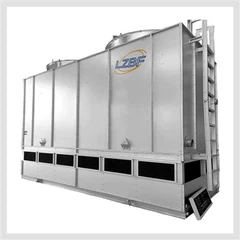
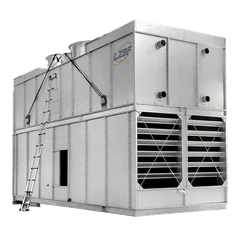
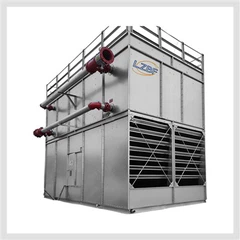
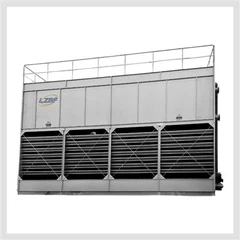

Why Data Centers Rely on Closed-Circuit Cooling Towers for Maximum Efficiency
Sep 06, 2026
Leave a message

 Data centers are the backbone of the digital economy. Every second of downtime can result in massive financial losses, damaged reputations, and compromised data integrity. At the heart of keeping these facilities running smoothly is one critical system: cooling.
As server densities continue to rise and energy costs climb, data center operators are under increasing pressure to find cooling solutions that are both highly efficient and extremely reliable. This is where closed-circuit cooling towers have become the go-to choice for modern data center design.
The Cooling Challenge in Data Centers
Data centers generate enormous amounts of heat. Traditional air-cooling methods are often insufficient for high-density server racks, pushing facilities to adopt liquid cooling and chilled water systems. These systems require a dependable heat rejection solution, and that is exactly what cooling towers provide.
However, not all cooling towers are created equal. Open-circuit towers, while common in general industrial applications, expose process water directly to the atmosphere. For a data center, this introduces several serious risks.
Why Closed-Circuit Towers Are the Ideal Choice
1. Protecting Sensitive IT Infrastructure
Data center cooling systems are directly connected to precision air conditioning units, chillers, and liquid-cooled server racks. Any contamination in the cooling water can lead to fouling, corrosion, and blockages in these critical components.
A closed-circuit cooling tower keeps the process fluid completely sealed inside a coil, never allowing it to mix with outside air or spray water. This ensures that the water circulating through your chillers and IT equipment remains clean at all times, protecting your investment and preventing unexpected failures.
2. Lowering PUE and Reducing Energy Costs
Power Usage Effectiveness (PUE) is one of the most important metrics in data center management. The closer a facility's PUE is to 1.0, the more efficiently it uses energy.
Closed-circuit cooling towers contribute to a lower PUE in several ways:
They maintain consistent heat transfer efficiency because the internal coils stay clean and free of scale.
They can operate in dry mode during cooler months, shutting off the spray pump and relying solely on fan-driven air cooling.
They integrate seamlessly with variable frequency drives (VFDs), allowing fans and pumps to adjust speed based on real-time cooling demand.
Over the course of a year, these efficiency gains translate into significant electricity savings.
3. Water Conservation and Environmental Compliance
Water scarcity is a growing concern for data centers worldwide. Many regions now impose strict regulations on industrial water usage, and data center operators must demonstrate responsible water management.
Closed-circuit towers consume significantly less water than open systems because only the external spray water evaporates. The process fluid is never lost to evaporation or blowdown. In water-stressed areas, this advantage alone can make the difference between project approval and rejection.
4. Supporting Liquid Cooling and High-Density Racks
The future of data center cooling is liquid cooling. As AI workloads, GPU clusters, and high-performance computing become more prevalent, traditional air cooling simply cannot keep up.
Closed-circuit cooling towers are perfectly suited to support liquid cooling infrastructure. They provide a stable, clean heat rejection loop that works in tandem with direct-to-chip cooling, rear-door heat exchangers, and immersion cooling systems. This makes them a future-proof investment for next-generation data centers.
Conclusion
For data centers, cooling is not just an operational detail, it is a strategic priority. Closed-circuit cooling towers deliver the reliability, efficiency, and water conservation that modern data center operators demand. By protecting sensitive equipment, lowering PUE, and supporting the transition to liquid cooling, they offer a clear path to sustainable, cost-effective operations.
If you are designing or upgrading a data center cooling system, a closed-circuit cooling tower is not just an option, it is the smart choice.

Send Inquiry