


What should be done if a closed cooling tower produces noise during operation?
Mar 30, 2026
Leave a message
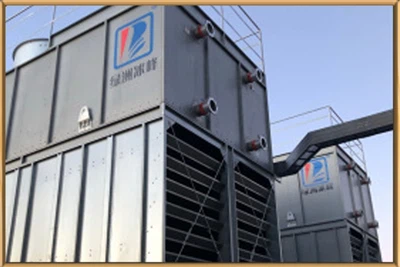
The noise generated by a clooling tower during operation not only affects the surrounding environment but may also indicate abnormal equipment operation. It is necessary to address the issue precisely by identifying the source of the noise, prioritizlow-cost and easy-to-implement solutions, and carrying out engineering modifications when necessary, while balancing noise reduction effects with equipment cooling efficiency. The following are detailed solutions.

First, tource of the noise must be identified to implement targeted rectifications. The noise from a closed cooling tower mainly originates from four categories, with fan and motor noise accounting for the highest proportion, aproximately 60%-70%. This is followed by water spray noise, structural vibration and resonance noise, and a small amount of abnormal noise caused by equipment malfunctions. Fan andtor noise is often caused by dust accumulation on blades, dynamic balance deviations, bearing wear, or excessive rotational speed, manifesting as sharp abnormal sounds or dull roaring. Water spray nose is the "gushing" sound produced by water droplets impacting the coil and water basin; clogged nozzles and uneven water flow will exacerbate the noise. Structural vibration originates from en bases and loose bolts, while resonance amplifies low-frequency noise. Additionally, gearbox malfunctions and foreign object intrusion can also generate abnormal noise.

Noise treatment should follow the principubleshooting, then low-cost rectification, and finally advanced modification," prioritizing issues that are easy to handle and require minimal investment. For the main noise source of fans and m maintenance is key. Regularly clean fan blades to remove dust and debris, correct blade dynamic balance to avoid airflow vortex noise caused by blade eccentricity; inspect motor bearings, repl lubricating oil or replace worn bearings in time to resolve sharp abnormal sounds caused by bearing friction; tighten or replace loose drive belts, and adjust the coaxiality of the motoan to reduce vibration noise. At the same time, a variable frequency drive (VFD) can be installed to reduce fan speed while meeting cooling demands; reducing spee0% can lower noise by 3-5dB, achieving both noise reduction and energy savings. If noise levels still do not meet standards, low-noise airfoil blades or large-er low-speed fans can be replaced, paired with high-efficiency low-noise motors to reduce noise generation at the source.

For water flow and spray noise, simple and effective buffering meacan be taken. Laying rubber cushioning pads or polyurethane foam in the water basin reduces the impact force of water droplets hitting the basin, lowering nse by 5-10dB; replacing low-splash packing and flow distribution plates ensures uniform water distribution and gentle descent, reducing noise from water splashing and impacting the coil; regularly inspect a unclog nozzles, adjust spray pressure to avoid excessive flow or misalignment, and check the pump operation to resolve abnormal noise caused by pump cavitation and water hammer in the piping.

Ttreatment of structural vibration and resonance noise focuses on vibration reduction and isolation. Check the cooling tower base to ensure the ground is level and tighten base fixing bolts to prevent equipment vibration and transmithe building during operation; install rubber vibration pads or spring vibration isolators between the base and the ground to effectively isolate vibration transmission and reduce low-frequency noise. If multiple units are operatingin parallel, adjust the equipment spacing to avoid piping resonance, and install flexible joints at pipe connections when necessary to reduce vibration transmission.

If noise levels remain non-compliant after low-cost rectifications, advanced noise reduction and sound insulation modifications can be implemented. Installing impedance silencerhe air inlet and outlet of the cooling tower can reduce noise by 10-15 dB; adding sound-absorbing guide vanes at the outlet balances noise reduction with ventilatioConstructing a sound enclosure around the cooling tower using soundproof panels, with reserved ventilation openings and installed silencers, prevents interference with equipment heat dissipation. For outdoor cooling tund barriers can be erected to block noise propagation and minimize impact on the surrounding environment.
Furthermore, regular daily inspections are indispensable to promptly identify issues such as component wear and foreign object ingreallowing for preemptive handling to avoid abnormal noise caused by malfunctions. In summary, noise treatment for closed cooling towers requires precise measures based on the source; priority should be given to resosues through maintenance and low-cost modifications, with advanced modifications implemented when necessary, ensuring effective noise reduction while guaranteeing stable and efficient equipment operation.
Send Inquiry