


Correct Operation Of Closed Circuit Cooling Towers In Winter
Mar 25, 2026
Leave a message
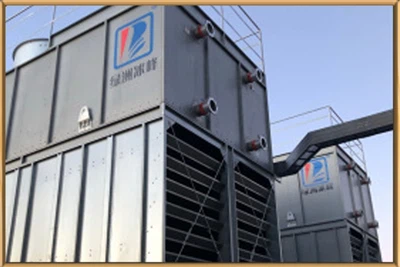
The core of operating a closed circuit cooling tower in winter lies in anti-freeze protection, dry/wet mode switching, parameter optimization, inspection and maintenance. It is necessary to prevent freezing and cracking of coils and pipelines while ensuring cooling efficiency and equipment safety. The operation plan shall be formulated according to the operation mode, ambient temperature and system configuration.
1. Pre-Winter Anti-Freeze Preparation (Must Be Done Before Winter)
System Insulation Reinforcement
Wrap the tower shell, heat exchange coils, inlet/outlet pipes, spray pipelines, valves and water collection pan with rock wool or polyurethane insulation layer of more than 50mm, and apply waterproof treatment on the outer layer. Install self-regulating electric heating tapes on exposed pipelines with a temperature control linkage set to activate at 4℃ and stop at 8℃, focusing on low-lying pipe sections and dead corners.
Anti-Freeze Solution Preparation
Add ethylene glycol or propylene glycol antifreeze to the internal circulation (process water side). Adjust the concentration according to the local minimum temperature (e.g. 30% ethylene glycol for -15℃ environment), ensuring the freezing point is 5–10℃ lower than the ambient temperature. Replace with compatible corrosion inhibitor.
Draining and Purging
For equipment shut down for a long time, open all drain and vent valves, and thoroughly purge residual water in coils, spray pipelines and water collection pan with compressed air to avoid freezing. For short-term shutdown, maintain continuous flow in the internal circulation.
Automatic Control System Commissioning
Set low-temperature alarm when return water temperature ≤5℃, linked to fan frequency reduction/shutdown and spray pump start/stop. Equip the water collection pan with electric heating and liquid level interlock to prevent dry burning.

2. Anti-Freeze and Parameter Optimization During Operation (Core Operation)
Internal Circulation (Process Water Side): Maintain Flow and Stable Temperature
No shutdown or flow cutoff
Maintain a minimum internal circulation flow rate (≥30% of design flow) even under low load. A bypass valve or auxiliary pump can be used to avoid stagnant water in the coils.
Temperature control
Control return water temperature at 8–15℃. Turn off or reduce fan speed at low temperatures to reduce cold air heat exchange. In extreme low temperatures, bypass the cooling tower and use process waste heat to maintain water temperature.
Antifreeze monitoring
Check antifreeze concentration and freezing point weekly, and replenish timely to avoid failure due to concentration drop.
External Circulation (Spray Water Side): Temperature-Controlled Start/Stop and Dry/Wet Switching
Wet operation
Normal spraying when ambient temperature ≥5℃. Automatically stop the spray pump when return water temperature drops to 5–7℃. Install electric heating in the water collection pan to keep water temperature ≥4℃.
Dry operation
When ambient temperature is continuously <0℃, completely drain the spray system, turn off the spray pump, and use only fan air cooling (full dry mode) to completely eliminate the risk of spray water freezing.
Intermittent sprayingIf
spraying is required, adopt short-cycle start/stop (e.g. run 10 minutes, stop 20 minutes) and apply heat tracing insulation to spray pipelines.
Fan and air volume adjustment
Use variable frequency control. Reduce speed or run intermittently at low temperatures. For parallel multiple towers, concentrate load operation to increase heat load and outlet water temperature of a single tower and reduce freezing risks.

3. Shutdown and Restart Specifications
Short-term shutdown (≤72 hours)
Keep the internal circulation pump running, open the bypass, maintain water temperature ≥5℃; drain the spray system and keep heat tracing insulation.
Long-term shutdown (>72 hours)
Thoroughly drain and purge the internal circulation and spray system with compressed air, close all valves and seal properly. A small amount of antifreeze can be injected into the coils for protection.
Restart procedure
First check the integrity of insulation, heat tracing and pipelines. Start the internal circulation pump slowly, raise the temperature gradually to above 10℃, then turn on spraying or fan according to ambient temperature to avoid cold shock.

4. Daily Inspection and Maintenance (Required Daily)
Parameter monitoring
Record return water temperature, pressure and current every 2 hours to ensure water temperature ≥5℃ and stable pressure.
Anti-freeze inspection
Inspect insulation layers, heating tapes and water collection pan daily. Melt ice with warm water if found; pouring boiling water is strictly prohibited. Clear ice accumulation at air inlets and fillers to ensure ventilation.
Water quality management
Water is prone to scaling in winter. Clean filters weekly, test pH and hardness monthly, and drain and replenish water timely to prevent clogging and corrosion.
Electrical maintenance
Check waterproofing and anti-freeze performance of motors, frequency converters and control cabinets to ensure normal startup at low temperatures.

5. Safety and Energy-Saving Key Points
Prioritize dry mode at low temperatures to reduce spray energy consumption and freezing risks. Match fan and pump frequency with load to reduce power consumption.
Develop a cold wave emergency plan. Stop spraying in extreme low temperatures, strengthen insulation and heating of internal circulation, and use temporary electric heating if necessary.

Operating a closed circuit cooling tower in winter takes anti-freeze as the bottom line, flow as the core, and automatic control as the means. Through insulation, heat tracing, dry/wet switching, parameter control and frequent inspections, equipment damage from freezing can be effectively avoided, achieving safe, efficient and energy-saving operation.
Send Inquiry