


How does the installation cost vary with the size of an evaporative cooled condenser?
Oct 27, 2025
Leave a message
How does the installation cost vary with the size of an evaporative cooled condenser?
As a supplier of Evaporative Cooled Condensers, I've witnessed firsthand the diverse needs of customers when it comes to cooling systems. One of the most frequently asked questions is how the installation cost of an evaporative cooled condenser varies with its size. In this blog post, I'll delve into the factors that influence this relationship and provide insights to help you make informed decisions for your cooling requirements.
Understanding Evaporative Cooled Condensers
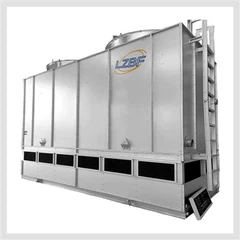
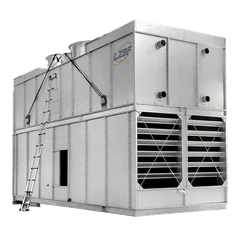
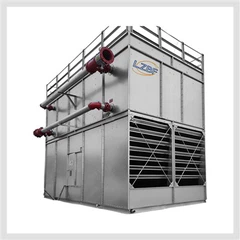
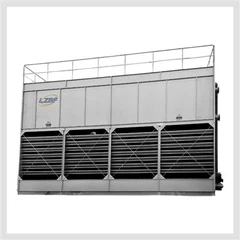
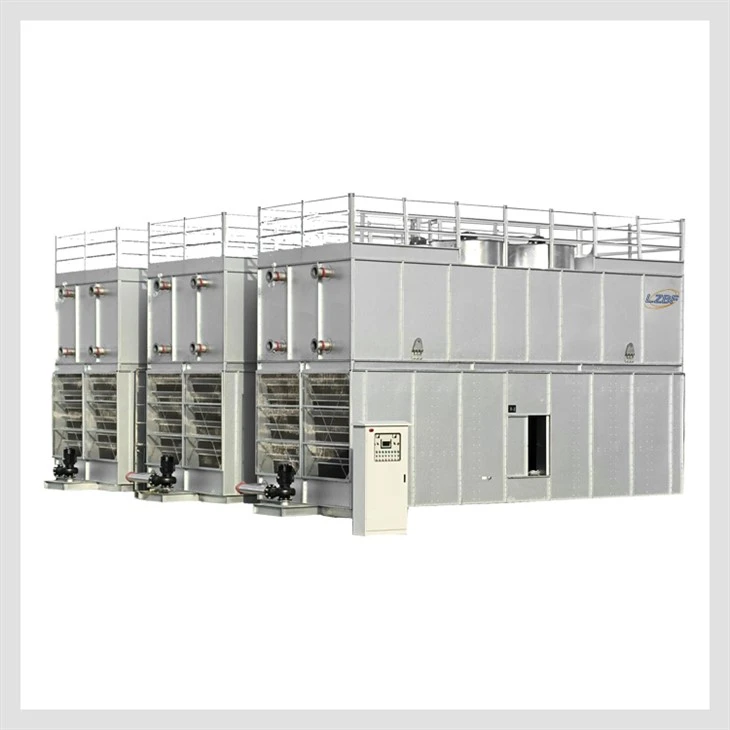
Before we explore the cost - size relationship, let's briefly understand what an evaporative cooled condenser is. An Evaporative Cooled Condenser is a heat exchanger that uses the principle of evaporation to remove heat from a refrigerant. It combines the functions of a condenser and a cooling tower, offering a more efficient and compact cooling solution compared to traditional systems. These condensers are widely used in industrial refrigeration, air - conditioning, and power generation applications.
Factors Affecting Installation Cost
There are several factors that contribute to the installation cost of an evaporative cooled condenser, and the size of the unit is a significant one. Here's how different aspects related to size impact the overall cost:
Material and Manufacturing Costs
Larger evaporative cooled condensers require more materials for construction. The heat exchanger tubes, the casing, and the structural supports all need to be larger and more robust to handle the increased heat transfer capacity. For example, a small - scale condenser might use a relatively thin - walled tube material, while a large - scale unit may require thicker and more corrosion - resistant tubes. The manufacturing process for larger units is also more complex, involving more labor - intensive assembly and quality control steps. This results in higher material and manufacturing costs, which are then reflected in the installation price.
Foundation and Structural Requirements
The size of the condenser directly affects the foundation and structural requirements. A larger condenser is heavier and requires a more substantial foundation to support its weight. This may involve additional excavation, concrete pouring, and reinforcement work. In some industrial settings, the structure may need to be modified or strengthened to accommodate the larger unit. For instance, if the condenser is to be installed on an existing rooftop, the roof may need to be reinforced to bear the extra load. These foundation and structural enhancements add to the overall installation cost.

Piping and Electrical Connections
As the size of the evaporative cooled condenser increases, so does the complexity of the piping and electrical connections. Larger units typically have higher refrigerant flow rates and require larger - diameter pipes. The installation of these pipes is more labor - intensive and may involve more fittings and valves. Electrical connections also need to be upgraded to handle the increased power requirements of larger condensers. More powerful motors, pumps, and control systems are needed, which in turn require larger electrical cables and more sophisticated electrical panels. All these additional components and installation work contribute to the cost.
Installation Labor
Installing a larger evaporative cooled condenser is a more time - consuming and labor - intensive process. It requires a larger installation team with specialized skills. The lifting and positioning of the larger unit are more challenging and may require the use of heavy - duty cranes and other equipment. The installation process also takes longer, which means more labor hours are billed. For example, a small condenser can be installed in a day or two, while a large - scale industrial condenser may take several weeks to install properly.
Cost - Size Relationship Analysis
To better understand the relationship between size and installation cost, we can look at some general trends. In most cases, the installation cost does not increase linearly with the size of the condenser. As the size increases, the cost per unit of heat transfer capacity may decrease up to a certain point. This is because of economies of scale in manufacturing and installation. Larger units can spread some of the fixed costs, such as design and setup costs, over a larger heat transfer capacity.
However, beyond a certain size, the cost per unit of heat transfer capacity may start to increase again. This is due to the factors mentioned above, such as the increasing complexity of foundation work, piping, and electrical connections. For example, a very large condenser may require custom - designed components and specialized installation techniques, which drive up the cost.
Let's consider two different sizes of Evaporative Condensing Unit. A small - sized unit with a heat transfer capacity of 100 kW may have an installation cost of around $10,000. This includes the cost of the unit itself, foundation work, piping, and electrical connections. A medium - sized unit with a capacity of 500 kW might cost around $30,000 for installation. Here, the cost has not increased five - fold, indicating some economies of scale. But if we look at a large - scale unit with a capacity of 2000 kW, the installation cost could be as high as $150,000. At this point, the cost per unit of heat transfer capacity has started to rise due to the increased complexity of installation.
Case Studies
Let's take a look at a couple of real - world case studies to illustrate the cost - size relationship more clearly.
Case Study 1: A Small - Scale Food Processing Plant
A small food processing plant needed to install an evaporative cooled condenser for its refrigeration system. They opted for a relatively small unit with a heat transfer capacity of 150 kW. The installation cost was mainly composed of basic foundation work, standard piping, and simple electrical connections. The total installation cost came to around $12,000. The small size of the unit made it easy to install, and there were no major structural or logistical challenges.
Case Study 2: A Large - Scale Chemical Plant
A large chemical plant required a high - capacity evaporative cooled condenser for its process cooling. They chose a unit with a heat transfer capacity of 3000 kW. The installation process was much more complex. The plant had to reinforce the existing structure to support the heavy condenser, and the piping and electrical systems were extensive. The installation cost for this large - scale unit was approximately $200,000, which was significantly higher than the small - scale example due to the increased size and complexity.
Considerations for Customers
When considering the installation of an evaporative cooled condenser, customers should carefully evaluate their cooling needs. It's important to strike a balance between the size of the unit and the installation cost. Here are some tips:
- Accurately Assess Cooling Requirements: Conduct a detailed heat load calculation to determine the exact size of the condenser needed. Avoid over - sizing, as it will lead to higher installation and operating costs.
- Evaluate Long - Term Costs: While a larger unit may have a higher upfront installation cost, it may offer better energy efficiency in the long run. Consider the total cost of ownership, including energy consumption, maintenance, and replacement costs.
- Seek Professional Advice: Consult with an experienced supplier or engineer who can provide expert guidance on the appropriate size and type of evaporative cooled condenser for your application.
Contact Us for Procurement
If you're in the market for an evaporative cooled condenser, we're here to help. As a leading supplier, we offer a wide range of Evaporative Condensing Unit and Ammonia Evaporative Condenser options to suit different sizes and applications. Our team of experts can assist you in selecting the right unit and provide a detailed cost estimate for installation. Contact us today to start the procurement process and discuss your specific requirements.
References
- ASHRAE Handbook - HVAC Systems and Equipment. American Society of Heating, Refrigerating and Air - Conditioning Engineers.
- "Industrial Refrigeration Handbook" by David W. Radermacher.
- Technical papers on evaporative cooling technology published in leading HVAC and refrigeration journals.
Send Inquiry