


How does the air flow affect the cooling efficiency of a compound closed cooling tower?
Jan 22, 2026
Leave a message
Hey there! As a supplier of Compound Closed Cooling Towers, I've been getting a lot of questions lately about how air flow impacts the cooling efficiency of these towers. So, I thought I'd take a deep dive into this topic and share some insights with you.
Understanding the Basics of Compound Closed Cooling Towers
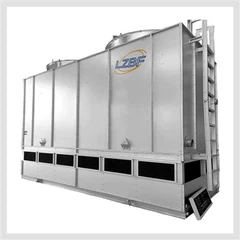
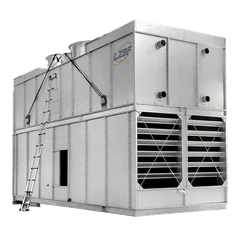
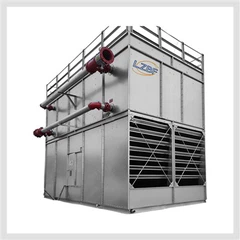
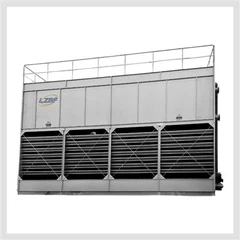
Before we jump into the air flow stuff, let's quickly go over what a Compound Closed Cooling Tower is. It's a piece of equipment that combines the features of dry and wet cooling methods. The main goal is to cool a fluid, usually water, by transferring heat from the fluid to the surrounding air.
In a Compound Closed Cooling Tower, the fluid to be cooled circulates through a closed-loop system, typically a heat exchanger. This keeps the fluid clean and free from contaminants, which is a big plus in many industrial applications.
The Role of Air Flow in Cooling Efficiency
Now, let's talk about air flow. Air flow is like the lifeblood of a cooling tower. It's what helps carry away the heat from the fluid. There are a few key ways that air flow affects the cooling efficiency:
Heat Transfer
The most obvious way air flow impacts cooling efficiency is through heat transfer. When air moves over the surface of the heat exchanger in the cooling tower, it picks up heat from the fluid inside. The faster the air flow, the more heat it can carry away in a given amount of time.


Think of it like blowing on a hot cup of coffee. The faster you blow, the quicker the coffee cools down. In a cooling tower, the same principle applies. A higher air flow rate means more heat is transferred from the fluid to the air, resulting in better cooling efficiency.
Evaporative Cooling
In addition to sensible heat transfer, many Compound Closed Cooling Towers also use evaporative cooling. When water evaporates, it absorbs a large amount of heat from its surroundings. In a cooling tower, this evaporation process occurs on the surface of the fill material or the heat exchanger.
Air flow plays a crucial role in evaporative cooling. It helps to carry away the water vapor that is produced during evaporation. If the air flow is too low, the water vapor can build up around the evaporation surface, reducing the rate of evaporation and, therefore, the cooling efficiency. On the other hand, a strong air flow can quickly remove the water vapor, allowing more water to evaporate and increasing the cooling capacity of the tower.
Uniformity of Air Distribution
Another important factor is the uniformity of air distribution. In an ideal cooling tower, the air should flow evenly over all parts of the heat exchanger. If the air flow is uneven, some areas of the heat exchanger may receive less air, resulting in poor heat transfer in those areas.
This can lead to hot spots in the fluid, which can reduce the overall cooling efficiency of the tower. To ensure uniform air distribution, cooling towers are often designed with features such as air inlet louvers, fans, and baffles. These components help to direct the air flow and distribute it evenly throughout the tower.
Types of Air Flow in Cooling Towers
There are two main types of air flow in cooling towers: forced draft and induced draft.
Forced Draft
In a forced draft cooling tower, the fan is located at the air inlet. The fan blows air into the tower, creating a positive pressure inside. This type of air flow is often used in smaller cooling towers or in applications where a high air flow rate is required.
One of the advantages of forced draft is that it can provide a more uniform air distribution, especially in towers with complex geometries. However, forced draft cooling towers can also be more prone to recirculation, where the hot, moist air that has been discharged from the tower is drawn back into the air inlet. This can reduce the cooling efficiency of the tower.
Induced Draft
In an induced draft cooling tower, the fan is located at the air outlet. The fan sucks air through the tower, creating a negative pressure inside. This type of air flow is more commonly used in larger cooling towers.
Induced draft cooling towers are less prone to recirculation than forced draft towers because the hot, moist air is discharged at a higher velocity and at a greater height. However, induced draft towers can be more expensive to operate because the fan has to work against the resistance of the tower.
Factors Affecting Air Flow
There are several factors that can affect the air flow in a cooling tower:
Fan Design and Performance
The design and performance of the fan are crucial for ensuring proper air flow. A well-designed fan can provide a high air flow rate with low power consumption. The size, shape, and number of blades, as well as the speed of the fan, all play a role in determining its performance.
Tower Geometry
The geometry of the cooling tower can also affect the air flow. The height, diameter, and shape of the tower, as well as the location and size of the air inlets and outlets, can all impact the air flow pattern inside the tower.
Environmental Conditions
Environmental conditions, such as wind speed and direction, can also have a significant impact on the air flow in a cooling tower. Strong winds can disrupt the air flow pattern inside the tower, leading to uneven cooling and reduced efficiency. In addition, high humidity can reduce the rate of evaporation, which can also affect the cooling performance of the tower.
How We Optimize Air Flow in Our Compound Closed Cooling Towers
As a supplier of Compound Closed Cooling Towers, we take air flow optimization very seriously. We use advanced computational fluid dynamics (CFD) simulations to design our towers and ensure that the air flow is uniform and efficient.
We also offer a range of fans and air distribution systems to meet the specific needs of our customers. Our fans are designed to provide high air flow rates with low power consumption, and our air distribution systems are designed to ensure that the air is evenly distributed throughout the tower.
In addition, we take into account the environmental conditions at the installation site when designing our towers. We can provide wind shields and other accessories to protect the tower from strong winds and ensure that the air flow is not disrupted.
Conclusion
In conclusion, air flow is a critical factor in determining the cooling efficiency of a Compound Closed Cooling Tower. By understanding how air flow affects heat transfer, evaporative cooling, and air distribution, we can design and operate cooling towers that are more efficient and reliable.
If you're in the market for a Compound Closed Cooling Tower, or if you have any questions about how air flow affects cooling efficiency, I'd love to hear from you. We offer a wide range of Industrial Closed Circuit Counter Flow Cooling Tower, Split-type Dry-wet Closed Cooling Tower, and Fluid Cooling Heat Exchanger solutions to meet your specific needs. Contact us today to start a conversation about your cooling requirements and let's work together to find the best solution for you.
References
- Incropera, F. P., & DeWitt, D. P. (2002). Fundamentals of Heat and Mass Transfer. John Wiley & Sons.
- Kakaç, S., & Liu, H. (2002). Heat Exchangers: Selection, Rating, and Thermal Design. CRC Press.
- Merkel, E. (1925). Die Theorie der Verdunstungskühler. VDI - Zeitschrift, 69(24), 1088 - 1096.
Send Inquiry