


How does the defrosting process work in an Indirect Evaporative Condenser used in cold climates?
Sep 05, 2025
Leave a message
Hey there! I'm a supplier of Indirect Evaporative Condensers, and today I wanna chat about how the defrosting process works in these condensers, especially when they're used in cold climates.
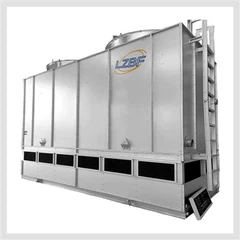
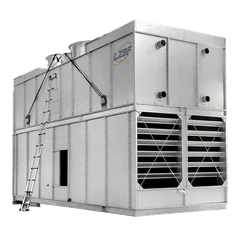
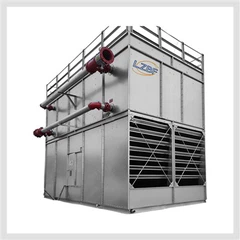
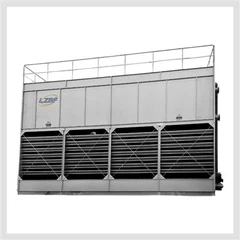
First off, let's quickly understand what an Indirect Evaporative Condenser is. It's a piece of equipment that plays a crucial role in cooling systems. It uses the principle of evaporative cooling to condense refrigerant vapor into a liquid state. In simple terms, it helps get rid of heat from the refrigerant, which is essential for the proper functioning of the whole cooling setup.
Now, when we talk about cold climates, things get a bit tricky. One of the major issues that these condensers face in cold weather is frost buildup. Frost can accumulate on the surface of the condenser coils, and if not dealt with properly, it can seriously hamper the condenser's performance.
So, how does the defrosting process work? Well, there are a few different methods commonly used, and I'll break them down for you.
1. Hot Gas Defrosting
This is one of the most popular methods for defrosting Indirect Evaporative Condensers. The basic idea behind hot gas defrosting is to use the hot refrigerant gas from the compressor to melt the frost on the coils.
Here's how it goes. When the control system detects that there's too much frost on the condenser coils, it initiates the defrosting cycle. The hot refrigerant gas, which is usually at a high temperature and pressure, is redirected from the compressor discharge line to the condenser coils. As this hot gas flows through the coils, it transfers its heat to the frost, causing it to melt.
The melted frost then drains away from the condenser, usually through a drainage system. Once the defrosting is complete, the system switches back to normal operation. One of the advantages of hot gas defrosting is that it's relatively energy - efficient because it uses the waste heat from the compressor. However, it does require a well - designed piping system to ensure that the hot gas is distributed evenly across the coils.
2. Electric Defrosting
Another method is electric defrosting. In this case, electric heating elements are installed on or near the condenser coils. When the defrosting cycle is triggered, an electrical current is sent through these heating elements, which then generate heat.
The heat from the elements is transferred to the coils, melting the frost. Electric defrosting is relatively simple to control, and it can be very effective in small - scale or less complex systems. However, it can be quite energy - intensive, especially if the defrosting cycles are frequent or if the system is large.
3. Water Defrosting
Water defrosting involves spraying warm water over the condenser coils to melt the frost. A water pump is used to draw water from a water source, and then the water is sprayed through nozzles onto the coils.
The warm water transfers its heat to the frost, causing it to melt. After the defrosting is done, the water is drained away. One of the benefits of water defrosting is that it can be very fast and effective. But it also has some drawbacks. For example, in extremely cold climates, the water can freeze on the coils if the defrosting process isn't carefully managed. Also, it requires a reliable water source and a proper drainage system.
Control Systems for Defrosting
No matter which defrosting method is used, a good control system is essential. These control systems are designed to detect when defrosting is needed and to initiate the appropriate defrosting cycle.
There are a few different ways that these control systems can work. One common method is to use temperature sensors. These sensors are placed on the condenser coils, and they measure the temperature of the coils. If the temperature drops below a certain threshold, it's a sign that frost may be building up, and the control system will trigger the defrosting cycle.
Another approach is to use time - based controls. In this case, the defrosting cycles are set to occur at regular intervals. For example, the system may be programmed to defrost every few hours, regardless of whether there's actually a lot of frost on the coils. While this method is simple, it may not be the most efficient, as it can lead to unnecessary defrosting cycles.
Importance of Proper Defrosting in Cold Climates
Proper defrosting is absolutely crucial when using Indirect Evaporative Condensers in cold climates. Frost buildup can have a significant impact on the performance of the condenser.
When there's a thick layer of frost on the coils, it acts as an insulator. This means that it reduces the heat transfer efficiency between the refrigerant and the surrounding air or water. As a result, the condenser has to work harder to achieve the same level of cooling, which can lead to increased energy consumption and higher operating costs.
In addition, excessive frost buildup can also cause mechanical damage to the condenser coils. The expansion and contraction of the frost as it freezes and thaws can put stress on the coils, leading to cracks or leaks over time. This can not only reduce the lifespan of the condenser but also result in refrigerant leaks, which can be harmful to the environment.
Our Indirect Evaporative Condensers
As a supplier of Indirect Evaporative Condensers, we've designed our products to handle the challenges of cold climates. Our condensers come with state - of - the - art defrosting systems that are both efficient and reliable.
We use advanced control systems that can accurately detect frost buildup and initiate the defrosting cycle at the right time. Whether you prefer hot gas defrosting, electric defrosting, or water defrosting, we can customize our condensers to meet your specific needs.
If you're looking for an Evaporative Cooled Condenser that can perform well in cold climates, or if you're interested in Condensadores Evaporativos or Condensadores Evaporativo, we've got you covered.
If you're in the market for a high - quality Indirect Evaporative Condenser, don't hesitate to reach out to us. We'd love to have a chat with you about your requirements and how our products can meet your needs. Whether you're a small business or a large industrial operation, we're here to provide you with the best solutions for your cooling systems.


References
- Pita, J. R., & Corberán, J. M. (2013). Heat transfer analysis of an indirect evaporative condenser. Applied Thermal Engineering, 50(1), 1023 - 1031.
- Zubair, S. M., & Abdel - Rahman, M. M. (2003). Evaporative condensers: A review of research, design, and performance. Applied Thermal Engineering, 23(12), 1519 - 1537.
Send Inquiry