


How does a crossflow closed cooling tower handle high heat loads?
Sep 05, 2025
Leave a message
As a supplier of Crossflow Closed Cooling Towers, I am often asked about how these remarkable pieces of equipment handle high heat loads. In this blog post, I will delve into the science and engineering behind crossflow closed cooling towers and explain how they effectively manage high heat loads in various industrial applications.


Understanding Crossflow Closed Cooling Towers
Before we discuss how crossflow closed cooling towers handle high heat loads, let's first understand what they are. A crossflow closed cooling tower is a type of heat exchanger that uses a combination of air and water to remove heat from a process fluid. The process fluid flows through a closed-loop system of tubes, while air and water flow over the outside of the tubes in a crossflow pattern. This design allows for efficient heat transfer between the process fluid and the air/water mixture.
The Heat Transfer Process
The heat transfer process in a crossflow closed cooling tower can be broken down into three main stages: sensible heat transfer, latent heat transfer, and evaporation.
Sensible Heat Transfer
Sensible heat transfer occurs when the process fluid transfers heat to the water flowing over the outside of the tubes. This causes the temperature of the water to rise, while the temperature of the process fluid decreases. The amount of sensible heat transfer depends on the temperature difference between the process fluid and the water, as well as the surface area of the tubes.
Latent Heat Transfer
Latent heat transfer occurs when a portion of the water evaporates from the surface of the tubes. This evaporation process requires energy, which is taken from the remaining water and the process fluid. As a result, the temperature of the water and the process fluid decreases further. The amount of latent heat transfer depends on the humidity of the air and the temperature of the water.
Evaporation
Evaporation is the final stage of the heat transfer process. As the water evaporates, it is carried away by the air flowing through the cooling tower. This continuous evaporation process helps to maintain a low temperature of the water and the process fluid.
Handling High Heat Loads
Now that we understand the heat transfer process in a crossflow closed cooling tower, let's discuss how these towers handle high heat loads.
Design and Construction
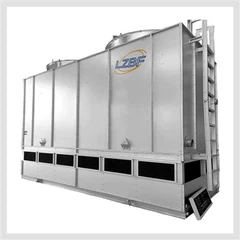
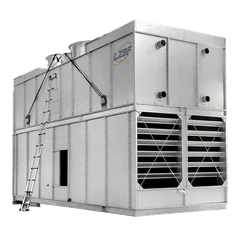
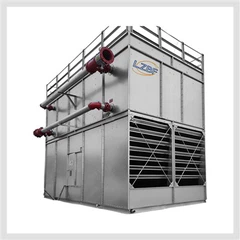
One of the key factors in handling high heat loads is the design and construction of the cooling tower. Our Composite Cross Type Closed Cooling Towers are designed with a large surface area of tubes to maximize the heat transfer efficiency. The tubes are made of high-quality materials that are resistant to corrosion and fouling, ensuring long-term performance and reliability.
In addition, our cooling towers are equipped with high-capacity fans and pumps to ensure adequate air and water flow. These fans and pumps are designed to operate efficiently even under high heat load conditions, ensuring that the cooling tower can effectively remove heat from the process fluid.
Water Management
Another important factor in handling high heat loads is water management. Our cooling towers are designed with advanced water management systems to ensure efficient use of water. These systems include water distribution systems, drift eliminators, and water treatment systems.
The water distribution system ensures that the water is evenly distributed over the surface of the tubes, maximizing the heat transfer efficiency. The drift eliminators prevent water droplets from being carried out of the cooling tower by the air, reducing water loss and environmental impact. The water treatment system helps to prevent the growth of algae, bacteria, and other contaminants in the water, ensuring the long-term performance and reliability of the cooling tower.
Control Systems
Control systems play a crucial role in handling high heat loads. Our cooling towers are equipped with advanced control systems that monitor and adjust the operation of the fans, pumps, and other components. These control systems ensure that the cooling tower operates at optimal efficiency, even under varying heat load conditions.
For example, the control system can adjust the speed of the fans and pumps based on the temperature of the process fluid and the ambient air. This helps to ensure that the cooling tower provides the right amount of cooling capacity, while minimizing energy consumption.
Benefits of Crossflow Closed Cooling Towers
In addition to their ability to handle high heat loads, crossflow closed cooling towers offer several other benefits.
Energy Efficiency
Crossflow closed cooling towers are highly energy-efficient compared to other types of cooling systems. The combination of sensible and latent heat transfer, as well as the advanced control systems, helps to minimize energy consumption. This not only reduces operating costs but also helps to reduce the environmental impact of the cooling system.
Water Conservation
Crossflow closed cooling towers are designed to use water efficiently. The advanced water management systems help to reduce water loss through evaporation and drift, ensuring that the cooling tower uses less water compared to other types of cooling systems. This is especially important in areas where water is scarce or expensive.
Low Maintenance
Crossflow closed cooling towers are relatively low-maintenance compared to other types of cooling systems. The use of high-quality materials and advanced water treatment systems helps to prevent corrosion, fouling, and other problems. This reduces the need for frequent maintenance and repairs, ensuring long-term performance and reliability.
Conclusion
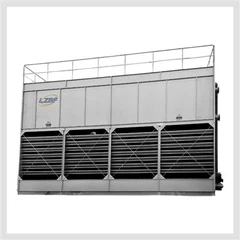
In conclusion, crossflow closed cooling towers are an effective solution for handling high heat loads in various industrial applications. Their unique design and construction, combined with advanced water management and control systems, allow them to efficiently remove heat from the process fluid. If you are looking for a reliable and energy-efficient cooling solution for your high heat load application, consider our Composite Cross Type Closed Cooling Towers, Air Cooled Closed Circuit Cooler, or Cross Flow Stainless Steel Closed Circuit Evaporative Cooling Cooler.
If you have any questions or would like to discuss your specific cooling needs, please feel free to contact us. We are here to help you find the best cooling solution for your application.
References
- "Cooling Tower Fundamentals," Cooling Tower Institute.
- "Heat Transfer in Crossflow Closed Cooling Towers," Journal of Heat Transfer.
- "Design and Operation of Crossflow Closed Cooling Towers," ASHRAE Handbook.
Send Inquiry