


Can a Recold Evaporative Condenser be used in marine applications?
Oct 06, 2025
Leave a message
In the realm of marine applications, the selection of appropriate equipment is crucial for ensuring the efficiency, reliability, and safety of various systems. One such piece of equipment that has garnered attention is the Recold Evaporative Condenser. As a supplier of Recold Evaporative Condensers, I am often asked whether these condensers can be effectively used in marine settings. In this blog post, I will delve into the technical aspects, advantages, challenges, and practical considerations to answer this question comprehensively.
Technical Overview of Recold Evaporative Condensers
Recold Evaporative Condensers operate on the principle of evaporative cooling. They combine the functions of a condenser and a cooling tower in a single unit. The process involves hot refrigerant vapor entering the condenser tubes. As water is sprayed over the tubes and a fan induces an airflow, a portion of the water evaporates. This evaporation process absorbs heat from the refrigerant, causing it to condense back into a liquid state. The condensed refrigerant then exits the condenser for reuse in the refrigeration or air - conditioning system.
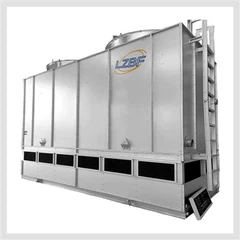
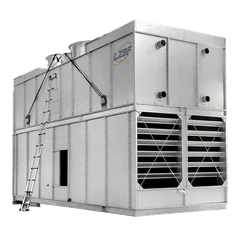
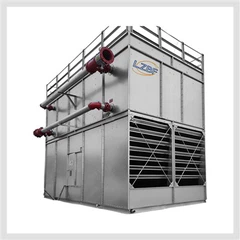
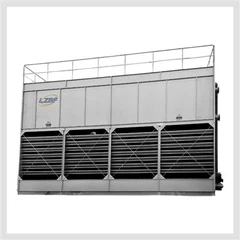
There are different types of evaporative condensers available in our product range, such as the Ammonia Evaporative Condenser, which is specifically designed for use with ammonia as a refrigerant. Ammonia is a common refrigerant in industrial and marine applications due to its excellent thermodynamic properties and environmental friendliness. Our Evaporative Cooled Condenser provides efficient cooling for various refrigerants, and the Evaporative Condenser Cooling Tower offers a combined solution for heat rejection.
Advantages of Using Recold Evaporative Condensers in Marine Applications
Energy Efficiency
One of the primary advantages of Recold Evaporative Condensers in marine applications is their high energy efficiency. Evaporative cooling is a more efficient heat - rejection method compared to air - cooled condensers. In marine environments, where power consumption is a critical factor due to limited power generation capacity on ships, the reduced energy consumption of evaporative condensers can lead to significant cost savings. The evaporation process allows for a lower condensing temperature, which in turn reduces the compressor work and energy consumption of the refrigeration system.
Space Savings
Space is at a premium on ships. Recold Evaporative Condensers are compact and combine multiple functions into one unit. Unlike traditional systems that require separate condensers and cooling towers, an evaporative condenser takes up less floor space. This is especially beneficial for marine applications, where every square meter of space is carefully allocated for different purposes, such as cargo storage, crew quarters, and machinery rooms.
Water Conservation
In marine applications, fresh water is a valuable resource. Although Recold Evaporative Condensers use water for the cooling process, they are designed to be water - efficient. The water is recirculated within the system, and the amount of make - up water required is relatively low compared to other cooling methods. This helps to conserve fresh water on board, which is essential for long - distance voyages and in areas where fresh water supply is limited.
Corrosion Resistance
Our Recold Evaporative Condensers are built with high - quality materials that offer excellent corrosion resistance. In marine environments, the condensers are exposed to saltwater, high humidity, and corrosive gases. The use of corrosion - resistant materials such as stainless steel for the tubes and frames ensures the long - term durability of the condensers. This reduces the maintenance requirements and extends the service life of the equipment, which is crucial for the reliable operation of marine refrigeration and air - conditioning systems.
Challenges and Considerations in Marine Applications
Saltwater Exposure
While our condensers are designed to resist corrosion, continuous exposure to saltwater can still pose challenges. Saltwater can cause scaling and fouling on the condenser tubes, which can reduce the heat transfer efficiency. To mitigate this issue, we recommend regular maintenance, including cleaning the tubes and using water treatment chemicals to prevent scaling. Additionally, the condenser design should incorporate features that minimize the contact between the saltwater and the critical components of the system.


Vibration and Shock
Ships are subject to constant vibration and shock due to the movement of the vessel, engine operation, and waves. These mechanical forces can affect the structural integrity of the Recold Evaporative Condensers. Our condensers are engineered with robust construction and vibration - damping features to withstand these forces. However, proper installation and mounting are essential to ensure that the condensers are securely fixed and can operate reliably in a vibrating environment.
Regulatory Compliance
Marine applications are subject to strict regulations and standards. Our Recold Evaporative Condensers are designed and manufactured to meet international marine standards, such as those set by the International Maritime Organization (IMO). We ensure that our products comply with safety, environmental, and performance requirements. This includes proper refrigerant handling, noise reduction, and energy efficiency standards.
Practical Case Studies and Real - World Applications
There have been several successful installations of Recold Evaporative Condensers in marine applications. For example, on some large - scale fishing vessels, our condensers have been used in the fish storage refrigeration systems. The energy efficiency of the evaporative condensers has allowed these vessels to reduce their fuel consumption, which is a significant cost factor in the fishing industry. The compact design has also enabled the vessels to optimize their use of space, allowing for more storage capacity for the catch.
In cruise ships, Recold Evaporative Condensers have been installed in the air - conditioning systems. The water - conservation feature has been particularly beneficial, as it reduces the demand for fresh water on board. The low noise operation of our condensers has also contributed to a more comfortable environment for the passengers and crew.
Conclusion
In conclusion, Recold Evaporative Condensers can indeed be effectively used in marine applications. Their energy efficiency, space - saving design, water conservation capabilities, and corrosion resistance make them a suitable choice for various marine refrigeration and air - conditioning systems. While there are challenges such as saltwater exposure, vibration, and regulatory compliance, these can be addressed through proper design, maintenance, and installation.
If you are involved in the marine industry and are considering upgrading or installing a new refrigeration or air - conditioning system, I encourage you to explore the benefits of our Recold Evaporative Condensers. Our team of experts is ready to provide you with detailed information, technical support, and customized solutions to meet your specific requirements. We welcome you to contact us for a consultation and to discuss your procurement needs.
References
- ASHRAE Handbook of Refrigeration. American Society of Heating, Refrigerating and Air - Conditioning Engineers.
- International Maritime Organization (IMO) Regulations on Marine Equipment and Safety.
- Technical Documentation of Recold Evaporative Condensers. [Supplier's internal documentation]
Send Inquiry