


Winterizing Your Cooling Tower: Essential Freeze Protection Guide
Sep 08, 2026
Leave a message

 As winter approaches, facility managers in cold climates face a significant challenge: protecting their industrial cooling systems from freezing temperatures. Water expands when it freezes, which can lead to burst pipes, cracked heat exchanger coils, and damaged pumps-resulting in costly repairs and extended downtime.
For closed-circuit cooling towers, preventing freeze damage is not just about maintenance; it's about business continuity. Here are the most effective strategies to winterize your cooling tower.
1. Glycol Dosing (The Most Reliable Method)
 Adding glycol (usually propylene or ethylene glycol) to the circulating fluid lowers its freezing point. This is the standard solution for closed-circuit systems because the process fluid is isolated from the atmosphere.
Recommendation: Maintain a glycol concentration sufficient to protect against temperatures at least 10°F (-12°C) lower than the lowest expected ambient temperature.
Testing: Regularly test the glycol concentration with a refractometer to ensure levels haven't dropped due to leaks or water make-up.
2. Electric Heaters & Basin Heaters
 For the external spray water system (which is open to the air), glycol is often not used. Instead, electric heaters are installed in the cold-water basin.
Function: These heaters automatically activate when the water temperature drops near freezing, keeping the basin water fluid so the spray pumps can operate.
Tip: Ensure the heater capacity is sized correctly for your basin volume and the local insulation conditions.
3. Intermittent Operation & Drain Down
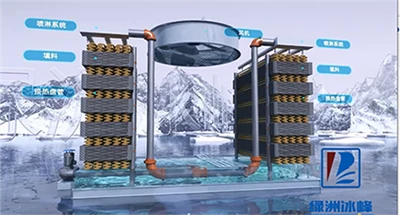 If the cooling tower is not required to run 24/7 during winter:
Drain Down: Completely drain the basin and all piping if the system will be idle for an extended period. Use compressed air to blow out residual water from the spray nozzles and coils.
Intermittent Run: If the load allows, run the system intermittently to keep water moving, but ensure basin heaters are active during off-cycles.
4. Insulation and Wind Barriers
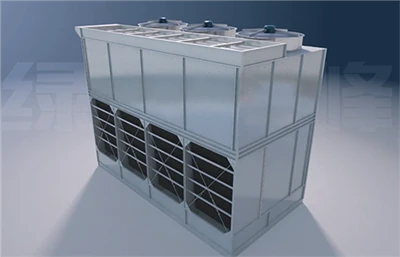 Cold wind can drastically increase the rate of heat loss and freezing risk.
Install insulated panels around the tower casing.
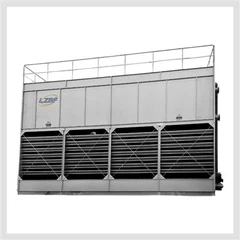
Use wind barriers on the air intake louvers to reduce the volume of freezing air entering the tower while still allowing necessary airflow for operation.
Conclusion
Don't wait for the first snowfall to think about freeze protection. Inspecting your heating elements, testing your glycol levels, and checking your control logic now can save you thousands of dollars in equipment replacement later.
Need advice on selecting the right glycol concentration or heater size for your specific model? Contact our engineering team today.

Send Inquiry