


3 Warning Signs Your Closed-Circuit Cooling Tower Needs Immediate Maintenance
Sep 10, 2026
Leave a message


A closed-circuit cooling tower is designed to be a low-maintenance, high-reliability solution. However, even the best-engineered systems need periodic inspection and care. Over time, minor issues can escalate into major failures if left unaddressed.
The good news is that most problems send clear warning signals long before a breakdown occurs. Here are the top 3 signs that your closed-circuit cooling tower needs immediate maintenance.
1. Rising Outlet Temperature (The Efficiency Drop)
 One of the first and most obvious signs of trouble is when the process fluid outlet temperature starts creeping higher than normal, even though the heat load hasn't changed.
What's causing it:
Scale buildup on the coils: Over time, mineral deposits can form on the exterior surface of the heat exchange coils, creating an insulating layer that blocks heat transfer.
Clogged spray nozzles: If the external spray water distribution becomes uneven, parts of the coil surface are not being cooled effectively.
Dirty air intake louvers: Blocked louvers reduce airflow, starving the tower of the air it needs for evaporative cooling.
What to do: Inspect the coil surfaces for scale, clean or replace clogged spray nozzles, and check the air intake area for debris.
2. Unusual Noise or Vibration
 A healthy cooling tower operates with a steady, predictable sound. If you start hearing grinding, rattling, or excessive vibration, something is mechanically wrong.
What's causing it:
Worn motor bearings: Bearings degrade over time, especially in humid environments. A grinding or squealing noise is a classic sign.
Imbalanced fan blades: Debris buildup or physical damage to fan blades can cause imbalance, leading to vibration that stresses the entire structure.
Loose drive belt or coupling: In belt-driven systems, a worn or loose belt can cause slippage and unusual noise.
What to do: Shut down the system immediately if you hear abnormal noise. Inspect the motor, fan assembly, and drive components. Replacing a bearing now costs a fraction of replacing a seized motor later.
3. Higher Than Normal Water Consumption
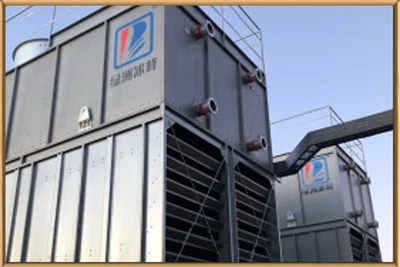 If your water meter readings are climbing without a corresponding increase in cooling demand, you likely have a leak or excessive blowdown issue.
What's causing it:
Internal coil leaks: A pinhole leak in the coil means process fluid is escaping into the spray water basin. This is serious because it contaminates your clean process loop.
Excessive drift: Damaged or missing drift eliminators allow water droplets to escape with the exhaust air, wasting water.
Faulty float valve: A stuck or malfunctioning make-up water valve can cause continuous overfilling.
What to do: Check the basin water level, inspect the drift eliminators, and test the process fluid for contamination. If you suspect a coil leak, a pressure test should be performed immediately.
The Bottom Line
Proactive maintenance is always cheaper than emergency repairs. By monitoring these three warning signs-temperature rise, unusual noise, and water consumption-you can catch problems early and keep your cooling system running at peak performance.
Need replacement parts, maintenance kits, or professional inspection services? Contact our after-sales team today for a customized maintenance plan.

Send Inquiry