


Performance Analysis and Application Advantages of Closed Cooling Towers
Jul 04, 2025
Leave a message
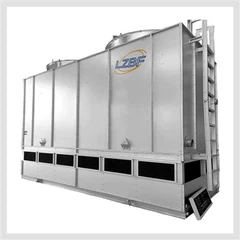
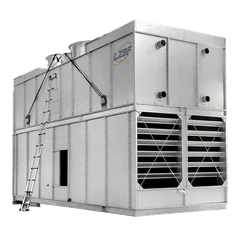
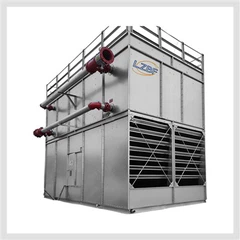
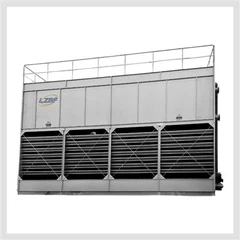
As a highly efficient heat exchange device, closed cooling towers play a key role in industrial cooling, air conditioning systems, and the energy sector. Their core performance is reflected in heat exchange efficiency, water conservation, operational stability, and environmental adaptability, making them a key choice for modern cooling technology.
Heat Exchange Efficiency: The Core Advantage of Closed Cooling Towers
Closed cooling towers achieve efficient heat transfer through a closed-circuit system. They operate by circulating water within coils, indirectly exchanging heat with external spray water and air. Since the cooling medium (such as the process fluid) does not directly contact the air, contamination and evaporation losses are avoided. Furthermore, optimized coil materials (such as copper and stainless steel) and structural design (such as fins for enhanced heat transfer) significantly improve heat exchange efficiency. Modern closed cooling towers can achieve heat transfer coefficients several times higher than traditional open cooling towers, making them particularly suitable for applications with stringent water quality requirements, such as data centers and precision manufacturing.
Water Saving and Environmental Performance
The closed-circuit design of a closed cooling tower significantly reduces water evaporation, achieving water savings of over 90% compared to open cooling towers. Spray water is replenished only when needed and is recycled through a water collection tray and filtration system, reducing water consumption. Furthermore, the closed system eliminates direct contact between the process fluid and the outside air, reducing the risk of contamination by impurities, dust, and microorganisms, extending the life of the cooling medium, and reducing the use of chemicals, thus complying with environmental requirements.
Operational Stability and Reliability
The closed-circuit system of a closed cooling tower effectively isolates external contaminants, reducing the risk of pipe scaling, corrosion, and biosludge, thereby ensuring long-term stable operation. Intelligent control systems (such as variable-frequency fans and temperature sensors) automatically adjust spray and air volume according to operating conditions, maintaining efficient operation even at partial loads. Furthermore, closed cooling towers are often equipped with backup circulation pumps and alarm systems, further enhancing equipment reliability and making them suitable for continuous industrial operation.
Environmental Adaptability and Flexibility
Closed cooling towers operate stably within a wide temperature range (-30°C to 50°C), adapting to diverse climate conditions. In cold regions, coils can be prevented from freezing by adding antifreeze or using electric heaters. In high-temperature and high-humidity environments, efficient cooling is maintained by optimizing the balance between air volume and spray ratio. Their modular design also facilitates capacity expansion based on demand, making them suitable for both new projects and upgrades to existing systems.
Applications and Future Trends
Closed cooling towers are widely used in industries such as power, chemical, metallurgy, air conditioning, and new energy, particularly in areas requiring high-precision temperature control or water quality protection. With increasing demands for energy conservation and environmental protection, closed cooling towers will increasingly utilize more efficient materials (such as nano-coated coils), intelligent control (such as AI algorithms optimizing operating parameters), and low-noise designs to further enhance their overall performance.
In short, closed cooling towers, with their high efficiency, water conservation, stability, and environmental friendliness, have become a key development direction in modern cooling technology, providing reliable support for the sustainable development of various industries.
Send Inquiry