


Analysis of the Six Core Advantages of Closed Cooling Towers
Jul 03, 2025
Leave a message
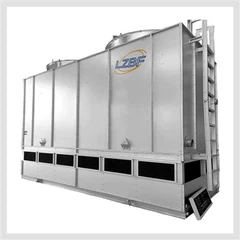
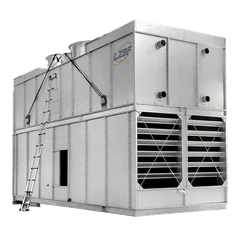
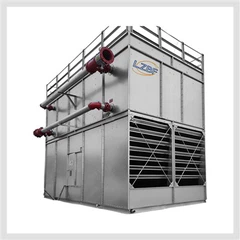
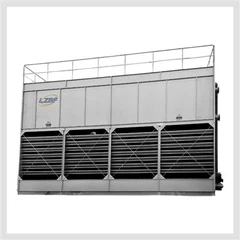
In the industrial cooling sector, closed cooling towers, with their unique design and high efficiency, have gradually become the preferred heat dissipation solution for modern production equipment. Compared to traditional open cooling towers, closed cooling towers achieve precise temperature control through a closed circulation system, which not only extends equipment life but also significantly reduces maintenance costs. The following are their irreplaceable core advantages:
1. High Heat Exchange Efficiency
Closed cooling towers utilize a dual mechanism of "evaporative cooling + coil heat exchange." Internally circulating water indirectly contacts spray water through copper or stainless steel coils. The spray water absorbs heat as it evaporates, and a fan then expels the moist, hot air. This design improves cooling efficiency by over 30% compared to traditional methods, making it particularly suitable for high-precision equipment sensitive to water temperature fluctuations, such as lasers and precision machine tools.
2. Fully Enclosed Anti-Pollution Protection
The system's circulating water is completely enclosed in sealed pipes, isolated from the outside air, fundamentally preventing the intrusion of dust, impurities, and algae. For industries with stringent water quality requirements, such as food processing and pharmaceuticals, closed cooling towers ensure long-term cleanliness of circulating water, preventing equipment scaling and corrosion caused by water contamination.
III. Significant Water and Energy Savings
Spray water is pre-cooled through PVC packing before being recycled, resulting in evaporation losses that are only one-fifth that of open cooling towers. Combined with an intelligent control system, it automatically adjusts fan speed and spray volume based on ambient temperature, ensuring cooling efficiency while reducing energy consumption. Tested data shows that closed cooling towers can save up to thousands of tons of water annually and approximately 25% less electricity than open cooling towers of the same specification.
IV. Ultra-Long Service Life
Key components, such as the heat exchange coils, are treated with an anti-corrosion coating, and the outer casing is typically constructed of corrosion-resistant fiberglass or galvanized steel. With proper maintenance, the main unit boasts a lifespan exceeding 15 years, two to three times that of open cooling towers. It is particularly suitable for use in cold northern regions or coastal areas with high salt fog, offering exceptional frost and rust resistance.
5. Low Maintenance Cost Advantage
Without an open water pool or fill structure, closed cooling towers require no frequent scale cleaning or filter replacement. Daily inspections require only a few moving parts, such as the spray pump and fan, reducing annual maintenance workload by 60%. The modular design also supports local repairs and replacements, significantly minimizing downtime losses.
6. Flexible Environmental Adaptability
Low-Temperature Protection: Built-in electric heaters prevent coil freezing in winter.
Noise Control: Optional low-speed fans or silencers are available to meet factory noise reduction requirements.
Space Optimization: The vertical design requires 40% less floor space than traditional cooling towers.
From steelmaking to data centers, closed cooling towers are redefining industrial temperature control standards with their reliability. With stricter environmental regulations and rising energy efficiency requirements, this cooling solution, which combines water conservation, energy saving, and environmental protection, is poised to become a key technology choice for more companies seeking sustainable production.
Send Inquiry