


Applications and Technical Advantages of Closed Cooling Towers
Jul 05, 2025
Leave a message
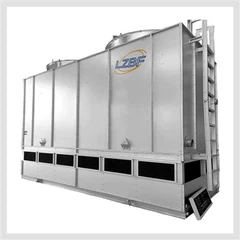
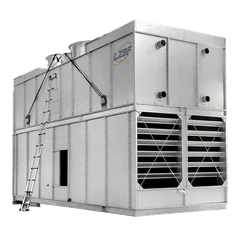
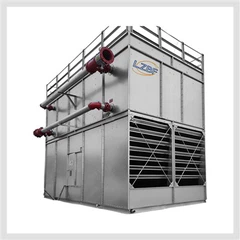
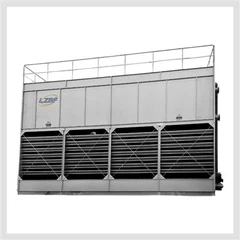
As highly efficient heat exchange devices, closed cooling towers are widely used in the industrial, commercial, and energy sectors. Their core function is to efficiently dissipate heat through indirect contact between circulating water and air. Compared to traditional open cooling towers, closed cooling towers protect the cooling medium from contamination through a closed circulation system, significantly improving system stability and service life. This article will explore in detail the main applications and technical features of closed cooling towers.
Core Applications in the Industrial Sector
In industrial production, closed cooling towers are critical supporting equipment for many high-energy-consuming devices. For example, in the power industry, equipment such as generators and transformers require continuous cooling to maintain stable operation. Closed cooling towers ensure equipment efficiency through precise temperature control. High-temperature furnaces and rolling mills in the metallurgical industry, as well as reactors in the chemical industry, also rely on closed cooling systems. Their corrosion resistance and airtightness effectively prevent chemical leakage and contamination. Furthermore, hydraulic systems and injection molding machines in mechanical manufacturing often use closed cooling towers to ensure that lubricant oil and mold temperatures remain within the optimal operating range.
Expanded Applications in the Commercial and Energy Sectors
Closed cooling towers also play a crucial role in commercial buildings and the new energy sector. Data centers, core infrastructure of the information age, often utilize closed cooling towers for precision air conditioning systems in server rooms to achieve efficient heat dissipation, ensuring reliable operation in high-temperature environments. In photovoltaic and wind power plants, inverters and other temperature-sensitive electrical equipment enable closed cooling technology to precisely adjust heat dissipation requirements and improve energy conversion efficiency. Furthermore, the use of closed cooling towers in central air conditioning systems in high-rise buildings not only reduces water consumption but also minimizes damage to pipes from external impurities, lowering maintenance costs.
Technical Advantages and Adaptability
The core advantage of closed cooling towers lies in their closed-circuit design. Using shell-and-tube heat exchangers to isolate the cooling medium from the outside air prevents scaling, algae growth, and contamination, making them particularly suitable for applications with stringent water quality requirements. Furthermore, their modular structure allows for flexible expansion, allowing the number of operating units to be adjusted according to load fluctuations, achieving energy-efficient operation. In extreme climates, closed cooling towers can utilize a spray system and fan to work together to prevent freezing in low-temperature environments and enhance heat dissipation in high-temperature environments, demonstrating exceptional environmental adaptability.
Future Development Trends
With rising industrial energy efficiency standards and tightening environmental regulations, closed cooling towers are evolving towards intelligent and energy-efficient solutions. Modern closed cooling towers, with integrated temperature sensors and variable frequency control systems, can adjust operating parameters in real time, further reducing energy consumption. Furthermore, the use of environmentally friendly fillers and water-saving technologies has given closed cooling towers greater potential for water recycling.
In summary, closed cooling towers, with their high efficiency, reliability, and environmental friendliness, have become an indispensable cooling solution across numerous industries. With continued technological advancement, their scope of application will continue to expand, providing crucial support for the sustainable development of global industry and energy systems.
Send Inquiry