


Classification and Application Analysis of Closed Cooling Towers
Jul 02, 2025
Leave a message
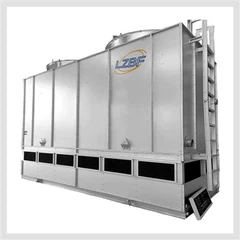
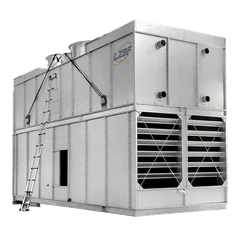
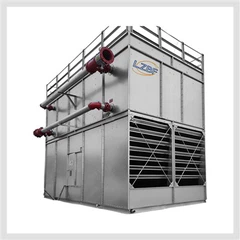
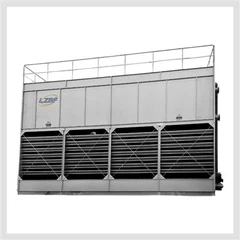
In modern industrial and commercial settings, closed cooling towers, as efficient heat exchange equipment, are widely used in industries such as HVAC, power generation, and the chemical industry. They achieve cooling through heat exchange between circulating water and air, while effectively protecting the medium from contamination. Closed cooling towers can be classified into various types based on their structural design and application scenarios to meet the needs of different industries.
Based on ventilation method, closed cooling towers are primarily categorized as natural ventilation and forced ventilation. Natural ventilation relies on air convection generated by the tower's height to achieve cooling. Its structure is typically hyperbolic and is suitable for locations with ample space and moderate ambient temperatures. Forced ventilation, on the other hand, uses fans to drive air flow, resulting in higher cooling efficiency and suitable for high-load or high-temperature environments. It is currently the mainstream choice in the industrial sector.
Based on the heat exchange method, closed cooling towers can be categorized as dry, wet, and combined dry-wet types. Dry closed cooling towers cool solely through heat conduction between the air and the medium within the tubes, without any water evaporation. They are suitable for areas with water shortages or where water quality requirements are stringent. Wet closed cooling towers utilize the principle of water evaporation and heat absorption, resulting in more effective cooling, but they consume a certain amount of water. Combined wet and dry cooling towers combine the advantages of both, operating in wet cooling mode during hot weather and switching to dry cooling mode during colder months, achieving a balance between energy efficiency and water conservation.
Based on their structural form, closed cooling towers can be categorized as either open or closed circulation systems. Open systems, which directly contact the air, are suitable for applications where medium purity is less critical; closed systems, which isolate the medium from the outside environment through coils, are widely used in hygiene-sensitive industries such as pharmaceuticals and food. Furthermore, they can be categorized by installation type as either crossflow or counterflow. The former uses horizontal air flow for easier maintenance, while the latter uses vertical air flow for higher heat exchange efficiency.
With technological advances, closed cooling towers are moving towards energy-saving and intelligent technologies. Some newer models integrate variable-frequency fans and pump control systems, dynamically adjusting energy consumption based on load. Amidst increasingly stringent environmental regulations, low-noise and water-saving designs are also becoming industry trends.
Understanding the classification and characteristics of closed-circuit cooling towers can help companies select the optimal solution based on their actual needs, balancing efficiency, cost, and sustainability goals. Whether in traditional manufacturing or emerging sectors, the proper configuration of closed-circuit cooling systems can significantly improve operational stability and energy efficiency.
Send Inquiry