


How Closed-Circuit Cooling Towers Help Data Centers Achieve Lower PUE and Higher Reliability
Sep 16, 2026
Leave a message

 Data centers are under constant pressure to do more with less: more computing power, less energy, less water, and less downtime. Cooling is one of the largest non-IT energy loads in a data center, so every improvement in cooling efficiency can directly improve overall facility performance.
For modern data centers, closed-circuit cooling towers are becoming an important part of the cooling strategy. They offer a practical way to reject heat efficiently while protecting sensitive equipment and supporting long-term operational goals.
Why Cooling Efficiency Matters in Data Centers
 In a data center, cooling is not just about keeping servers comfortable. It is about maintaining stable operating temperatures, protecting hardware, and controlling energy costs.
When cooling systems run inefficiently, the results are easy to see:
Higher electricity consumption
Increased water usage
More frequent maintenance
Greater risk of equipment stress
Higher PUE
PUE, or Power Usage Effectiveness, is one of the most common metrics used to measure data center efficiency. A lower PUE means more energy is being used for IT loads, and less is being wasted on cooling and support systems.
How Closed-Circuit Cooling Towers Support Lower PUE
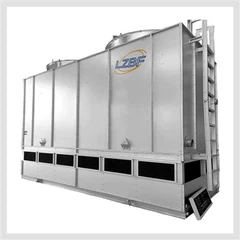
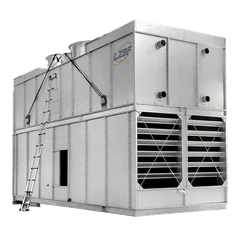
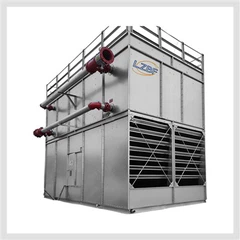
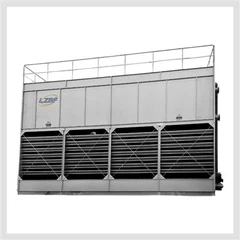
 Closed-circuit cooling towers can help data centers improve efficiency because they separate the process fluid from the external cooling environment.
The process fluid circulates inside a sealed coil, while external spray water and airflow remove heat from the outside of the coil. This indirect heat rejection helps maintain cleaner process water and more stable cooling performance.
Several design features can help reduce energy consumption:
Variable frequency drives allow fans and pumps to adjust speed based on real-time cooling demand.
Dry or hybrid operation can reduce water use when ambient conditions allow.
Smart controls help match cooling output with actual heat load instead of running at full capacity all the time.
When the cooling system responds dynamically to changing conditions, the data center can avoid unnecessary energy waste.
Protecting Sensitive IT Infrastructure
 Data center cooling systems often connect to chillers, precision air conditioning units, liquid cooling loops, and other sensitive equipment. If the cooling water becomes contaminated with dirt, biological growth, or corrosion byproducts, those contaminants can reduce heat transfer efficiency and increase maintenance needs.
Closed-circuit cooling towers help reduce this risk because the process fluid does not come into direct contact with outside air. This makes them a strong choice for facilities where equipment protection and long-term reliability are priorities.
Cleaner process water can help:
Reduce fouling in heat exchangers
Maintain more consistent cooling performance
Lower the frequency of system cleaning
Reduce the risk of unexpected maintenance
Support longer equipment life
Supporting Liquid Cooling and Future Growth
 As data centers adopt higher-density racks, AI workloads, GPU clusters, and liquid cooling systems, cooling requirements are becoming more demanding. Traditional air cooling alone may not be enough for next-generation IT environments.
Closed-circuit cooling towers can fit well into advanced cooling designs because they provide a stable heat rejection loop. They can support:
Chilled water systems
Liquid cooling infrastructure
High-density server rooms
Hybrid cooling systems
Future capacity expansion
This makes them a practical choice not only for current operations, but also for data centers planning long-term growth.
Reliability and Operational Continuity
 For data centers, reliability is not optional. Even short periods of cooling instability can create operational risk.
Closed-circuit cooling towers support operational continuity by providing consistent heat rejection and reducing the chance of contamination-related problems. When combined with proper maintenance, monitoring, and control strategies, they can help data centers maintain stable temperatures and predictable performance.
Conclusion
Closed-circuit cooling towers offer data centers a balanced combination of efficiency, protection, and scalability. By helping to lower PUE, reduce contamination risk, support liquid cooling, and improve long-term reliability, they can become a valuable part of a modern data center cooling strategy.
If your data center is planning a cooling upgrade, expansion, or efficiency improvement, a closed-circuit cooling tower may be worth serious consideration.

Send Inquiry