


Analysis of Suitable Environments for Evaporative Condensers
Jul 10, 2025
Leave a message
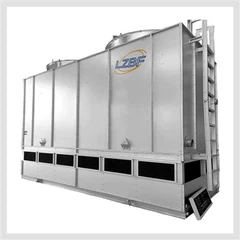
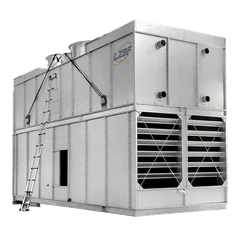
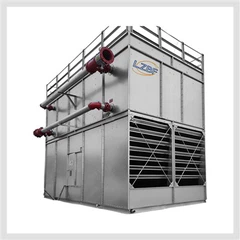
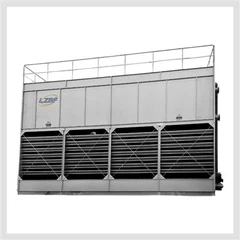
Evaporative condensers are highly efficient heat exchange devices that remove heat through water evaporation. They are widely used in refrigeration, air conditioning, chemical engineering, and other fields. Their operating principle is to cool the refrigerant using a combination of air and water.Compared to traditional air- or water-cooling methods, they offer advantages such as energy conservation, water conservation, and a smaller footprint. However, the performance of evaporative condensers is significantly affected by environmental conditions, making selection of the appropriate application scenario crucial for their efficient operation.
1. Impact of Climate Conditions
Evaporative condensers operate best in dry, warm environments. In high-temperature environments, water evaporation is more efficient, effectively removing heat and thus improving condensation efficiency. For example, in southern my country, where summer temperatures are high, evaporative condensers can significantly reduce the energy consumption of cooling systems.
However, in high-humidity environments (such as coastal areas or during the rainy season), the air is near saturation, and evaporation efficiency decreases significantly, resulting in a weakened condenser's heat dissipation capacity. In these cases, if the ambient temperature remains high, evaporative condensers can still function effectively, but increasing fan power or optimizing the spray system may be necessary to improve heat exchange efficiency.
In low-temperature environments (such as winter in northern China), evaporative condensers can experience reduced efficiency and even pose a risk of freezing, potentially compromising equipment safety. Therefore, when used in cold regions, antifreeze measures are typically required, such as electric heating, circulating water insulation, or seasonal switching to other cooling methods.
II. Industrial and Commercial Applications
Evaporative condensers are particularly suitable for space-critical and energy-sensitive applications, such as:
Refrigeration and Air Conditioning Systems: In large supermarkets, data centers, cold storage facilities, and other locations, evaporative condensers can effectively lower condensing temperatures, reduce compressor load, and thus save energy.
Chemical and Power Industries: In industries such as petrochemicals and power plants, evaporative condensers can be used to cool process fluids or generator sets. Their compact design and efficient heat dissipation are suitable for space-constrained industrial environments.
Food Processing and Pharmaceutical Industries: These industries require stringent temperature control. Evaporative condensers provide stable cooling while reducing water consumption and meeting environmental requirements. III. Adaptability in Special Environments
In dusty or corrosive environments (such as mines and chemical plants), the heat exchange tubes and spray systems of evaporative condensers are susceptible to contamination or corrosion. Therefore, corrosion-resistant materials (such as stainless steel and titanium alloys) must be selected, and filtration and water quality management must be strengthened.
In water-scarce areas, although evaporative condensers rely on water evaporation to dissipate heat, they use less circulating water than traditional water-cooled systems. Their closed-loop design reduces water waste, making them more water-efficient than traditional cooling towers.
IV. Summary
Evaporative condensers perform best in high-temperature, dry, and space-constrained environments, making them suitable for a variety of industries, including refrigeration, chemicals, and power generation. However, in high-humidity, low-temperature, or harsh environments, optimized designs must be tailored to specific conditions, such as implementing antifreeze and corrosion protection measures or supplementary heat dissipation measures. Choosing the right environment can fully leverage the high efficiency and energy-saving advantages of evaporative condensers, reducing operating costs and extending equipment life.
Send Inquiry