


What is the role of the drift eliminator in a crossflow closed cooling tower?
Nov 04, 2025
Leave a message
In the realm of industrial cooling solutions, crossflow closed cooling towers stand as a cornerstone for maintaining optimal operating temperatures in various processes. As a trusted supplier of crossflow closed cooling towers, I've witnessed firsthand the critical role that each component plays in the overall efficiency and performance of these systems. One such component that often goes unnoticed but is of utmost importance is the drift eliminator. In this blog post, I'll delve into the significance of drift eliminators in crossflow closed cooling towers, exploring their functions, benefits, and impact on system performance.
Understanding Crossflow Closed Cooling Towers
Before we dive into the role of drift eliminators, let's briefly review how crossflow closed cooling towers operate. In a crossflow closed cooling tower, hot water from the process is circulated through a series of tubes or coils, while ambient air is drawn across the tubes in a perpendicular direction. As the air passes over the tubes, it absorbs heat from the water, causing the water temperature to decrease. The cooled water is then returned to the process, while the heated air is discharged into the atmosphere.
One of the key advantages of crossflow closed cooling towers is their ability to prevent the contamination of the process water. Unlike open cooling towers, where the process water is exposed to the atmosphere, crossflow closed cooling towers keep the process water contained within a closed loop, reducing the risk of corrosion, scaling, and biological growth. This not only extends the lifespan of the equipment but also improves the quality of the process water.
The Function of Drift Eliminators
Drift eliminators are an essential component of crossflow closed cooling towers, designed to capture and remove water droplets that are entrained in the air stream as it exits the tower. These water droplets, known as drift, can carry with them dissolved solids, chemicals, and microorganisms, which can cause environmental pollution, damage to nearby equipment, and health hazards to humans.

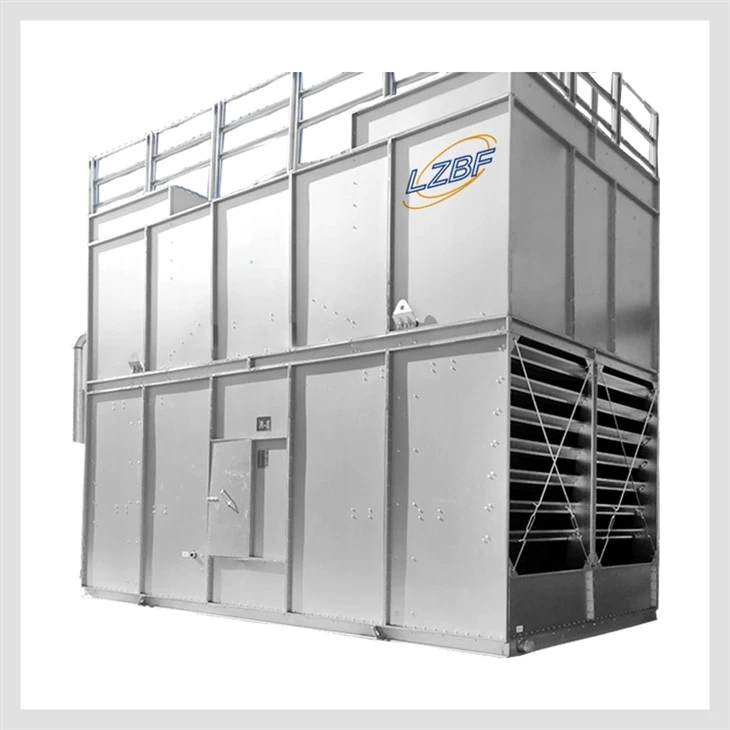
The primary function of drift eliminators is to reduce the amount of drift that is discharged into the atmosphere. They do this by creating a tortuous path for the air stream, causing the water droplets to collide with the surfaces of the eliminator and coalesce into larger droplets. These larger droplets then fall back into the cooling tower, where they are recirculated through the system.
Benefits of Drift Eliminators
The use of drift eliminators in crossflow closed cooling towers offers several benefits, including:
Environmental Protection
By reducing the amount of drift that is discharged into the atmosphere, drift eliminators help to minimize the environmental impact of cooling tower operations. Drift can contain a variety of pollutants, such as heavy metals, chemicals, and microorganisms, which can contaminate soil, water, and air. By capturing and removing these pollutants, drift eliminators help to protect the environment and comply with environmental regulations.
Equipment Protection
Drift can also cause damage to nearby equipment, such as electrical systems, machinery, and buildings. The water droplets in the drift can carry with them corrosive substances, which can cause rust and corrosion on metal surfaces. Additionally, the moisture in the drift can promote the growth of mold and mildew, which can damage building materials and cause health problems for occupants. By reducing the amount of drift, drift eliminators help to protect nearby equipment and buildings from damage.
Health and Safety
Drift can pose a health hazard to humans, particularly if it contains harmful chemicals or microorganisms. Inhalation of drift can cause respiratory problems, skin irritation, and other health issues. By reducing the amount of drift, drift eliminators help to protect the health and safety of workers and nearby residents.
Water Conservation
Drift eliminators also help to conserve water by reducing the amount of water that is lost through evaporation and drift. By capturing and returning the water droplets to the cooling tower, drift eliminators help to reduce the water consumption of the system, which can result in significant cost savings over time.
Types of Drift Eliminators
There are several types of drift eliminators available for crossflow closed cooling towers, each with its own unique design and performance characteristics. The most common types of drift eliminators include:
Baffle-Type Drift Eliminators
Baffle-type drift eliminators consist of a series of vertical or horizontal baffles that are arranged in a staggered pattern. The air stream is forced to flow through the narrow passages between the baffles, causing the water droplets to collide with the surfaces of the baffles and coalesce into larger droplets. Baffle-type drift eliminators are relatively simple and inexpensive, but they may not be as effective as other types of drift eliminators in capturing small water droplets.
Mesh-Type Drift Eliminators
Mesh-type drift eliminators consist of a series of fine mesh screens that are arranged in a parallel or perpendicular pattern. The air stream is forced to flow through the mesh screens, causing the water droplets to be trapped in the mesh and coalesce into larger droplets. Mesh-type drift eliminators are more effective than baffle-type drift eliminators in capturing small water droplets, but they may be more expensive and require more maintenance.
Blade-Type Drift Eliminators
Blade-type drift eliminators consist of a series of curved blades that are arranged in a spiral or helical pattern. The air stream is forced to flow through the narrow passages between the blades, causing the water droplets to collide with the surfaces of the blades and coalesce into larger droplets. Blade-type drift eliminators are the most effective type of drift eliminator in capturing small water droplets, but they are also the most expensive and require the most maintenance.
Selecting the Right Drift Eliminator
When selecting a drift eliminator for a crossflow closed cooling tower, it's important to consider several factors, including:
Drift Reduction Efficiency
The drift reduction efficiency of a drift eliminator is a measure of its ability to capture and remove water droplets from the air stream. The higher the drift reduction efficiency, the less drift will be discharged into the atmosphere. When selecting a drift eliminator, it's important to choose one that has a high drift reduction efficiency to ensure compliance with environmental regulations and to minimize the environmental impact of the cooling tower operations.
Pressure Drop
The pressure drop across a drift eliminator is a measure of the resistance that the air stream encounters as it passes through the eliminator. The higher the pressure drop, the more energy will be required to move the air through the cooling tower. When selecting a drift eliminator, it's important to choose one that has a low pressure drop to minimize the energy consumption of the cooling tower and to reduce operating costs.
Material Compatibility
The material of the drift eliminator should be compatible with the chemicals and water treatment agents that are used in the cooling tower. Some materials may be prone to corrosion, scaling, or biological growth, which can reduce the effectiveness of the drift eliminator and increase maintenance requirements. When selecting a drift eliminator, it's important to choose one that is made from a material that is resistant to corrosion, scaling, and biological growth.
Maintenance Requirements
The maintenance requirements of a drift eliminator should also be considered when selecting a drift eliminator. Some drift eliminators may require frequent cleaning or replacement to maintain their effectiveness, while others may be self-cleaning or require minimal maintenance. When selecting a drift eliminator, it's important to choose one that has low maintenance requirements to reduce operating costs and to minimize downtime.
Conclusion
In conclusion, drift eliminators play a critical role in the performance and efficiency of crossflow closed cooling towers. By capturing and removing water droplets from the air stream, drift eliminators help to reduce the environmental impact of cooling tower operations, protect nearby equipment and buildings, and ensure the health and safety of workers and nearby residents. When selecting a drift eliminator for a crossflow closed cooling tower, it's important to consider several factors, including drift reduction efficiency, pressure drop, material compatibility, and maintenance requirements.
As a supplier of crossflow closed cooling towers, we offer a wide range of drift eliminators to meet the specific needs of our customers. Our drift eliminators are designed to provide high drift reduction efficiency, low pressure drop, and long service life, ensuring optimal performance and reliability of your cooling tower system.
If you're interested in learning more about our crossflow closed cooling towers or drift eliminators, or if you have any questions or concerns, please don't hesitate to contact us. Our team of experts is available to provide you with detailed information and assistance to help you select the right cooling tower system for your application. We look forward to working with you to provide you with the best cooling solutions for your needs.
References
- "Closed Air Circuit Water Cooled." /closed-circuit-cooling-towers/closed-air-circuit-water-cooled.html
- "A Closed Circuit Cooling Tower." /closed-circuit-cooling-towers/a-closed-circuit-cooling-tower.html
- "Closed Circuit Cooling Water System." /closed-circuit-cooling-towers/closed-circuit-cooling-water-system.html
Send Inquiry