


What is the performance of a crossflow closed cooling tower in high - altitude regions?
Oct 02, 2025
Leave a message
Hey there! As a supplier of Crossflow Closed Cooling Towers, I've been getting a bunch of questions lately about how these bad boys perform in high - altitude regions. So, I thought I'd take some time to break it down for you all.
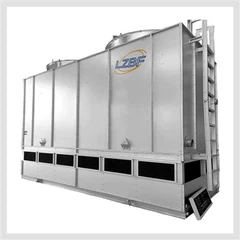
First off, let's talk about what a crossflow closed cooling tower is. In simple terms, it's a device that cools a fluid (usually water) by transferring heat to the atmosphere. The "crossflow" part means that the air flows horizontally across the direction of the falling water. And the "closed" part indicates that the fluid being cooled is kept separate from the environment, which helps prevent contamination.
Now, high - altitude regions are a whole different ballgame. The most obvious difference is the lower air pressure. At higher altitudes, the air is thinner, which means there are fewer air molecules per unit volume. This has a direct impact on the cooling tower's performance.
One of the key factors affected by low air pressure is the evaporation rate. Evaporation is a major cooling mechanism in cooling towers. When water evaporates, it takes heat away from the remaining water, thus cooling it down. But in high - altitude regions, the lower air pressure makes it easier for water to evaporate. Sounds good, right? Well, it's a double - edged sword.
On one hand, the increased evaporation rate can lead to more efficient cooling in the short term. The water cools down faster as more of it evaporates, taking heat with it. However, this also means that more water is lost through evaporation. So, you'll need to replenish the water in the cooling tower more frequently. This can be a hassle, especially in regions where water is scarce.
Another aspect affected by high - altitude conditions is the fan performance. The fans in a crossflow closed cooling tower are responsible for moving air through the tower. With thinner air at high altitudes, the fans have to work harder to move the same amount of air. This can lead to increased energy consumption. The motor has to draw more power to maintain the desired airflow, which can drive up your electricity bills.
The heat transfer efficiency is also influenced by the low air density. Heat transfer in a cooling tower occurs between the hot water and the air. With fewer air molecules available at high altitudes, the contact between the water and the air is reduced. This means that the heat transfer rate might decrease, and the cooling tower may not be able to achieve the same level of cooling as it would at lower altitudes.
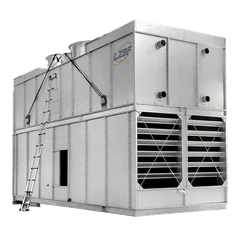
Now, let's talk about how we, as a supplier, address these challenges. We've developed different types of crossflow closed cooling towers to suit high - altitude conditions. For example, our Composite Cross Type Closed Cooling Tower is designed with enhanced evaporation surfaces. These surfaces increase the contact area between the water and the air, compensating for the reduced air density at high altitudes. This helps to maintain a good heat transfer rate.
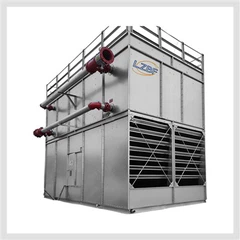
Our Wet and Dry Closed Cooling Tower is another great option. In this type of tower, there are both wet and dry sections. The wet section uses evaporation for cooling, while the dry section relies on convection. This dual - mode operation allows for more flexibility in different conditions. In high - altitude regions, you can adjust the operation of the wet and dry sections based on the water availability and the cooling requirements.
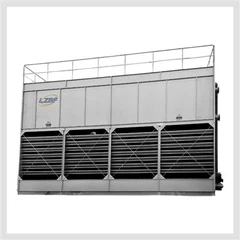
The Closed - circulated Cooling Tower is also well - suited for high - altitude use. It has a closed - loop system that minimizes water loss. Since the fluid being cooled is kept separate from the environment, the water consumption is relatively low. This is a big advantage in high - altitude regions where water conservation is crucial.
In addition to these design features, we also provide regular maintenance and support services. Our technicians are trained to handle the unique challenges of high - altitude cooling tower operation. They can optimize the tower's performance, check for any signs of wear and tear, and make necessary adjustments to ensure efficient and reliable operation.
If you're operating in a high - altitude region and are in the market for a crossflow closed cooling tower, you need to consider these performance factors carefully. It's not just about getting a tower that can cool water; it's about getting one that can do it efficiently, economically, and with minimal hassle.
We offer a range of Composite Cross Type Closed Cooling Tower, Wet and Dry Closed Cooling Tower, and Closed - circulated Cooling Tower models that are specifically engineered to perform well in high - altitude environments. Whether you're looking for a small - scale tower for a local business or a large - scale solution for an industrial plant, we've got you covered.
If you're interested in learning more about our products or want to discuss your specific cooling needs, don't hesitate to reach out. We're here to help you make the right choice for your high - altitude cooling requirements. Let's have a chat and see how we can work together to keep your equipment cool and running smoothly.
References


- "Cooling Tower Handbook" by John A. Reynolds
- "Thermal Engineering Principles for High - Altitude Applications" by Maria Lopez
Send Inquiry