


What are the future trends in evaporative type of condenser technology?
Aug 27, 2025
Leave a message
Hey there! I'm in the business of supplying evaporative type of condensers, and I've been keeping a close eye on the industry. Today, I wanna chat about what the future holds for evaporative condenser technology.
Energy Efficiency Takes Center Stage
One of the most prominent future trends in evaporative condenser technology is the relentless pursuit of energy efficiency. In today's world, where energy costs are sky - rocketing and environmental concerns are at an all - time high, everyone wants to save on energy bills while reducing their carbon footprint.
Evaporative condensers work by using the latent heat of evaporation to cool the refrigerant. In the future, we're gonna see even more advanced designs that optimize this process. For example, new materials are being developed that have better heat transfer properties. These materials can transfer heat more effectively from the refrigerant to the water, which means less energy is needed to achieve the same level of cooling.
Manufacturers are also looking into variable - speed drives. These drives can adjust the speed of the fans and pumps in the evaporative condenser based on the actual cooling demand. So, when the load is low, the equipment runs at a lower speed, consuming less energy. This kind of intelligent control system is going to become standard in the future.
Water Conservation
Another major trend is water conservation. Evaporative condensers use water for the cooling process, but the water consumption can be quite significant. As water becomes an increasingly scarce resource, it's crucial to find ways to use it more efficiently.
One approach is the development of closed - loop systems. In a closed - loop evaporative condenser, the water is recirculated within the system, and only a small amount is lost due to evaporation. This reduces the overall water consumption compared to open - loop systems.
We're also seeing the integration of water treatment technologies. By treating the water in the evaporative condenser, we can prevent scale and corrosion, which not only extends the lifespan of the equipment but also allows for more efficient use of water. For instance, using advanced filtration systems can remove impurities from the water, ensuring that the heat transfer surfaces remain clean and the water can be reused effectively.
Smart and Connected Systems
The future of evaporative condenser technology is all about being smart and connected. With the rise of the Internet of Things (IoT), evaporative condensers are going to be part of a larger network.
Imagine being able to monitor and control your evaporative condenser from anywhere in the world using your smartphone or computer. You can check the temperature, pressure, and water levels in real - time. If there's a problem, you'll get an alert immediately, allowing you to take action before it causes major damage.
Smart sensors will also be used to collect data on the performance of the evaporative condenser. This data can be analyzed to optimize the operation of the equipment, predict maintenance needs, and improve overall efficiency. For example, if the sensors detect a decrease in heat transfer efficiency, the system can automatically adjust the operating parameters or prompt a maintenance check.
Integration with Renewable Energy Sources
As the world moves towards renewable energy, evaporative condensers are going to play a role in integrating with these sources. Solar power is a great example. Solar panels can be installed to power the fans and pumps in the evaporative condenser. This not only reduces the reliance on grid electricity but also makes the cooling process more sustainable.
Geothermal energy is another option. By using geothermal heat exchangers in combination with evaporative condensers, we can achieve even more efficient cooling. The geothermal heat exchanger can pre - cool the water before it enters the evaporative condenser, reducing the energy required for the evaporation process.
New Applications
The applications of evaporative condensers are also expanding. Traditionally, they've been used in industrial refrigeration, air - conditioning systems, and power plants. But in the future, we're gonna see them in new areas.


For example, in the data center industry, where cooling is a major challenge, evaporative condensers can provide an energy - efficient solution. Data centers generate a huge amount of heat, and evaporative condensers can help keep the servers at the right temperature without consuming excessive amounts of energy.
In the food and beverage industry, evaporative condensers can be used in the production process to cool various substances. They can also be used in the cold storage facilities to maintain the proper temperature for food preservation.
Types of Evaporative Condensers
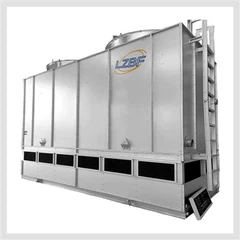
There are different types of evaporative condensers that are going to be influenced by these trends. For an Evaporative Cooled Condenser, the future improvements in energy efficiency and water conservation will make it an even more attractive option. It uses a combination of air and water to cool the refrigerant, and with the new technologies, it can operate with even less energy and water.
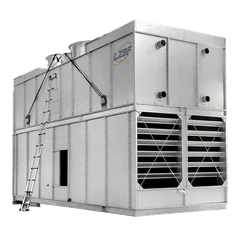
The Ammonia Evaporative Condenser is widely used in industrial refrigeration. As the demand for more sustainable and efficient refrigeration systems grows, this type of condenser will see advancements in terms of safety, energy efficiency, and integration with other systems.
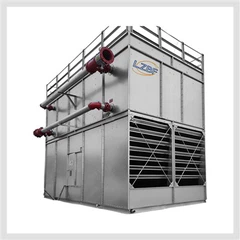
The Evaporative Surface Condenser is also set to benefit from the future trends. With the development of smart systems and better heat transfer materials, it can provide more reliable and efficient cooling in various applications.
Conclusion
The future of evaporative condenser technology is really exciting. With the trends of energy efficiency, water conservation, smart and connected systems, integration with renewable energy sources, and new applications, these condensers are going to become even more important in our lives.
If you're in the market for an evaporative condenser or looking to upgrade your existing system, now is the time to start thinking about these future trends. We, as a leading supplier of evaporative condensers, are committed to providing you with the latest and most advanced products that meet your needs. Whether you need a solution for a small - scale application or a large industrial project, we've got you covered.
If you're interested in learning more about our products or have any questions regarding evaporative condensers, feel free to reach out. We'd love to have a chat with you and discuss how we can work together to meet your cooling requirements. Let's embrace the future of evaporative condenser technology together!
References
- "Industrial Refrigeration Handbook" by Gustav Lorentzen and Arne Andersen
- "Handbook of Air Conditioning and Refrigeration" by William C. Turner
- Research papers on energy - efficient cooling technologies from various academic journals
Send Inquiry