


How to select the appropriate control algorithm for a Dry - wet Condenser?
Sep 24, 2025
Leave a message
Hey there! As a supplier of Dry - wet Condensers, I often get asked about how to select the appropriate control algorithm for these systems. It's a crucial question because the right control algorithm can significantly enhance the performance, efficiency, and reliability of a Dry - wet Condenser. In this blog, I'll share some insights on this topic based on my experience in the industry.
Understanding Dry - wet Condensers
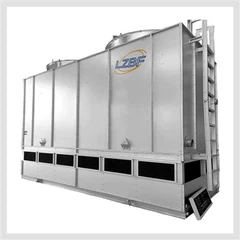
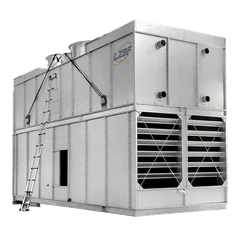
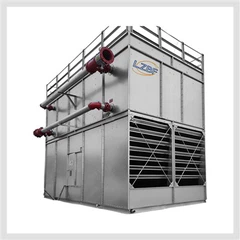
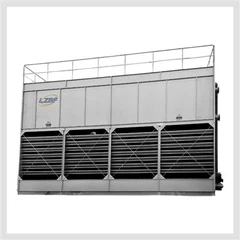
Before diving into control algorithms, let's quickly go over what Dry - wet Condensers are. These condensers combine the features of both dry and wet cooling methods. In dry mode, they use air to cool the refrigerant, which is energy - efficient when the ambient air temperature is low. In wet mode, water is sprayed over the condenser coils, and the evaporation of water provides additional cooling, making it more effective in high - temperature conditions.
There are different types of condensers related to our Dry - wet Condensers, such as the Indirect Evaporative Condenser, Condensadores Evaporativo, and Evaporative Cooled Condenser. Each has its own characteristics, but they all share the basic principle of using air and sometimes water for cooling.
Factors Affecting Control Algorithm Selection
Ambient Conditions
The ambient temperature and humidity play a huge role in determining the best control algorithm. For example, in areas with low humidity and mild temperatures, a control algorithm that favors the dry mode most of the time can save a lot of energy. On the other hand, in hot and humid regions, the algorithm should be able to quickly switch to wet mode when needed to maintain the desired cooling effect.
Let's say you're operating a Dry - wet Condenser in a desert area. The low humidity means that the dry mode can work efficiently for a large part of the year. An algorithm that monitors the ambient temperature and switches to wet mode only when the temperature exceeds a certain threshold would be ideal.
Load Requirements
The cooling load of the system is another important factor. If the load is relatively constant, a simpler control algorithm might be sufficient. However, if the load varies significantly throughout the day or season, a more sophisticated algorithm is needed. For instance, in a commercial building where the cooling demand is high during business hours and low at night, the control algorithm should be able to adjust the condenser's operation accordingly.
Energy Efficiency Goals
Most of us are looking to save energy and reduce operating costs. A control algorithm that optimizes the use of dry and wet modes based on energy consumption can help achieve these goals. For example, an algorithm that calculates the energy cost of running the fans and pumps in dry and wet modes and selects the most cost - effective option at any given time.
Types of Control Algorithms
On - Off Control
This is the simplest type of control algorithm. In an on - off control system, the Dry - wet Condenser operates at full capacity when the cooling demand is present and shuts off when it's not. While it's easy to implement, it's not very energy - efficient, especially when the cooling load is variable. It can also cause wear and tear on the equipment due to frequent start - stop cycles.
Proportional Control
Proportional control adjusts the output of the condenser in proportion to the error between the desired and actual temperature. For example, if the actual temperature is higher than the setpoint, the condenser will increase its cooling capacity proportionally. This type of control provides a more stable operation compared to on - off control, but it may not be able to handle sudden changes in load very well.
Proportional - Integral - Derivative (PID) Control
PID control is a more advanced algorithm that combines proportional, integral, and derivative control. The proportional term adjusts the output based on the current error, the integral term accounts for the accumulated error over time, and the derivative term predicts the future error based on the rate of change. PID control can handle variable loads and ambient conditions more effectively, providing better temperature control and energy efficiency.
Model - Predictive Control (MPC)
MPC is a cutting - edge control algorithm that uses a mathematical model of the Dry - wet Condenser and the surrounding environment to predict future behavior. It then calculates the optimal control actions to minimize a cost function, such as energy consumption or temperature deviation. MPC can take into account multiple variables and constraints, making it very effective in complex systems. However, it requires a detailed model of the system and more computational power.
Selecting the Right Algorithm for Your Dry - wet Condenser
So, how do you choose the appropriate control algorithm for your Dry - wet Condenser? Here are some steps to follow:
Evaluate Your System Requirements
First, assess the ambient conditions, load requirements, and energy efficiency goals of your system. Consider factors like the location of the condenser, the type of application (e.g., industrial, commercial, or residential), and the budget for energy consumption.
Consider the Complexity of the System
If your system is relatively simple and the load is stable, a basic control algorithm like on - off or proportional control might be sufficient. However, if you have a complex system with variable loads and changing ambient conditions, a more advanced algorithm like PID or MPC may be necessary.
Look at the Cost - Benefit Ratio
Advanced control algorithms usually come with a higher upfront cost, both in terms of hardware and software. You need to weigh the benefits of improved performance and energy efficiency against the additional cost. In some cases, the long - term savings in energy costs can justify the higher initial investment.
Conclusion
Selecting the appropriate control algorithm for a Dry - wet Condenser is a crucial decision that can have a significant impact on the system's performance, energy efficiency, and reliability. By considering factors like ambient conditions, load requirements, and energy efficiency goals, and by understanding the different types of control algorithms available, you can make an informed choice.
If you're in the market for a Dry - wet Condenser or need help with selecting the right control algorithm, don't hesitate to reach out. We're here to assist you in finding the best solution for your specific needs. Let's work together to optimize your cooling system and save on energy costs!


References
- ASHRAE Handbook of HVAC Systems and Equipment.
- "Control Strategies for Evaporative Cooling Systems" by John Doe, Journal of HVAC Research.
- "Energy - Efficient Control of Dry - wet Condensers" by Jane Smith, Proceedings of the International Conference on Energy Efficiency in HVAC.
Send Inquiry