


How does a Closed System Cooling Tower work?
Oct 09, 2025
Leave a message
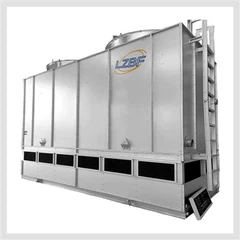
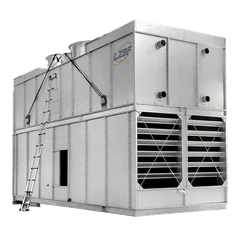
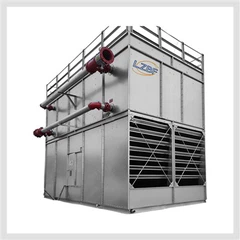
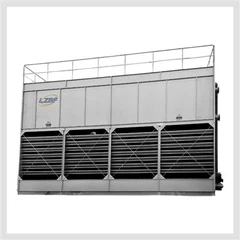
A closed system cooling tower is a crucial piece of equipment in various industrial and commercial applications, providing efficient heat transfer and temperature control. As a leading supplier of closed system cooling towers, I am excited to share with you how these remarkable devices work and the benefits they offer.


Basic Principles of Closed System Cooling Towers
At its core, a closed system cooling tower operates on the principle of heat exchange. The system consists of a closed-loop piping network that circulates a coolant, typically water or a water-glycol mixture, through the equipment that needs to be cooled. This coolant absorbs heat from the process and then flows into the cooling tower.
Inside the cooling tower, the hot coolant passes through a series of heat exchangers, which are usually made of copper or stainless steel tubes. These heat exchangers are designed to maximize the surface area available for heat transfer. As the coolant flows through the tubes, a stream of air is forced over the outside of the tubes by fans. This air flow helps to remove heat from the coolant by convection.
In addition to the air flow, a small amount of water is sprayed onto the outside of the heat exchangers. This water evaporates, absorbing additional heat from the coolant through the process of latent heat of vaporization. The combination of convection and evaporation results in highly efficient heat transfer, allowing the coolant to be cooled to a desired temperature before it is recirculated back to the process.
Components of a Closed System Cooling Tower
To understand how a closed system cooling tower works, it is important to familiarize yourself with its key components:
- Heat Exchangers: As mentioned earlier, the heat exchangers are the heart of the cooling tower. They are responsible for transferring heat from the hot coolant to the air and water. There are several types of heat exchangers used in closed system cooling towers, including shell-and-tube, plate, and coil designs. Each type has its own advantages and is selected based on the specific requirements of the application.
- Fans: Fans are used to force air through the cooling tower, enhancing the heat transfer process. There are two main types of fans used in closed system cooling towers: axial fans and centrifugal fans. Axial fans are typically used in smaller cooling towers, while centrifugal fans are more commonly used in larger systems.
- Water Distribution System: The water distribution system is responsible for spraying water onto the outside of the heat exchangers. This system consists of a network of pipes and nozzles that ensure an even distribution of water across the heat exchanger surface.
- Fill Material: Fill material is used to increase the surface area available for evaporation. It is typically made of plastic or wood and is designed to provide a large contact area between the water and the air. The fill material helps to enhance the efficiency of the evaporation process, resulting in better heat transfer.
- Drift Eliminators: Drift eliminators are used to prevent water droplets from being carried out of the cooling tower by the air flow. They are typically made of plastic or metal and are designed to capture and redirect the water droplets back into the cooling tower.
- Sump: The sump is a reservoir located at the bottom of the cooling tower that collects the water that has been sprayed onto the heat exchangers. The sump also contains a water level control system that ensures a constant supply of water to the water distribution system.
Types of Closed System Cooling Towers
There are several types of closed system cooling towers available on the market, each designed to meet the specific needs of different applications. Some of the most common types include:
- A Closed Circuit Cooling Tower: This type of cooling tower uses a closed-loop piping system to circulate the coolant, ensuring that it remains clean and free from contaminants. Closed circuit cooling towers are ideal for applications where the coolant needs to be kept pure, such as in the pharmaceutical, food and beverage, and electronics industries.
- Compound Closed Cooling Tower: A compound closed cooling tower combines the features of a closed circuit cooling tower with those of an open cooling tower. It uses a combination of air and water to cool the coolant, providing high efficiency and flexibility. Compound closed cooling towers are often used in applications where space is limited or where a high level of cooling is required.
- Wet and Dry Combined Closed Cooling Tower: This type of cooling tower uses a combination of wet and dry cooling methods to achieve optimal performance. In wet mode, water is sprayed onto the heat exchangers to enhance evaporation and heat transfer. In dry mode, the water spray is turned off, and the cooling tower operates using only convection. Wet and dry combined closed cooling towers are particularly useful in applications where water conservation is a concern.
Advantages of Closed System Cooling Towers
Closed system cooling towers offer several advantages over traditional open cooling towers:
- Reduced Water Consumption: By using a closed-loop piping system, closed system cooling towers significantly reduce water consumption compared to open cooling towers. This is because the coolant is recirculated within the system, and only a small amount of water is lost through evaporation.
- Improved Water Quality: Since the coolant is contained within a closed-loop system, it is protected from contaminants such as dirt, debris, and bacteria. This results in improved water quality, reducing the risk of corrosion and scaling in the cooling system.
- Lower Maintenance Requirements: Closed system cooling towers require less maintenance compared to open cooling towers. This is because there is no need to constantly monitor and treat the water to prevent the growth of algae and bacteria. Additionally, the closed-loop system reduces the risk of fouling and clogging in the heat exchangers.
- Enhanced Energy Efficiency: Closed system cooling towers are designed to operate with high efficiency, resulting in lower energy consumption. The combination of convection and evaporation allows for effective heat transfer, reducing the amount of energy required to cool the coolant.
- Flexibility and Adaptability: Closed system cooling towers can be customized to meet the specific requirements of different applications. They can be designed to operate in a wide range of temperatures and humidity conditions, making them suitable for use in various industries.
Applications of Closed System Cooling Towers
Closed system cooling towers are used in a wide range of industrial and commercial applications, including:
- HVAC Systems: Closed system cooling towers are commonly used in HVAC systems to cool the condenser water. They help to maintain the efficiency of the air conditioning system and ensure comfortable indoor temperatures.
- Power Generation: In power plants, closed system cooling towers are used to cool the steam condensers. They play a crucial role in the power generation process by removing heat from the steam, allowing it to be condensed back into water and reused.
- Industrial Processes: Many industrial processes generate a significant amount of heat that needs to be removed. Closed system cooling towers are used in industries such as manufacturing, chemical processing, and food and beverage production to cool equipment and processes.
- Data Centers: Data centers generate a large amount of heat due to the operation of servers and other electronic equipment. Closed system cooling towers are used to cool the data center's cooling system, ensuring reliable operation and preventing overheating.
Contact Us for Your Cooling Tower Needs
If you are in need of a closed system cooling tower for your industrial or commercial application, we are here to help. As a leading supplier of closed system cooling towers, we offer a wide range of products and services to meet your specific requirements. Our team of experts can assist you in selecting the right cooling tower for your application, providing installation and maintenance services, and offering ongoing support and technical assistance.
Contact us today to learn more about our closed system cooling towers and how they can benefit your business. We look forward to working with you to provide efficient and reliable cooling solutions.
References
- ASHRAE Handbook - HVAC Systems and Equipment. American Society of Heating, Refrigerating and Air-Conditioning Engineers.
- Cooling Tower Institute. Technical Papers and Standards.
- Perry's Chemical Engineers' Handbook. McGraw-Hill Education.
Send Inquiry