


What Are The Disadvantages Of A Closed-Circuit Cooling Tower?
Jun 14, 2026
Leave a message
What Are the Disadvantages of a Closed-Circuit Cooling Tower?
Compared to open cooling towers, closed-circuit cooling towers have clear advantages in water conservation, water quality protection, and equipment life. However, they are not perfect. Every piece of equipment has its own boundaries and limitations. Understanding these disadvantages helps users make more informed decisions when selecting a cooling tower and avoid buying the wrong type or using it incorrectly.
Below is an objective analysis of the disadvantages of closed-circuit cooling towers from five dimensions.
I. Higher Initial Investment Cost
The Issue:
A closed-circuit cooling tower has a more complex structure than an open tower. It requires heat exchange coils, a spray system, a collection basin, fans, and other components. The coils themselves are typically made of stainless steel or copper, which are expensive materials. For the same cooling capacity (e.g., 100 tons per hour), the initial purchase price of a closed-circuit tower is typically 1.5 to 2 times that of an open tower.
Why is it more expensive?
The heat exchange coils are made of stainless steel or copper - high material cost
A closed-circuit tower requires a stronger tower structure to support the weight of the coils
Higher specifications are required for the spray system and circulating pump
More complex testing procedures (every unit is tested)
How to address it:
Although the initial investment is higher, the savings in water, energy, and maintenance costs from a closed-circuit tower usually pay back the price difference within 2 to 3 years. For factories that need to operate over the long term, a closed-circuit tower is actually more cost-effective from a lifecycle cost perspective.
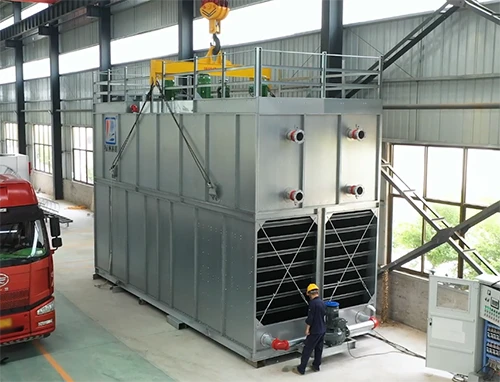
II. Heavier Weight, Higher Requirements for Installation Support
The Issue:
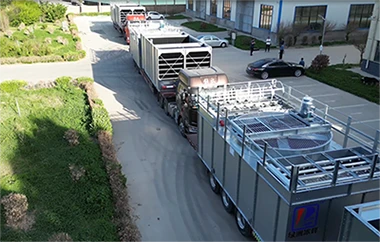
Because a closed-circuit cooling tower has additional heat exchange coils and more structural support, its overall weight is significantly greater than that of an open tower with the same cooling capacity. Large closed-circuit towers are especially heavy when filled with water.
Specific impacts:
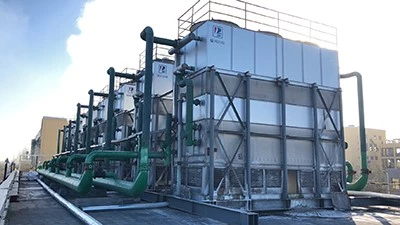
Higher load-bearing requirements for rooftops. Installing a closed-circuit tower on an older factory roof may require structural reinforcement, adding extra cost.
More difficult transportation and lifting, requiring larger lifting equipment and more complex lifting plans.
Some projects with space constraints (e.g., basements, mezzanines) may not be able to accommodate large closed-circuit towers.
How to address it:
During the selection phase, confirm the load-bearing capacity of the installation location with a structural engineer. If the rooftop cannot support the weight, consider multiple smaller closed-circuit towers distributed across the area, or choose a lightweight tower design with optimized structure.
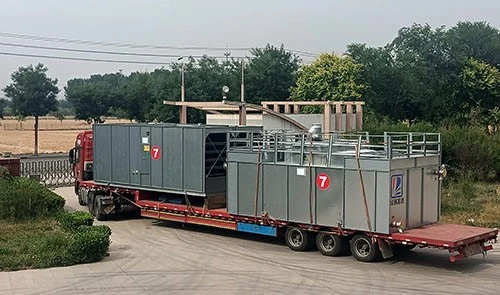
III. Additional Freeze Protection Measures Needed in Winter
The Issue:
The spray water system and external piping of a closed-circuit cooling tower are at risk of freezing in cold winter conditions. While the cooling medium in the internal circuit can be antifreeze or pure water, the spray water in the external circuit can easily freeze if not drained or heated.
Specific problems:
Water inside the spray pump, piping, and nozzles can freeze, causing the pump casing and pipes to crack
Ice formation on the fill and coil surfaces reduces heat exchange efficiency and can even crush the structure
In northern regions, if the tower is shut down in winter, all spray water must be drained
If winter operation is required, freeze protection measures such as electric heat tracing or steam heating may be needed
How to address it:
When shutting down in winter, thoroughly drain the spray system and piping
For winter operation, configure electric heat tracing or connect to steam heating
Choose a closed-circuit tower design with automatic draining capability
Use antifreeze (e.g., a glycol solution) in the internal circuit instead of pure water
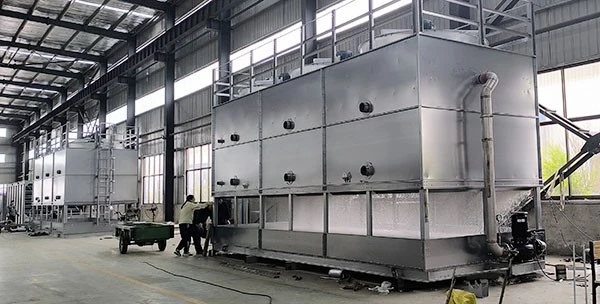
IV. Relatively More Difficult Maintenance
The Issue:
A closed-circuit cooling tower has a more compact structure than an open tower, with multiple internal components such as heat exchange coils, spray piping, and fill material. Maintenance access is relatively limited.
Specific problems:
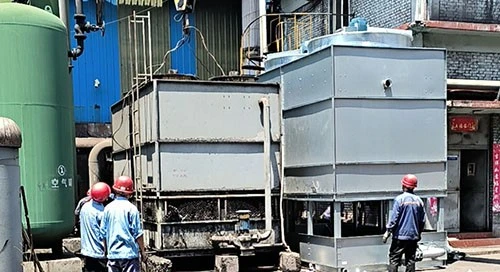
If a coil leaks, repair is complicated. It requires draining the spray water, removing part of the casing, and sometimes welding repair.
Cleaning the inside of the coils is more difficult than cleaning the fill of an open tower. If poor water quality causes scaling inside the coils, chemical cleaning or high-pressure water jetting may be required.
Maintenance requires skilled technicians. General factory maintenance personnel may not have experience with closed-circuit towers.
How to address it:
Choose a closed-circuit tower with high-quality coil materials to reduce the risk of leakage from the source
Treat the water before installation to reduce the possibility of scaling inside the coils
Sign a long-term maintenance agreement with the manufacturer, with a professional team responsible for maintenance
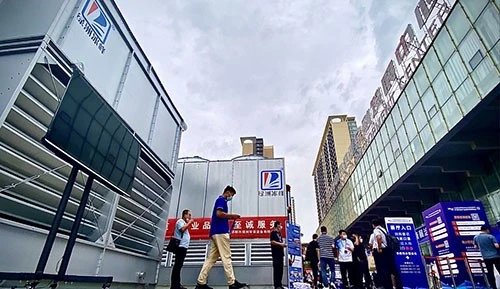
V. Still Has Some Requirements for Water Quality
The Issue:
In a closed-circuit cooling tower, the cooling medium circulates inside sealed coils and never contacts the air, so there is no issue of external impurities entering the system. However, the spray water (the external circuit) is still exposed to the air.
Specific problems:
As spray water evaporates, the concentration of minerals in the water gradually increases. If not controlled, scale can still form on the external surface of the coils.
In hard water areas, without water treatment measures, scale can still form on the external coil surface, reducing heat exchange efficiency.
Impurities in the spray water (dust, algae, etc.) can clog the nozzles.
How to address it:
Blow down the system regularly to control the concentration cycles of the spray water
Install water treatment equipment (e.g., a water softener, automatic chemical dosing device)
For areas with particularly poor water quality, choose a hybrid flow closed-circuit tower (the spray water is pre-cooled by the fill first, reducing the risk of scaling)
Summary
| Disadvantage | Impact | Countermeasure |
|---|---|---|
| Higher initial investment | Large upfront expense | Consider lifecycle cost; payback in 2-3 years |
| Heavier weight | Higher rooftop load requirements | Conduct structural assessment beforehand; use distributed layout |
| Freeze risk in winter | Possible cracking in cold regions | Drain system, use electric heat tracing, or use antifreeze |
| More difficult maintenance | Requires skilled technicians | Sign a maintenance agreement; choose high-quality coils |
| Spray water can still scale | External circuit needs maintenance | Regular blowdown; install water treatment |
Conclusion:
The disadvantages of closed-circuit cooling towers are mainly in five areas: higher initial investment, heavier weight, freeze protection needs, more difficult maintenance, and potential scaling in the external circuit. However, most of these disadvantages can be avoided or mitigated through proper design, correct selection, and standard operation and maintenance practices.
For most industries that have high requirements for water quality, equipment life, and operational stability (such as data centers, chemical plants, pharmaceutical manufacturing, and food processing), the disadvantages of closed-circuit towers are far outweighed by their advantages. For temporary projects with extremely tight budgets, very good water quality, and low requirements for equipment life, an open tower may still be an option.
Oasis Bingfeng - 24 years focused on the R&D and manufacturing of closed-circuit cooling towers. We not only tell you the advantages of closed-circuit towers but also honestly explain their limitations, helping you make the best choice for your specific needs.
Send Inquiry