


Application Of Closed-Circuit Cooling Towers in The Metal Heat Treatment And Surface Finishing Industry
Jun 12, 2026
Leave a message
Application of Closed-Circuit Cooling Towers in the Metal Heat Treatment and Surface Finishing Industry
Metal heat treatment and surface finishing are fields with extremely strict temperature control requirements. Processes such as quenching, tempering, vacuum furnace operation, and plating baths all depend on a stable, clean cooling system.
But the cooling system is often the "hidden killer" on the production line. Many factories still use traditional open cooling towers. After a few years, scale builds up thick in the furnace water jackets, temperatures can't be controlled, product quality fluctuates, and entire furnace loads can be scrapped. One scrapped load can cost hundreds of thousands.
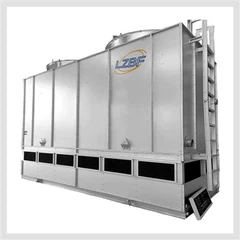
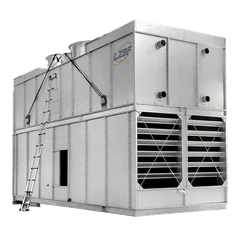
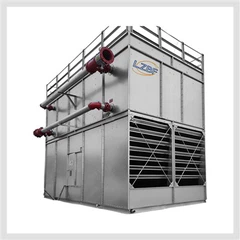
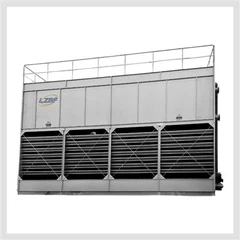
Closed-circuit cooling towers are replacing open towers as the better choice for the heat treatment and surface finishing industries.
Let's look at several typical applications.
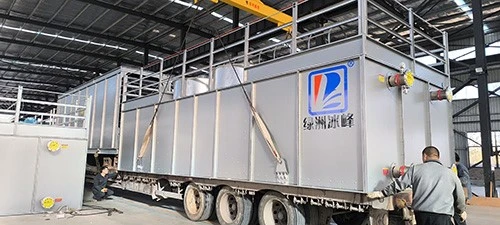
Application 1: Quenching Furnace Cooling
Quenching involves heating a workpiece above its critical temperature and then cooling it rapidly to obtain a martensitic or bainite structure. The cooling rate directly affects the hardness and toughness of the workpiece.
In common "external cooling" methods, circulating cooling water flows through the furnace jacket to remove heat. The quality and temperature stability of this cooling water are critical.
Problems with open cooling towers:
The circulating water in an open tower is directly exposed to the air. Leaves, dust, and impurities constantly enter the system. Calcium and magnesium ions become concentrated due to evaporation, forming thick scale on the inner walls of the furnace water jacket. Scale is a poor conductor of heat - the furnace wall temperature becomes uneven, causing large hardness variations across different parts of the workpiece, or even cracks. In severe cases, scale blocks the water passages, the furnace overheats locally and deforms, and the entire furnace is scrapped.
How a closed-circuit cooling tower solves the problem:
A closed-circuit cooling tower uses a fully closed loop. The cooling water in the furnace jacket circulates inside sealed coils, never contacting the air. Impurities cannot enter, and there is no evaporation or concentration. The inner walls of the furnace jacket remain clean and free of scale. The furnace wall temperature is uniform, quenching quality is stable, and the furnace life is greatly extended.
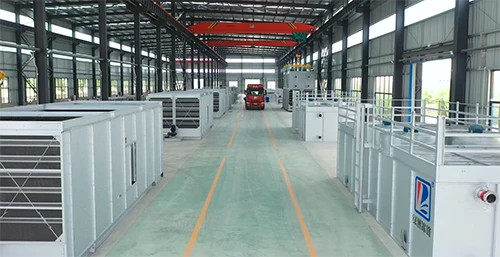
Application 2: Vacuum Furnace Cooling
Vacuum furnaces perform heat treatment at high temperatures and require extremely high sealing integrity. The cooling system is responsible for cooling the furnace shell, heat exchanger, and vacuum pump set.
Problems with open cooling towers:
The circulating water in an open tower contains dissolved oxygen, impurities, and microorganisms. When this water enters the vacuum furnace cooling jacket, it causes corrosion and scaling at high temperatures. If the furnace water jacket corrodes through, vacuum integrity is lost, and the entire furnace load is scrapped. Vacuum furnaces are expensive and time-consuming to repair.
How a closed-circuit cooling tower solves the problem:
A closed-circuit cooling tower uses pure water or softened water in its closed loop, containing no dissolved oxygen or impurities. The closed loop prevents external contamination. The furnace water jacket neither corrodes nor scales. The vacuum furnace operates stably for long periods, with greatly extended intervals between repairs.
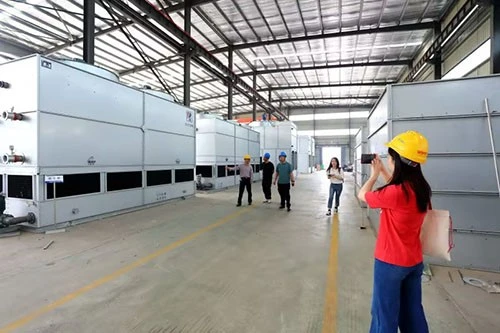
Application 3: Plating Bath Cooling (Zinc/Chromium)
During electroplating, the electrolyte in the plating bath heats up due to the electric current. If the temperature gets too high, additives decompose, coating quality deteriorates, and current efficiency drops. Therefore, the plating bath requires continuous cooling.
Problems with open cooling towers:
An open tower cools the plating solution via a heat exchanger. But the open water system easily clogs the heat exchanger, reducing heat transfer efficiency and causing plating bath temperature to go out of control. Worse, if the heat exchanger leaks, impurities and microorganisms from the open water contaminate the expensive plating solution. The entire bath is ruined - a huge loss.
How a closed-circuit cooling tower solves the problem:
A closed-circuit cooling tower can use pure water as the cooling medium in a closed loop - no scaling, the heat exchanger stays efficient. Even if the heat exchanger accidentally leaks, pure water does not contaminate the plating solution. Plating bath life is extended, and plating quality remains stable.
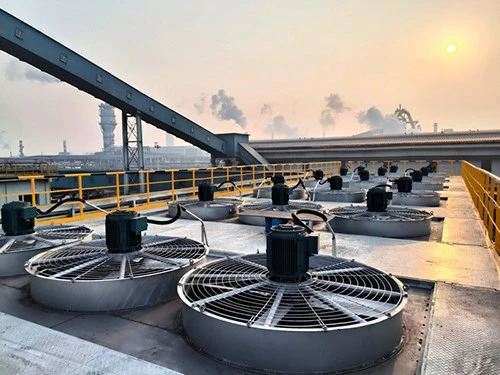
Application 4: Rectifier Cooling for Anodizing
In the anodizing process, rectifiers convert AC to DC power for the anodizing bath. The rectifiers generate a large amount of heat during operation and require continuous cooling.
Problems with open cooling towers:
Poor water quality from an open tower causes scale buildup and clogging in the rectifier's internal water cooling passages. Cooling flow decreases, the rectifier temperature rises, electronic components age faster, and the rectifier can even burn out. Replacing a rectifier costs hundreds of thousands, and production losses are even greater.
How a closed-circuit cooling tower solves the problem:
A closed-circuit cooling tower provides clean cooling water to the rectifier. Passages stay free of scale and clogging. The rectifier maintains normal operating temperature, equipment life is extended, and failure rates drop significantly.
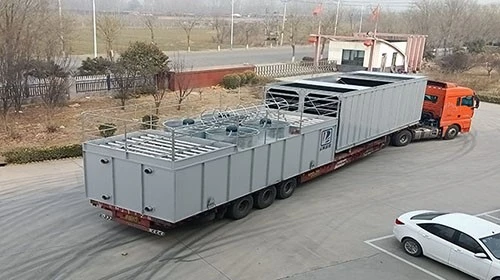
Summary: Why Are Closed-Circuit Cooling Towers Better for Heat Treatment and Surface Finishing?
| Comparison | Open Cooling Tower | Closed-Circuit Cooling Tower |
|---|---|---|
| Water Quality | Dirty, impurities, scale-prone | Clean, pure water loop, no scale |
| Equipment Life | Prone to corrosion, clogging, short life | No corrosion, no clogging, long life |
| Product Quality | Temperature fluctuates, inconsistent quality | Stable temperature, consistent quality |
| Maintenance Cost | Frequent cleaning, repairs, tube replacement | Largely maintenance-free |
| Downtime Risk | High | Extremely low |
For the heat treatment and surface finishing industries, the cooling system is not auxiliary equipment - it is a core link that determines product quality and production costs. A closed-circuit cooling tower may cost more upfront than an open tower, but what it saves is:
Hundreds of thousands in furnace repairs
Tens of thousands to hundreds of thousands in bath contamination losses
Hundreds of thousands in rectifier replacement
Losses from scrapped product
Losses from production downtime
Oasis Bingfeng - 24 years focused on closed-circuit cooling towers. Providing scale‑free cooling solutions for the heat treatment and surface finishing industries.
Send Inquiry