


Technical Features Of Closed-Circuit Evaporative Coolers
Jun 17, 2025
Leave a message
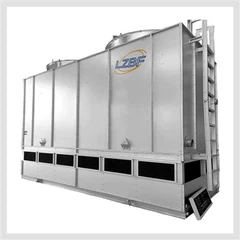
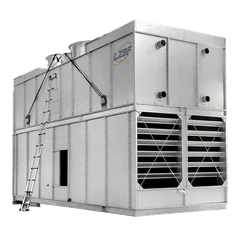
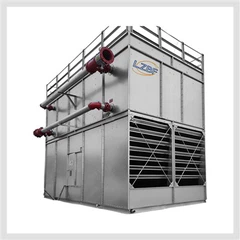
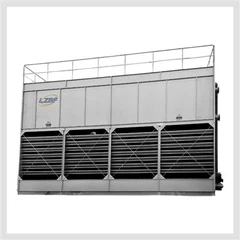
Closed-circuit evaporative coolers are highly efficient and energy-efficient cooling devices widely used in industrial, commercial, and HVAC applications. Their core principle is to reduce the temperature of the circulating medium by absorbing heat through water evaporation, while also protecting the medium from contamination through a closed circulation system. Compared to traditional open cooling towers or dry coolers, closed-circuit evaporative coolers offer significant advantages in energy efficiency, environmental friendliness, and reliability.
Efficient Evaporative Cooling Mechanism
Closed-circuit evaporative coolers use evaporative cooling technology, leveraging the ability of water to absorb large amounts of latent heat during evaporation. This allows them to reduce the temperature of the circulating medium (such as water, glycol solution, or process fluid) to near the wet-bulb temperature. The operating process typically involves spraying water onto the heat exchange tubes to form a film. Air flowing over the tubes removes the moisture and reduces the temperature of the medium inside. Because the evaporation process acts directly on the heat exchange surface, the cooling efficiency is far superior to dry cooling methods such as natural convection or forced air.
Closed Circulation Preserves Media Purity
Unlike traditional open cooling towers, the circulating medium in a closed system flows within closed pipes, avoiding direct contact with the outside air. This design effectively prevents the ingress of dust, impurities, microorganisms, or corrosive chemicals, thereby extending the service life of the medium and reducing the risk of scaling, corrosion, and biofouling. This feature of closed-circuit coolers is particularly important for industrial applications with stringent water quality requirements, such as food processing, pharmaceuticals, and precision manufacturing.
Energy Savings and Environmental Protection, Lower Operating Costs
Closed-circuit evaporative coolers typically consume less energy than traditional cooling solutions. The power of their fans and pumps can be adjusted according to operating conditions, and some advanced systems feature variable frequency control technology to further optimize energy efficiency. Furthermore, because evaporative cooling relies on the wet-bulb temperature of the ambient air rather than its dry-bulb temperature, in temperate climates, its cooling performance can even approach free cooling, significantly reducing reliance on mechanical refrigeration (such as chillers), thereby lowering overall operating costs and carbon emissions.
Intelligent Control and Modular Design
Modern closed-loop evaporative coolers are commonly integrated with intelligent control systems that monitor parameters such as water temperature, air humidity, and flow rate in real time, automatically adjusting variables like spray volume and fan speed to ensure optimal system operation. The modular design allows for flexible expansion based on actual needs, facilitating maintenance and upgrades. Some products also support remote monitoring, further enhancing operational efficiency.
Adaptable and Widely Used
Closed-loop evaporative coolers can adapt to a wide range of operating conditions, including high-temperature, dusty, and corrosive environments. By utilizing heat exchange tubes made of various materials (such as copper, stainless steel, or titanium), the devices can handle acidic and alkaline fluids or extreme temperatures. Typical applications include:
Industrial cooling: Cooling circulating water for generator sets, compressors, and hydraulic systems;
HVAC: As auxiliary equipment for condensers or process cooling;
Data centers: Providing efficient cooling solutions for server cabinets. Conclusion
Closed-circuit evaporative coolers, with their efficient evaporative cooling capabilities, media protection, energy-saving advantages, and flexible adaptability, have become a key choice in modern cooling technology. As industry demands for energy efficiency and environmental protection increase, this technology will continue to evolve towards intelligent, low-maintenance, and high-reliability solutions, providing optimized solutions for cooling needs across various industries.
Send Inquiry