

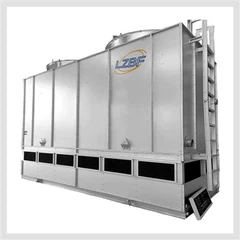
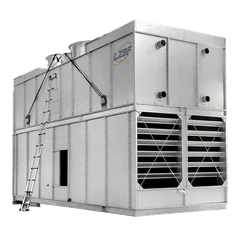
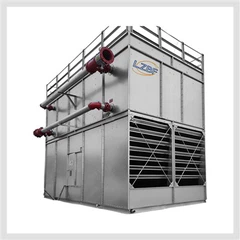
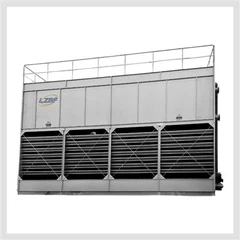

Winter Maintenance and Upkeep of Closed Cooling Towers
Jan 31, 2026
Leave a message

Closed cooling towers are an ideal solution for a wide range of applications, from water-source heat pumps to process cooling.
Integrating the functions of a cooling tower and a plate heat exchanger, a closed cooling tower maintains the fluid to be cooled in a clean closed loop, minimizing the risk of contamination to other system components.
The winter operation or shutdown preparation of closed cooling towers is similar to that of open cooling towers, yet with additional requirements.
Anti-Freezing Protection for Coil Pipes
Coil pipes are the most expensive components of closed cooling towers, and their freezing and bursting must be prevented. Draining coil pipes is one anti-freezing method but has limitations. Draining galvanized steel pipes is only allowed in emergency situations and cannot be part of standard operating procedures, as the inner surfaces of coil pipes are ungalvanized and prone to rapid corrosion. If necessary, stainless steel and copper coil pipes can be drained, but the process is not easy and requires appropriate system modifications.

To avoid the complicated operation of draining coil pipes, the most common practice is to keep the closed cooling tower in circulation and take anti-freezing measures for the medium inside the coil pipes. If the minimum outlet temperature of 7°C-10°C for coil pipes and requirements such as minimum flow rate cannot be met, ethylene glycol must be added to lower the freezing point of the medium in the coil pipes. Manufacturers of closed cooling towers can provide the coil pipe outlet temperatures under low-temperature conditions to assist in formulating anti-freezing measures for coil pipes.


Two types of glycols are commonly used at present: food-grade propylene glycol with lower efficiency, and toxic ethylene glycol with lower viscosity and higher efficiency at low temperatures. Due to its toxicity, ethylene glycol is generally limited to industrial applications, while propylene glycol is the preferred choice for most HVAC (Heating, Ventilation and Air Conditioning) applications.

To determine the required amount of glycol, first refer to the data sheets provided by glycol manufacturers, where you can find the volume percentage of glycol required for anti-freezing at the minimum ambient temperature. Glycol data sheets list the dosages required for anti-freezing and anti-bursting-the anti-freezing dosage must be used instead of the anti-bursting one. Once the required dosage is determined, the selection of the closed cooling tower and circulating pump can be fine-tuned.
Here are some tips for handling glycol solutions: When the system is filled with the medium, glycol must be used for anti-freezing in cold weather until the system is drained and out of service. Even for 24/7 operation, glycol protection is recommended to prevent freezing caused by unforeseen shutdowns and maintenance.
Do not simply drain a portion of the medium and add the corresponding glycol, as this cannot effectively protect all parts of the entire system. Glycol must be fully mixed with the medium and evenly distributed throughout the system. Only industrial ethylene glycol with corrosion inhibitors shall be used; automotive or other grades of antifreeze are prohibited. In addition, avoid mixing glycols from different manufacturers if possible to prevent chemical incompatibility.
Anti-Freezing Protection for Water Pans
Although glycol prevents the medium in coil pipes from freezing and protects the coil pipes, the external circulating water pan has no anti-freezing protection. If the external circulating water pan is not drained in winter, resistance or steam heaters may be required to prevent the freezing of the external circulating water system when the closed cooling tower is not in operation. The heat input required for the water pan is determined by ambient conditions and can be found in the data sheet of the selected closed cooling tower. Alternatively, the external circulating water can be drained to a sump or a heated building to prevent freezing.

Improper angle of fan blades
A standard tilt angle arrangement is specified for fan blades during design and manufacturing. If there is a deviation in the angle of fan blades during operation, angle correction must be carried out when the equipment is shut down to ensure the normal operation of the fan and achieve the designed standard ventilation volume.

Further Considerations
Given the difficulties and associated risks of draining closed cooling tower coil pipes, for certain applications such as HVAC water-source heat pumps, the common practice is to circulate boiler fluid medium in the closed cooling tower. In this case, the external circulating water can be drained or properly heated since there is no longer a need to cool the coil pipes.
In addition, boiler heat will be lost through the coil pipes, so it is advisable to install air dampers to prevent air circulation around the coil pipes. While air dampers can prevent most heat loss, thermal insulation materials can further reduce it. These two technologies minimize the heat loss of coil pipes and avoid the oversizing of boilers and increased energy consumption costs.


Closed Cooling Tower
Efficient Cooling: High heat exchange efficiency, stable temperature control
Stable & Reliable: Closed design, minimal failure rate
Compact Structure: Small footprint, easy installation
Easy Maintenance: Simple cleaning, low cost


Send Inquiry