


Winter Anti-Freezing Measures For Closed-Circuit Cooling Towers
Nov 08, 2025
Leave a message
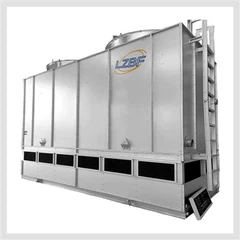
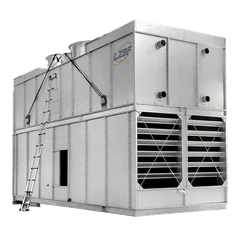
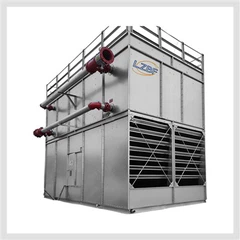
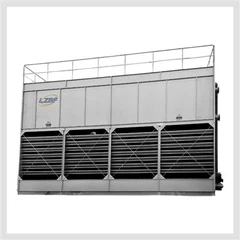
As harsh cold approaches, many friends in northern China have likely experienced pipe bursts caused by low temperatures. While most facility management personnel are familiar with open-circuit cooling towers, they know little about closed-circuit ones. Closed-circuit cooling towers are commonly used for equipment requiring high-quality cooling water. This article focuses on the structure of closed-circuit cooling towers and their winter anti-freezing measures.
Introduction to Closed-Circuit Cooling Towers
Working Principle
A closed-circuit cooling tower features two water circulation systems: one for internal spray water (tap water) and another for cooling water (RO water) supply and return.
The main cooling water inlet pipe enters the tower and splits into multiple small heat exchange copper tubes. These tubes are closely arranged with the tower's packing, running from bottom to top before converging into the main outlet pipe. The cooled water is sent to external heat exchange equipment and then recycled back to the tower, forming a fully closed cooling water loop.
The internal spray water operates as an open system supplemented by tap water. Stored in the bottom sump, the spray water is pumped to the water distributor at the top of the packing via a spray pump. It flows downward, spraying the packing and stainless steel cooling water tubes to facilitate forced heat exchange between the spray water and the cooling water inside the tubes, thereby lowering the cooling water temperature. Meanwhile, driven by the top fan, water evaporation further reduces the spray water temperature.
Key Components
Spray Pump: Provides power for the internal spray water to enable downward flow and forced heat exchange with the cooling water, reducing the cooling water temperature.
Fan: Equipped with a variable-frequency motor, it controls the spray water temperature by adjusting the fan frequency to regulate water evaporation.
Heat Exchange Copper Tubes: Ensure high cooling water quality while enhancing heat transfer efficiency with the spray water (made of materials with excellent thermal conductivity). However, their structure results in relatively high pressure loss.
Packing: Extends the contact time between the spray water and copper tubes, promoting more thorough heat exchange.

Winter Anti-Freezing Measures for Closed-Circuit Cooling Towers
Utilize the Project's Own Terminal Heat Load
This is the most energy-efficient anti-freezing method. The terminal heat load raises the temperature of the returned cooling water. When the return water enters the closed-circuit cooling tower, the fan drives heat exchange between the copper tubes and cold air. This not only lowers the water temperature but also prevents freezing in the tower and outdoor pipelines.
Use Antifreeze Agents
Antifreeze agents are the optimal choice for preventing pipe freezing and are widely used in automotive, electronic, and other industries with excellent anti-freezing effects.
Physical Antifreeze Agents: Offer convenient, safe, and reliable operation and maintenance.
Electronic Control Systems: Involve potential uncontrollable factors, leading to inconvenient maintenance and higher costs.
Operational Notes: During winter operation, adjust measures according to actual weather conditions. In extreme or sudden temperature drops, if a cooling tower is not in use, promptly forcefully drain water from the coils or keep it running with heat load to maintain sufficient circulating water flow and heat transfer-avoiding water freezing inside the coils.
Common Misconception: Some operators mistakenly believe that reducing water flow to increase temperature difference prevents freezing. However, closed-circuit cooling towers consist of multiple coil groups. Reduced system flow causes pressure imbalances, resulting in slow or stagnant water flow in some coils, which easily leads to freezing and pipe bursts. Therefore, appropriately increase circulating water flow in winter to ensure water circulation in all coil groups.
Forced Drainage Method
When cooling towers are not needed in winter, open the coil drain valves and blow compressed air into the coils to completely drain water before the ambient temperature drops below 0℃. Note: Control the compressed air pressure between 0.3–1MPa. Excessively low pressure may leave residual water, while excessively high pressure could exceed the coils' pressure-bearing capacity.
Insulate Spray Pumps and Piping
If heat exchange between cold air and copper tubes (with the fan at full frequency) fails to meet the required water temperature, supplement spray water and start the spray pump. However, load fluctuations may cause freezing of the spray water and pump. In such cases:
Insulate and heat-trace the spray piping and pump, and keep the spray pump running to maintain water circulation and prevent freezing.
Prevent ice formation on the packing surface, which could block air intake and reduce heat dissipation efficiency.
Alternatively, adopt an intelligent control system: the fan runs forward for a set period, stops, and then reverses for a set duration to blow hot air out of the tower and melt ice.
Send Inquiry