


Application Scenarios Of Closed-Circuit Cooling Towers In The Steel Industry
Nov 10, 2025
Leave a message

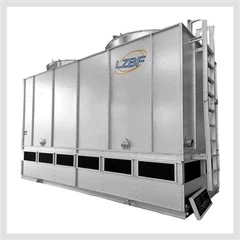
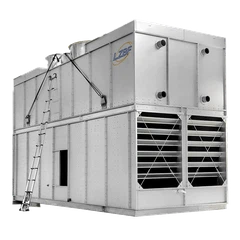
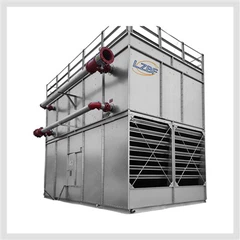
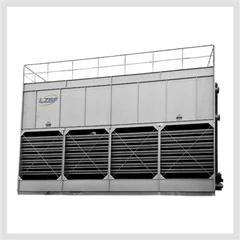
As the name implies, a closed-circuit cooling tower is equipment that cools the medium in a sealed environment. Compared with conventional FRP (Fiberglass Reinforced Plastic) open-circuit cooling towers, it features a fully enclosed structure. Thus, closed-circuit cooling towers address key pain points of open-circuit counterparts, including severe scaling, high water consumption, impurity ingress, algae growth, and excessive water drift.
Working Principle
The cooled medium flows through the metal heat exchange tubes of the closed-circuit cooling tower, transferring heat only to the water film covering the outer surface of the tubes. The thin water film rapidly absorbs heat, evaporates into water vapor, and is discharged to the external environment via the tower's exhaust system, completing the heat transfer process.
Closed-circuit cooling towers are widely used in multiple production links of the steel industry.
Application Scenarios
The steel industry involves complex processes such as high-temperature smelting and rolling. Closed-circuit cooling towers are mainly applied in the following scenarios:
Ironmaking and Steelmaking Processes
Blast Furnace Cooling Systems: Cool key components such as the blast furnace shell, tuyeres, and hot blast valves to prevent high-temperature deformation.
Converter/Electric Furnace Cooling: Cool equipment like converter oxygen lances, furnace shells, and electric furnace electrodes to ensure stable operation under high temperatures.
Continuous Caster Cooling: Precisely control the temperature of the caster's mold and secondary cooling zone to guarantee billet forming quality.
Steel Rolling and Heat Treatment Processes
Rolling Mill Hydraulic Systems: Cool hydraulic oil and lubrication systems of rolling mills to avoid equipment failures caused by excessive oil temperature.
Roll Cooling: Control roll temperature to extend service life and ensure rolling precision.
Annealing Furnaces/Quenching Lines: Cool equipment or steel strips after heat treatment to maintain process stability.
Auxiliary Systems
Generator Set Cooling: Cool circulating water for gas turbines or waste heat power generation systems in steel mills' self-owned power plants.
Air Compressor Cooling: Provide stable cooling for compressed air systems to ensure the efficiency of pneumatic equipment.
Chemical Water Treatment: The closed system prevents cooling water from contacting impurities, reducing scaling and corrosion.
Working Process
Closed-circuit cooling towers achieve cooling through "indirect heat exchange," with the core process divided into two cycles: internal circulation (process medium) and external circulation (spray water + air).
Internal Circulation
Process: High-temperature cooling medium (e.g., water, oil, or ethylene glycol solution) flows out of production equipment (e.g., blast furnaces, rolling mills) and enters the coils of the closed-circuit cooling tower.
Heat Exchange: Heat is transferred through the coil walls to the external spray water. The cooled medium returns to the production equipment for recycling.
Advantage: The medium is isolated from the external environment, avoiding contamination, scaling, and evaporation loss.
External Circulation (Open-Circuit Heat Dissipation)
Spray Water Circulation: A spray pump uniformly sprays water onto the coil surface to absorb heat from the internal medium.
Forced Air Convection: A fan drives air through the coils and spray water, reducing water temperature via evaporative heat dissipation and sensible heat exchange.
Water Recycling: The cooled spray water falls into the bottom water tank for reuse. A small amount of evaporation loss is compensated by the water supply system.
Intelligent Control
Temperature Regulation: Automatically adjust fan speed or spray water volume according to process requirements to optimize energy consumption.
Winter Antifreeze: In cold regions, electric heat tracing or ethylene glycol solution can be installed to prevent coil freezing.
Advantages and Adaptability to the Steel Industry
Water Conservation and Environmental Protection: High recycling rate reduces water consumption, aligning with the steel industry's green transformation needs.
Contamination Prevention: The enclosed design prevents dust and iron filings from entering the cooling system, protecting sensitive equipment (e.g., hydraulic systems).
Stability and Efficiency: Precise temperature control ensures continuous production processes and improves steel quality.
Easy Maintenance: Coils are made of corrosion-resistant materials (e.g., 304 stainless steel), resulting in low long-term operating costs.
Send Inquiry