

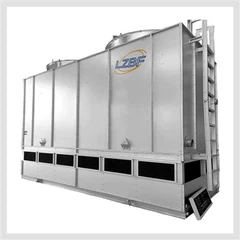
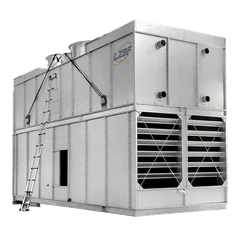
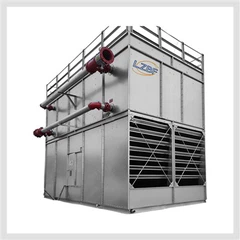
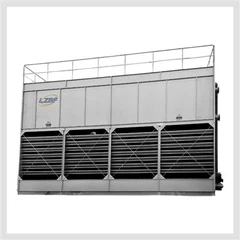

Why is the standard configuration for blast furnace cooling the closed cooling tower?
Oct 18, 2025
Leave a message
In the blast furnaces of iron and steel metallurgical enterprises, the interior contains high-temperature molten iron, while the exterior is a shell made of the same metal material. To prevent the shell from melting, refractory bricks are installed adjacent to the molten iron to reduce heat transfer to the shell, increase thermal resistance, and expand the temperature difference. Meanwhile, a circulating water system, referred to as the water-cooled wall, is added inside the metal shell. Low-temperature circulating water flows through it to remove heat.
More than a decade ago, due to the lack of recognition of closed cooling towers, open cooling towers were used to cool the water-cooled walls. However, unavoidable defects were discovered after use:
Scaling Problem
As circulating water is cooled by evaporation in open towers and pools, scale-forming ions in the water do not separate but become continuously concentrated as water molecules evaporate. Eventually, the concentration exceeds saturation, leading to crystallization and precipitation in various parts of the system-especially inside the water-cooled wall. The gradual thickening of scale on the inner wall severely impairs heat transfer, causing the temperature of the blast furnace shell to rise continuously and posing risks of the shell softening or even cracking. To address this, the metallurgical industry adopted demineralized water or purified water as the circulating medium. Nevertheless, no matter how thoroughly treated, impurities cannot be reduced to 0%. Over time, scale-forming ions will still exceed the saturation concentration.
Impurity Problem
Open towers and pools require full contact with air for heat exchange. Despite multiple filtration layers, various impurities in the environment can still enter the circulating system, causing blockages and serious consequences.
Algae Growth Problem
Large pools provide water volume buffering and enhance safety factors, but they also result in increased stagnant water with slow flow rates. This leads to massive algae growth, which is another cause of system blockages.
Water Resource Waste Problem
Waste stems from four aspects: increased evaporation, frequent blowdowns, drift loss from open towers, and water leakage from pools-all of which raise operational costs.
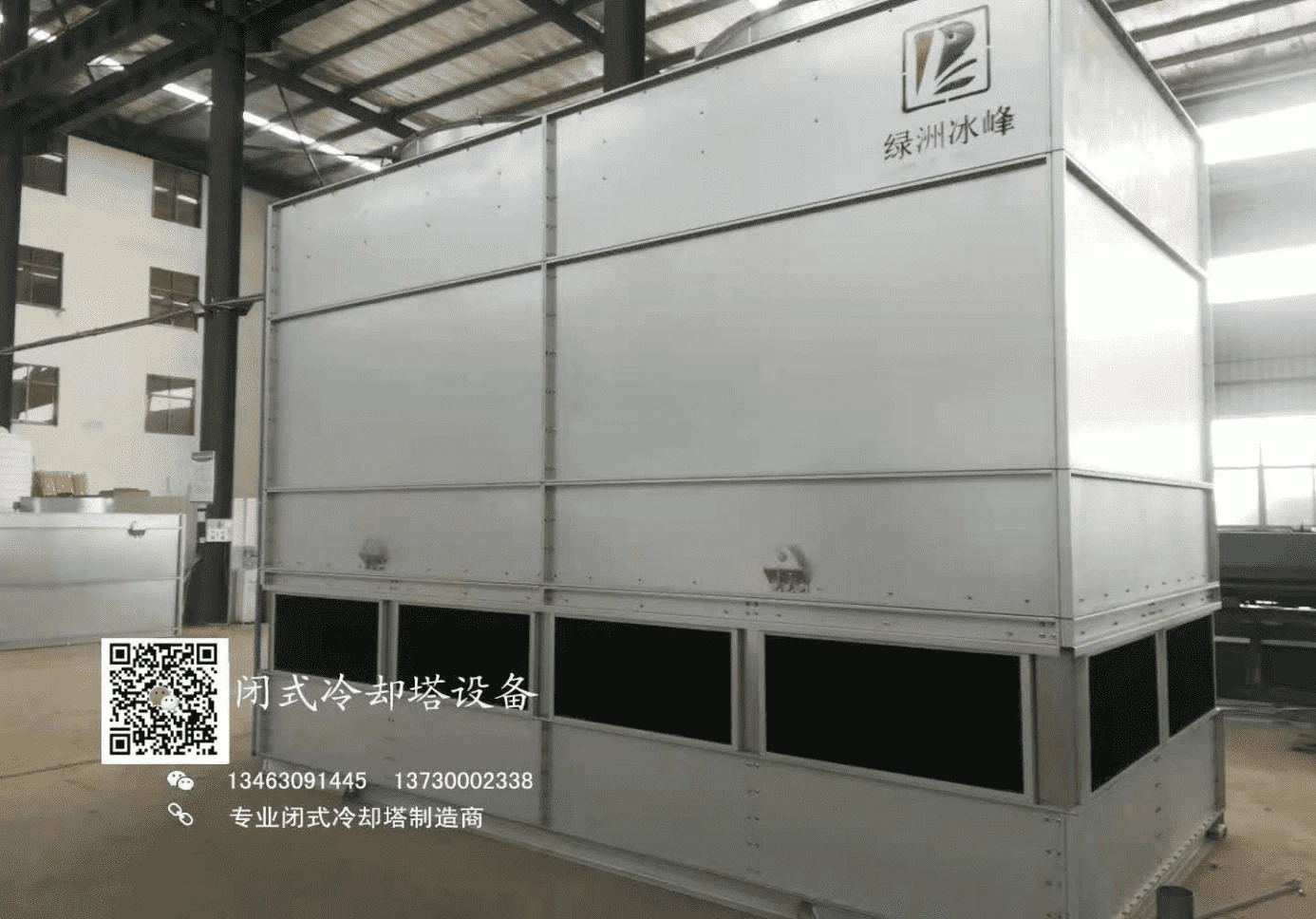
Today, with the continuous maturity of the design and manufacturing technology of closed cooling towers (also known as evaporative air coolers), they have become the standard configuration for blast furnace cooling. The aforementioned problems have been effectively eliminated, while operational costs have been reduced. Their advantages are as follows:
No Evaporation
It only cools without evaporation or consumption. The circulating medium is completely isolated from air with no contact at all, preventing medium evaporation loss and the entry of heat exchange impurities, thus ensuring the stability of the internal medium composition.
No Scaling
Since there is no evaporation, the concentration of scale-forming ions (such as calcium, magnesium, and sulfate) in the medium remains unchanged, eliminating scaling.
Easy Maintenance
All coils are fully visible, facilitating convenient maintenance and inspection.
Low Air Resistance
The equipment takes in air from four sides, resulting in low air resistance and reduced fan power consumption.
Send Inquiry