


Why Is the Bottom of a Cooling Tower Open?
Jul 11, 2026
Leave a message

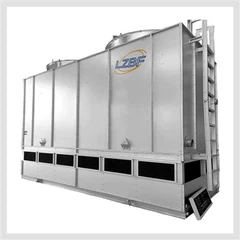
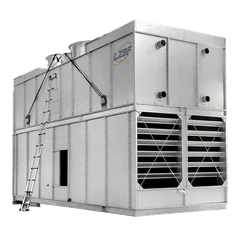
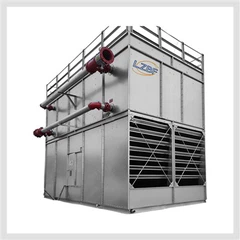
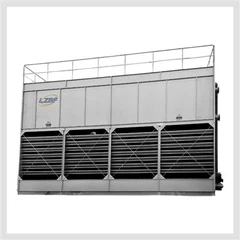
 Many people have noticed that most open and closed cooling towers do not have fully enclosed barriers at the bottom, leaving a large open area, some only fitted with protective grilles.
Numerous users wonder if fully sealing the bottom would deliver better dust and noise control. In fact, the open-bottom design is an essential requirement integrating heat exchange, drainage, maintenance and anti-freezing functions. Complete sealing will directly lead to ineffective cooling and frequent equipment failures, whose core functions are explained as follows one by one.


First, the open bottom serves as an air intake channel to guarantee convective heat exchange. The core working principle of cooling towers is that cold air fully contacts hot water to remove heat. Mainstream cross-flow and counter-flow cooling towers arrange air inlets at the lower section.
-
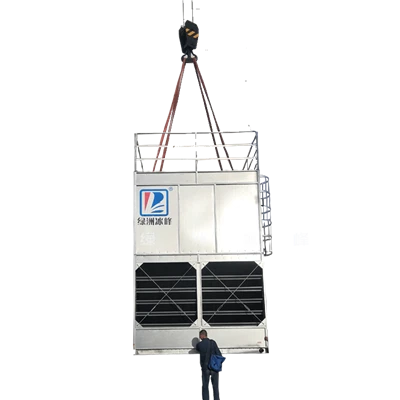 For counter-flow towers, hot water sprays down from the tower top while cold air flows upward through packing materials, enabling counter-contact heat exchange between cold and hot media.
 - In cross-flow towers, water flows horizontally, and the open bottom acts as a supplementary air inlet from the side and below. If the bottom is fully sealed, low-temperature outside air cannot smoothly enter the tower, creating a stagnant air cavity inside where hot air cannot escape.
- The heat exchange temperature difference will shrink sharply, the outlet water temperature keeps rising, fan load and power consumption surge, and supporting air compressors and chillers may even shut down due to high-temperature alarms. An open bottom forms a stable air duct and sufficient air intake, which is the basic structural design for the cooling function.
Second, the open bottom facilitates rapid water collection, sewage discharge and draining. During the spray circulation of cooling towers, sediment, limescale, algal sludge, fallen leaves and dust continuously settle into the bottom water collection tank.
- Without enclosed barriers at the bottom, drain outlets and collection pits are fully exposed. Accumulated sludge can be flushed directly during routine drainage without removing sealing panels. If the bottom is sealed, sludge will pile up in dead corners and become hard to clean, easily breeding legionella and green algae and clogging water distribution pipes and packing.
- When the tower is shut down in winter, the open bottom allows complete rapid drainage, preventing residual water trapped in a sealed base from cracking the shell and pipelines by freezing and greatly cutting maintenance costs for freeze damage. Meanwhile, drift water from spraying and condensed dripping water flow out directly through the bottom instead of accumulating inside a sealed base to corrode steel structures.
Third, the open bottom reserves ample operating space for routine maintenance. The bottom of cooling towers houses core components prone to faults, including circulating water pumps, makeup water valves, drain valves, filters, liquid level devices and pipe connectors.
-
 With no wall panels blocking the bottom, maintenance staff can walk under the tower directly to clean filter screens, inspect water pumps, replace valves and test chemical dosing ports without disassembling numerous sealing plates, greatly shortening maintenance time.
 - The spray water tanks and spray pumps of closed cooling towers are also installed in open areas, allowing packing cleaning and water eliminator replacement via bottom lifting operations.
- By contrast, a fully sealed base conceals internal pipelines in narrow, dim confined spaces that hinder operation. Leakage and corrosion issues cannot be detected timely, and minor faults may develop into permanent equipment scrappage.
Fourth, the open bottom reduces accumulated internal moisture and corrosion to extend service life.
-
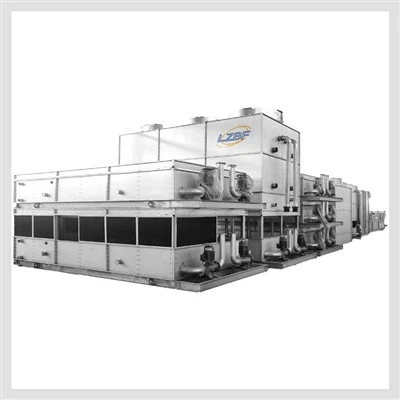 The interior of cooling towers maintains high humidity and mist all year round, and condensed water easily forms on metal shells.
 - If the bottom is sealed, moist air cannot escape, leaving the base in a long-term sealed humid environment that accelerates rusting and perforation of galvanized steel plates and stainless steel supports.
- The open structure enables vertical air circulation to carry away accumulated moisture at the bottom and slow corrosion. Rainwater can also drain straight out from the bottom without soaking the steel frame.
- In addition, bottom ventilation lowers the ambient temperature around water pumps and motors in hot summer, reducing high-temperature aging failures of electrical components.
Many users worry that an open bottom allows dust ingress and noise leakage. Manufacturers can install protective louvers, insect and dust screens, and noise reduction enclosures as supporting accessories to balance ventilation and protection without fully blocking air intake channels. While a fully sealed bottom may look neat, it breaks the core ventilation and heat exchange logic of cooling towers, triggering a series of problems including poor cooling performance, high energy consumption, hard-to-clean sludge and severe corrosion.

Send Inquiry