

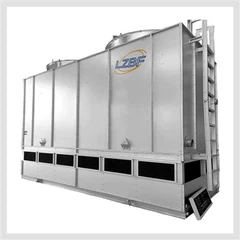
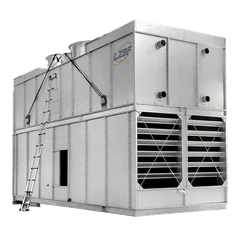
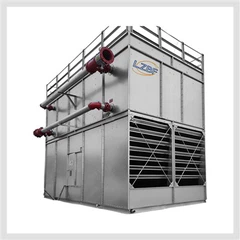
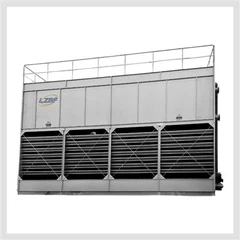

Which is better, an open circuit or a closed circuit?
Dec 30, 2025
Leave a message
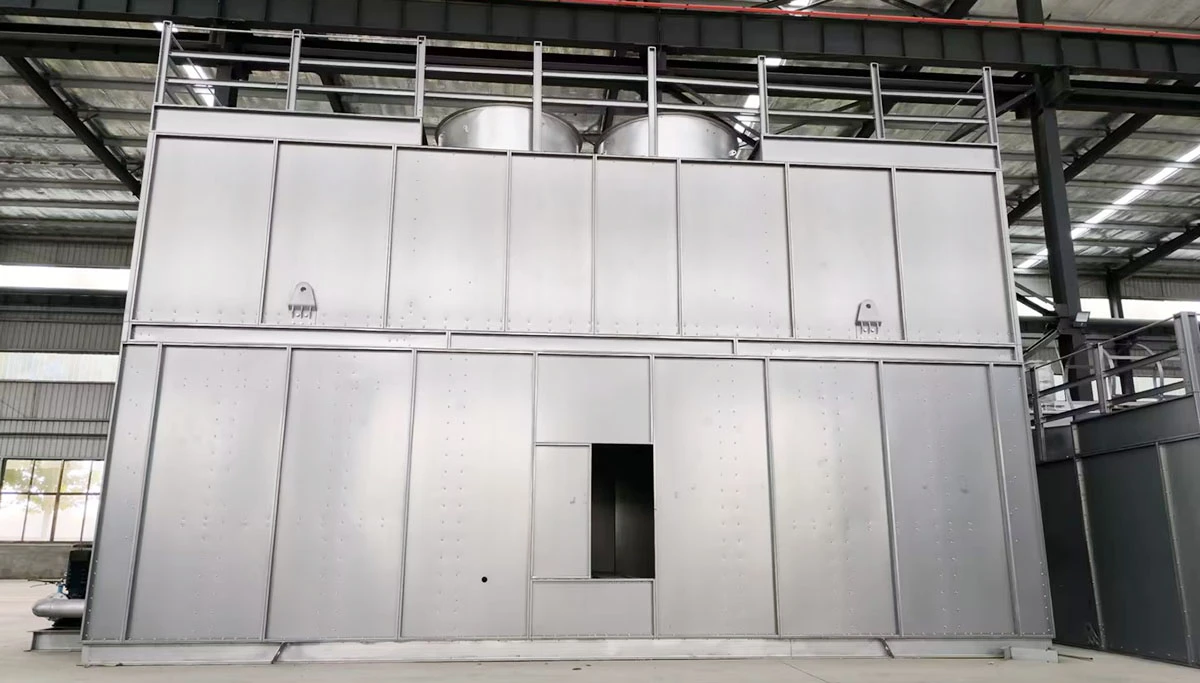
Open Circuit vs. Closed Circuit Cooling Systems: Which is Better?
This is a classic question in cooling system design. Simply put, there is no absolute "better"-only what is more suitable. Open circuits and closed circuits each have their own advantages and disadvantages in terms of principle, efficiency, cost, and application scenarios. Below, I will analyze them from multiple dimensions to help you make a decision based on your specific needs.
active members
years experience
events & challenges
expert instructors
Open Circuit
An open circuit, also commonly referred to as a "direct-flow" or "open" cooling system, is characterized by the direct contact of the coolant (usually water) with the atmosphere during its circulation.
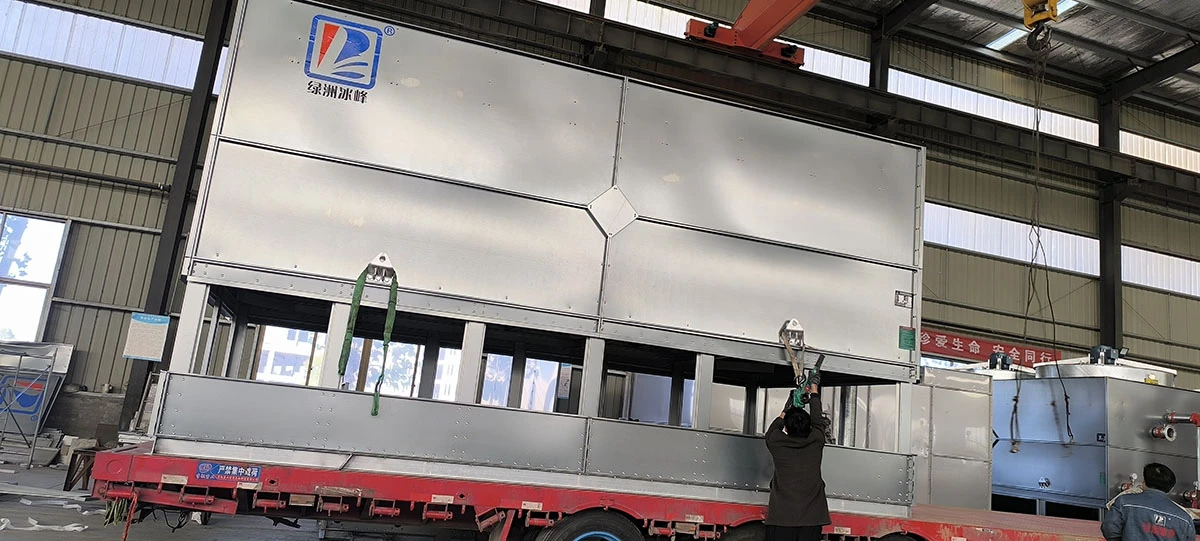
Working Principle
Heat Absorption: Heat is transferred from the cooled equipment (such as engines or generators) to the coolant.
Evaporation: As the heat-laden coolant passes through the radiator (condenser), it dissipates heat into the air through forced convection and natural convection.
Contact: The coolant undergoes direct heat exchange with the air in the radiator, which usually involves the evaporation of some water.
Recirculation: The cooled coolant is pumped back to the equipment to absorb heat again, completing the cycle.
Key Advantages
High Heat Dissipation Efficiency: Direct contact with air is a highly efficient method for heat dissipation, allowing for the rapid removal of large amounts of heat.
Simple Structure: The system is relatively simple, typically requiring only a pump, radiator, pipes, and fan.
Lower Cost: Initial equipment investment and maintenance costs are relatively low.
Easier Maintenance: Due to the coolant's contact with air, minerals, impurities, and other substances within the system can be more easily removed through blowdown, water replacement, etc.
Key Disadvantages
High Water Consumption: This is the most significant drawback of open circuits. The coolant continuously evaporates during heat dissipation, causing the liquid level to drop, requiring regular supplementation with fresh water.
Water Quality Degradation: Since primarily water evaporates, dissolved minerals, salts, and impurities become increasingly concentrated. This can lead to scaling and corrosion in pipes and radiators, severely affecting heat dissipation efficiency and system lifespan.
Air Pollution: Evaporated coolant (especially when antifreeze is used) can carry away some additives, potentially causing environmental impact.
Poor Anti-freezing Capability: To prevent freezing in winter, a large amount of antifreeze must be added to the coolant, significantly increasing costs.
Noise: High-speed fan rotation generates considerable noise.
Typical Applications
Open circuits are widely used in scenarios where extremely high heat dissipation efficiency is required, and water consumption and maintenance costs are not a primary concern.
Automotive Engines: This is the most typical application. Automotive engines generate enormous heat during operation, and an open cooling system efficiently dissipates heat while automatically compensating for liquid level changes through coolant expansion and contraction.
Marine Power Systems: Large ships' main engines and generators typically use open cooling systems, utilizing seawater as coolant, which is dissipated through the ship's outer hull or dedicated seawater radiators.
Power Plants: Some large generators employ open circuits, using water from cooling towers, rivers, or lakes for heat dissipation.
Closed Circuit
A closed circuit, also known as a "closed" or "recirculating" cooling system, is characterized by the circulation of coolant (usually antifreeze or special thermal oil) within a completely enclosed system, without direct contact with the atmosphere.

Working Principle
Heat Absorption: The coolant absorbs heat within the equipment.
Indirect Heat Dissipation: The heat-laden coolant is pumped to an isolated heat exchanger (often called a "cooler" or "condenser").
Heat Exchange: Inside the heat exchanger, the coolant transfers heat through the pipe wall to another independent fluid (usually water or air), thereby being cooled.
Recirculation: The cooled coolant is pumped back to the equipment to absorb heat again, completing the cycle.
Key Advantages
Zero Water Consumption: The coolant circulates within a closed system, with almost no evaporation loss, achieving zero water consumption.
Stable Water Quality: Since no water evaporates, the coolant's concentration and composition can remain stable for long periods, fundamentally solving scaling and corrosion issues.
Strong Anti-freezing Capability: By precisely controlling the coolant concentration (e.g., ethylene glycol concentration), anti-freezing capabilities ranging from -20°C to -50°C or even lower can be easily achieved, adapting to harsh cold environments.
Environmentally Friendly: A fully enclosed system prevents coolant volatilization and leakage, making it more environmentally friendly.
Low Noise: Closed systems typically use quieter pumps and heat exchangers instead of large fans, resulting in lower operational noise.
Key Disadvantages
Relatively Lower Heat Dissipation Efficiency: Compared to direct air contact, indirect heat exchange through pipe walls is slightly less efficient.
Complex System: Closed systems require additional components such as heat exchangers, expansion tanks, safety valves, and bypass valves, making the structure relatively complex.
Higher Cost: Initial equipment investment, coolant costs, and maintenance costs are generally higher than open systems.
Higher Maintenance Requirements: While water quality is stable, the coolant itself has a limited service life (usually 2-5 years) and needs regular replacement. Additionally, impurities may still deposit in the heat exchanger and require periodic cleaning.
Typical Applications
Closed circuits are the preferred choice in scenarios with strict requirements for water resources, water quality, anti-freezing performance, and operational noise.
Data Centers: IT equipment such as servers and switches generate heat that must be precisely controlled. Closed cooling systems provide stable, efficient cooling without water consumption, making them the mainstream choice for data centers.
Precision Electronics: Industrial control computers, medical devices, test instruments, etc., require stable operating temperatures to ensure accuracy and reliability.
Military Equipment: Tanks, armored vehicles, aircraft engines, etc., operate in extreme environments, and closed cooling systems provide reliable anti-freezing and anti-corrosion protection.
High-rise Buildings: For water conservation and environmental protection reasons, closed-circuit water systems are increasingly being adopted in the central air conditioning systems of modern high-rise buildings.
How to Choose? A Comparison Table
To provide a more intuitive comparison, I have summarized the key characteristics of both systems in the following table.
| Characteristic | Open Circuit | Closed Circuit |
|---|---|---|
| Heat Dissipation Efficiency | High | Relatively Lower |
| Water Consumption | High | Zero |
| Water Quality Management | Requires frequent blowdown, water replacement, chemical treatment; complex management | Stable water quality; almost no management required |
| Anti-freezing Capability | Weak; depends on external heating or frequent water changes | Strong; precisely adjustable |
| System Cost | Low | High |
| Maintenance Cost | Moderate | Moderate to High |
| Operational Noise | High; mainly from fans | Low; mainly from pumps |
| Environmental Impact | Significant; mainly water consumption and potential pollution | Minimal; mainly safe disposal of coolant |
| Typical Applications | Automotive, Marine, Power Plants | Data Centers, Precision Electronics, Military, High-rise Buildings |
Conclusion and Recommendations
Consider Closed Circuit When:
Water resources are severely limited: e.g., water-scarce areas or regions with high environmental requirements.
Water quality and system lifespan are prioritized: e.g., precision equipment or long-term industrial systems.
Operating in extremely low temperatures: requiring reliable anti-freezing protection.
Noise levels are a concern: e.g., in quiet office environments or residential areas.
Consider Open Circuit When:
Extremely high heat dissipation requirements: with low sensitivity to water consumption and maintenance costs.
Using low-cost natural water sources: e.g., near rivers, lakes, or seawater.
A simple, reliable, and easily maintainable system is needed: with a limited budget.

In summary, closed circuits represent the development direction of modern cooling technology. In today's pursuit of efficiency, stability, environmental friendliness, and sustainability, their advantages are increasingly prominent. However, in specific traditional applications where cost and heat dissipation efficiency are critically important, open circuits still have an irreplaceable position. The final choice should be comprehensively evaluated based on your specific application scenario, budget constraints, and long-term operational needs.
Send Inquiry