


What Is COC in Cooling Towers?
Jan 07, 2026
Leave a message
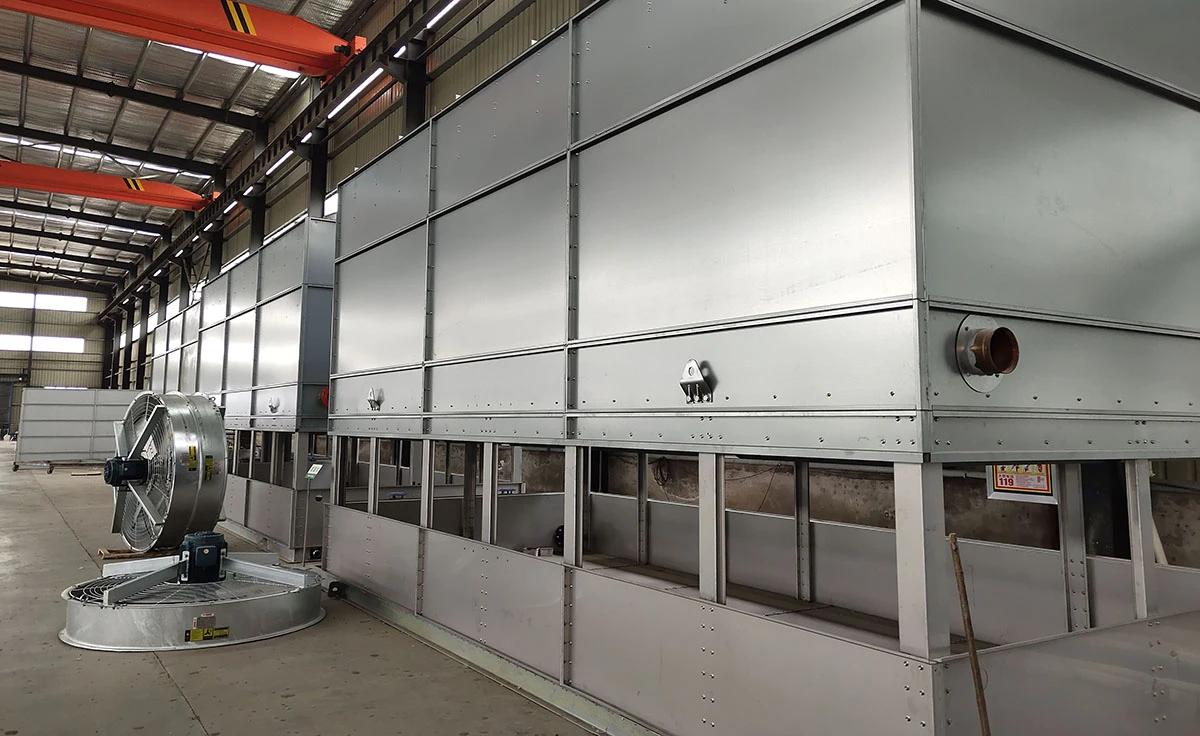
COC in Cooling Towers: Definition, Functions and Application Specifications
In the operation and management of cooling towers, COC (Cycle of Concentration) refers to the cycle of concentration. It is a core technical indicator for measuring the water quality stability, water-saving efficiency, and the risk of equipment scaling and corrosion in circulating cooling water systems. It is also a mandatory item in the technical parameter column of daily operation and maintenance records and bidding documents for industrial cooling systems. Essentially, it is the ratio of the concentration of dissolved solids in the circulating cooling water to that in the makeup water, directly determining the operating cost and service life of the cooling tower.
From the perspective of definition and calculation logic, the core of COC is the quantification of the concentration degree of salts in the circulating water system. During the operation of a cooling tower, the water temperature is reduced through evaporative heat dissipation. However, evaporation only removes pure water, while salts such as calcium ions, magnesium ions, and chloride ions dissolved in the water remain in the circulating water. To maintain the water balance of the system, continuous supplementation of fresh water is required. The salts brought in by the makeup water will accumulate continuously, making the salt concentration in the circulating water much higher than that in the makeup water. Theoretically, the calculation formula of COC is: COC = Concentration of dissolved solids in circulating water / Concentration of dissolved solids in makeup water. In actual operation and maintenance, to simplify the detection process, easily measurable indicators such as chloride ions and electrical conductivity are often used instead of dissolved solids for calculation, and the results are also of reference value.

The level of the COC indicator has a dual impact on the operation of the cooling tower and is the key to balancing water-saving efficiency and equipment safety. When the COC value is too low, it means that the discharge frequency of circulating water is too high, leading to a substantial increase in the consumption of makeup water. This not only causes a serious waste of water resources but also increases the consumption cost of water treatment chemicals. For example, when the COC value is 2, the consumption of makeup water is 2.5 times that when the COC value is 5. On the other hand, when the COC value is too high, the concentration of salts in the circulating water will exceed the saturation threshold, which is very likely to cause scaling in heat exchangers, coils, and pipelines. At the same time, the high concentration of chloride ions will accelerate the corrosion of metal equipment, resulting in a decrease in the heat exchange efficiency of the cooling tower, frequent equipment failures, and a significant increase in operation and maintenance costs.
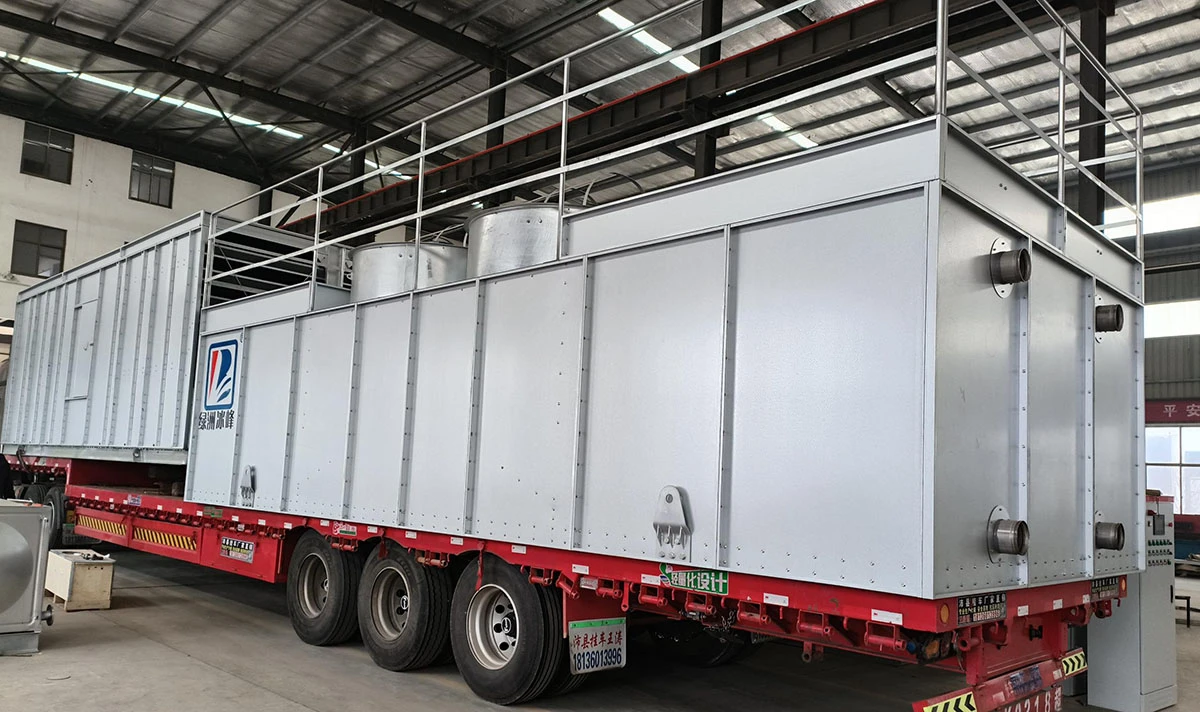
In practical applications, different types of cooling towers have their corresponding reasonable COC control ranges, which need to be accurately set according to the equipment type, water quality, and cooling medium. For the most widely used counter-flow open-circuit cooling towers, due to the direct contact between circulating water and air, the water quality fluctuates greatly, and the reasonable COC control range is 3–5 cycles. For cross-flow closed-circuit cooling towers, their closed-circuit circulation design reduces water quality pollution, so the COC value can be appropriately increased to 5–8 cycles. For scenarios with high water quality requirements, such as central air-conditioning systems, the COC value is usually controlled within 3–4 cycles to avoid scaling affecting the refrigeration efficiency. In addition, the hardness of the makeup water will also affect the setting of the COC value. When the hardness of the makeup water is high, the COC value should be appropriately reduced to reduce the risk of scaling.

It should be noted that the control of the COC indicator is not the adjustment of a single parameter but requires comprehensive management combined with multiple factors such as side-stream filtration systems, water treatment chemicals, and blowdown volume. By adding water treatment chemicals such as scale inhibitors and corrosion inhibitors, the anti-concentration capacity of circulating water can be effectively improved, thereby increasing the COC value and achieving the goal of water conservation and consumption reduction. In bidding documents, the reasonable COC control range is also an important basis for reflecting the rationality and economy of the technical scheme, which directly affects the competitiveness of the bidding scheme.
Send Inquiry