


What are the performance characteristics of evaporative condensers?
Jul 15, 2026
Leave a message

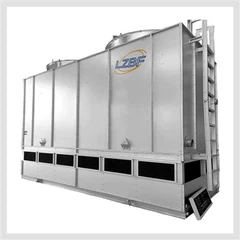
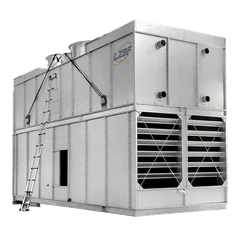
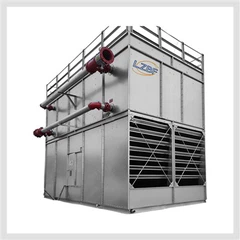
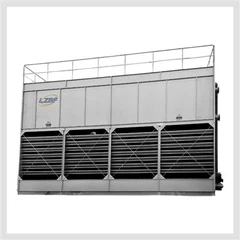
 Evaporative condensers are core heat exchange equipment widely used in refrigeration and chemical industries.
Combining the merits of water cooling and air cooling, they condense refrigerants through heat absorption from sprayed water evaporation.
Compared with the combination of water-cooled units plus cooling towers and air coolers, they deliver distinctive comprehensive performance and are applicable to cold storage, chemical production, central air conditioning, energy storage cooling and other scenarios.
High heat exchange efficiency stands out as its core performance advantage.
 High-temperature and high-pressure refrigerants flow through internal coils, while uniform water spraying forms a complete water film covering coil surfaces. Mass latent heat of vaporization is absorbed via water evaporation, generating a large heat exchange temperature difference and a far higher heat transfer coefficient than dry air coolers.
Under identical heat exchange loads, evaporative condensers require smaller heat exchange areas and feature a compact overall footprint. Even under high summer temperatures, evaporation cools coil surfaces down to nearly the local wet-bulb temperature.
The lowered condensing temperature effectively cuts the operating load of compressors and reduces power consumption of main units, delivering remarkable energy-saving benefits over long-term operation.
It boasts outstanding water conservation performance with low water consumption.

It maintains stable operating conditions and strong temperature control adaptability.


The equipment withstands drastic ambient temperature fluctuations. In hot spring and summer months, it relies on evaporation for efficient heat dissipation. In cold autumn and winter, it can switch to dry-wet operation mode by shutting off water spraying and running as a dry air cooler to prevent icing on coils and water troughs, suiting continuous production under sub-zero temperatures in North China.
Variable-frequency fans automatically adjust air volume based on condensing pressure to precisely stabilize condensing temperature. It avoids sharp water temperature spikes and excessive condensing pressure fluctuations common in water cooling systems, ensuring steady operation of refrigeration units and chemical reactors and lowering equipment start-stop failures.
With integrated modular design, it excels in space utilization and maintenance convenience.

Unlike split layouts of separate condensers and cooling towers, evaporative condensers integrate heat exchange coils, spraying systems, fans, water collection tanks and water eliminators into a single unit. No independent cooling pond construction is needed, greatly saving plant floor space and enabling outdoor open-air installation to cut infrastructure costs.
The unit is mainly constructed with magnesium-aluminum-zinc coated steel plates and stainless steel coils, offering powerful anti-corrosion and rust resistance against long-term erosion by rain and spray water to extend service life.
Its internal water circuit features short pipelines and few valves; routine maintenance only involves periodic limescale removal and spray nozzle clogging inspection, with far less maintenance workload than split water cooling systems.
Its noise reduction and environmental performance meet factory operation requirements.
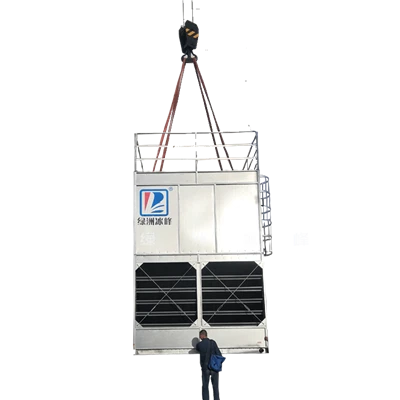
The fully enclosed cabinet paired with low-noise axial fans and airflow diversion silencing treatment generates lower operating noise than traditional open cooling towers.
The closed circulating spray water restrains algae and bacterial growth, reducing the dosage of chemical water treatment agents. Certain models are fitted with white fog elimination modules to remove visible white vapor during low-temperature operation, complying with factory environmental emission standards.
In summary, evaporative condensers integrate multiple superior performances including high heat exchange efficiency, water and energy conservation, small footprint, stable working conditions and easy maintenance.

Capable of meeting both high-temperature heat dissipation and winter anti-freezing demands, they serve as highly cost-effective heat exchange equipment for industrial refrigeration and process cooling applications.

Send Inquiry