


Is the evaporative condenser superior to the air-cooled condenser?
Dec 11, 2025
Leave a message
evaporative condenser and water-cooled condenser
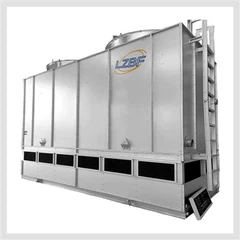
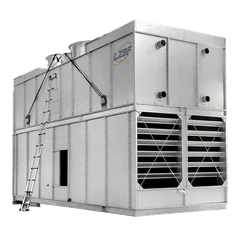
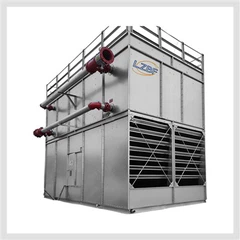
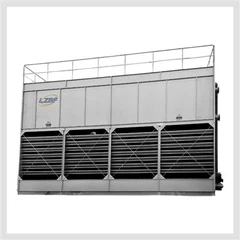
The evaporative condenser is not superior to the air-cooled condenser in all scenarios; each has technical advantages and applicable scenarios, and a comprehensive judgment must be made based on factors such as energy consumption requirements, water resource conditions, and installation space of the actual working conditions. From the perspective of core performance dimensions such as heat exchange efficiency and energy consumption performance, the evaporative condenser has significant advantages, but the air-cooled condenser is more distinctive in terms of maintenance convenience and initial investment.
Significant long-term economic efficiency
Located in 27 cities around the world,with 50 delivery centers,providing 200+ languages,7x24 hours delivery capacity,is the best partner for enterprise globalization

834M
Total Freelancer
732M
Positive Review
90M
Order recieved
236M
Projects Completed

The core advantages of the evaporative condenser lie in heat exchange efficiency and energy consumption control. It adopts a composite heat exchange mode of "water evaporation + air convection", using the latent heat of vaporization of water (2260kJ/kg) for heat transfer, and the heat transfer per unit area is 5-8 times that of the air-cooled condenser.
Its condensing temperature is close to the ambient wet-bulb temperature, 8-11℃ lower than that of the air-cooled condenser, and for every 1℃ decrease in condensing temperature, the compressor power consumption of the refrigeration unit can be reduced by 3%-3.5%, with the overall energy consumption being more than 30% lower than that of the air-cooled condenser.
In addition, the evaporative condenser integrates the functions of condenser, cooling tower, circulating water pump, etc., and covers only 50% of the area of the air-cooled condenser, making it suitable for large-scale refrigeration systems with compact space such as industrial plants and data centers.

In terms of water resource utilization, although the evaporative condenser requires a small amount of circulating water, its water consumption is only 5%-10% of that of the water-cooled condenser, and much lower than the secondary heat dissipation loss of the traditional water-cooled system.
In areas with relatively sufficient water resources, its water-saving advantage can still be reflected. The air-cooled condenser relies entirely on air for heat exchange and does not require a water source, a feature that makes it more applicable in water-scarce northern regions or small refrigeration equipment.

However, the evaporative condenser also has limitations. Its structure includes components such as spray systems and dehydrators, which have high requirements for water quality and are prone to scaling and nozzle clogging, requiring regular water treatment and maintenance, with maintenance costs higher than those of the air-cooled condenser.
In addition, in low-temperature environments in winter, its water pipes are prone to freezing and cracking, requiring additional anti-freezing measures, which increases the complexity of operation and management.

The advantages of the air-cooled condenser lie in its simple system and convenient maintenance. It consists only of finned coils and fans, with low initial investment costs, and installation does not require a supporting water circuit system, making it suitable for small and medium-sized refrigeration equipment such as household air conditioners and small cold storage.
In remote water-scarce areas, the air-cooled condenser does not need to consider water supply, and has stronger operational stability. However, in high-temperature environments in summer, its condensing temperature can reach 50℃, and the refrigeration efficiency will drop significantly, requiring an increase in compressor capacity to ensure refrigeration capacity, resulting in high long-term operating energy consumption.
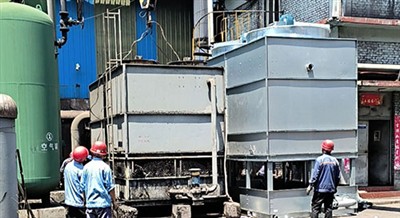
In summary, the evaporative condenser has better comprehensive performance when applied to large-scale industrial refrigeration systems, data centers and other scenarios with stringent requirements for energy consumption and space, and where water quality treatment conditions can be met; the air-cooled condenser is a more suitable choice for small refrigeration equipment, simple refrigeration systems in water-scarce areas, or working conditions pursuing low cost and easy maintenance.
Send Inquiry