


Is Closed-Loop Cooling System Efficient?
Jun 28, 2026
Leave a message

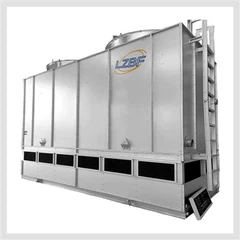
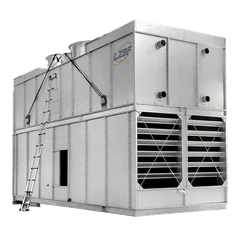
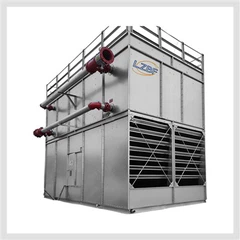
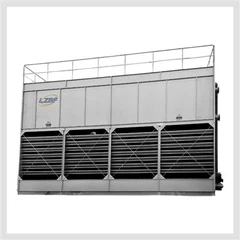
 Closed-loop cooling systems represented by closed cooling towers have become the mainstream cooling scheme for high-precision manufacturing, new energy energy storage, chemical pharmacy, data centers and metallurgical machinery in recent years.
Many purchasers and engineers still doubt its actual operating efficiency, worrying about insufficient heat exchange capacity, high energy consumption and complex maintenance. In fact, compared with traditional open cooling towers, closed-loop cooling systems have obvious comprehensive efficiency advantages in long-term operation, and their effectiveness can be verified from heat exchange performance, medium protection, energy and water saving, stable operation and full-cycle cost control.
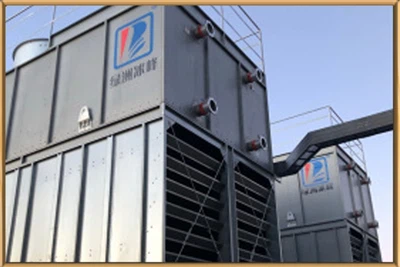 First of all, the core heat exchange efficiency of closed-loop cooling is reliable under all working conditions. The system separates the process fluid and external spray water through a fully closed coil heat exchanger.
The internal circulating medium such as antifreeze, softened water and process coolant flows inside the coil without contact with air and dust. When the ambient temperature is high in summer, the spray water evenly wets the coil surface to form a thin water film.
 The latent heat of water evaporation takes away a large amount of heat, and the axial flow fan accelerates air flow to strengthen heat and mass transfer. Its heat exchange logic integrates evaporative cooling and air cooling. Under standard wet bulb temperature conditions, the cooling temperature can approach the ambient wet bulb temperature, which is equivalent to the heat exchange upper limit of open towers.
In high-temperature and high-dust environments such as steel plants and battery production workshops, open towers will quickly scale and block packing after 1-3 months of operation, resulting in a sharp drop in heat exchange efficiency by 20% to 40%. The closed coil of the closed-loop system will not be polluted by dust and mud, and the heat exchange area is always kept intact. Even after one year of continuous operation, the heat exchange capacity attenuation is less than 5%, and the stable heat dissipation effect ensures continuous production without shutdown for cleaning, which is an efficiency advantage that open circulation cannot match.
 Secondly, closed-loop cooling effectively avoids medium loss and pipeline corrosion, reducing indirect efficiency loss caused by equipment failure. Open cooling towers directly expose process water to the atmosphere, which will continuously evaporate, carry away liquid through wind drift, and mix with dust, algae and bacteria in the air.
The circulating pipeline, mold, chiller unit and reaction kettle are prone to scaling, rust and blockage. Enterprises need to add water treatment chemicals frequently, replace pipeline filters every month, and stop production for descaling every quarter. Each shutdown will bring huge production loss.

The closed-loop main circulation channel is completely isolated from the outside air, no wind drift loss of process liquid, no algae breeding, and the pipeline inner wall is always clean. The service life of pumps, valves and heat exchange equipment is extended by more than twice.
 For precision industries such as lithium battery manufacturing and medical reagent production, the cooling medium must maintain high cleanliness. Once the open system is polluted, it will lead to product scrapping, and the hidden loss far exceeds the initial equipment investment of closed-loop cooling. From the perspective of production continuity, closed-loop systems greatly improve the overall operational efficiency of the factory.
In terms of water and energy saving efficiency, closed-loop cooling also shows long-term effectiveness. Although the closed tower adds a set of internal circulating pumps, the overall water consumption is far lower than open towers. The open tower has a wind drift loss rate of 1% to 3%, while the closed-loop spray water only circulates in the external tower body, with wind drift loss controlled below 0.3%.

In northern areas with water shortage and winter low temperature, the closed system can add antifreeze to the internal medium, and the spray water can be emptied or equipped with electric heating anti-freezing devices. There is no risk of pipeline cracking caused by icing, and no need to discharge a large amount of circulating water in winter, saving a lot of water resources year-round. Many users mistakenly believe that closed-loop systems consume more electricity.
 In fact, after the open tower is scaled, the water pump resistance increases, and the fan needs to run at full speed for a long time to make up for the reduced heat exchange efficiency.
After one year of operation, the power consumption of the open system will exceed that of the closed-loop system. For medium and large cooling projects above 500kW, the electricity and water cost saved by closed-loop cooling within two years can offset the price difference between closed towers and open towers.
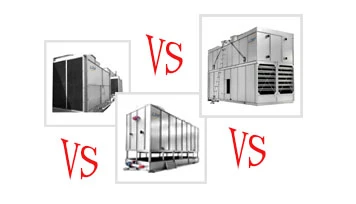 In addition, closed-loop cooling systems have strong adaptability to complex working conditions, and their effectiveness will not be reduced by harsh environments. For outdoor high-temperature, coastal salt fog, chemical plant corrosive gas and high-dust mining areas, open towers will accelerate equipment aging, while closed coil materials can be customized with 304 stainless steel, 2205 duplex stainless steel and anti-corrosion coating.
The fully closed structure isolates corrosive air, effectively protecting core cooling equipment. For data centers and power electronic equipment that require constant temperature cooling, closed-loop systems can stably control the water supply temperature fluctuation within ±1℃, avoiding equipment overheating protection shutdown caused by unstable cooling water temperature in open towers, and improving the operation efficiency of high-value electronic equipment.

In conclusion, the closed-loop cooling system is highly effective, not only meeting the heat dissipation demand in terms of basic cooling capacity, but also achieving higher comprehensive operation efficiency through stable heat exchange, medium protection, water and energy saving, low maintenance and strong environmental adaptability.
The slight increase in one-time investment can bring continuous benefits such as reduced downtime, lower water and electricity costs and extended equipment service life in the whole life cycle.
It is the most cost-effective and efficient cooling solution for industrial production with high requirements on medium cleanliness and continuous operation.
Send Inquiry