


Classification, Maintenance, and Cleaning Methods of Cooling Towers
Sep 18, 2025
Leave a message
In refrigeration and air-conditioning systems, cooling towers are indispensable key components, primarily functioning to supply cooling water to the system's condenser. When refrigerants complete the refrigeration process in the air-conditioning system, they absorb a large amount of heat and transform into a high-temperature, high-pressure gaseous state. To enable the refrigerants to be recycled, they need to be cooled back to a liquid state through the condenser. During this process, the condenser requires a large volume of cooling water to absorb the heat, and this heated cooling water is then sent to the cooling tower for cooling, so that it can return to the condenser for reuse.
I. Classification of Cooling Towers
Cooling towers can be classified based on ventilation methods, the contact mode between hot water and air, and the flow directions of water and air.
1.Classification by Ventilation Method
Natural draft cooling towers: Suitable for large-scale facilities or specific environmental conditions.
Mechanical draft cooling towers: Use fans to force air circulation, with strong adaptability but higher energy consumption.
Hybrid draft cooling towers: Combine the advantages of natural and mechanical ventilation, ensuring sufficient cooling efficiency even under adverse meteorological conditions.
2.Classification by Heat Contact Mode
Open cooling towers: Water contacts air directly, transferring heat through evaporation.
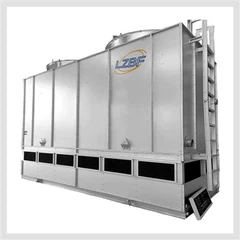
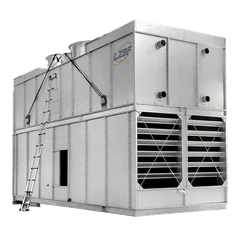
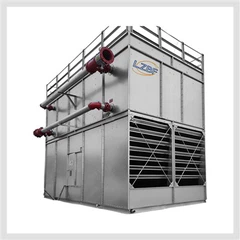
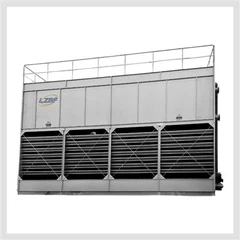
Closed cooling towers: Water circulates within a closed tube bundle, avoiding water quality contamination.
3.Classification by Flow Direction
Counterflow cooling towers: Water flows downward while air flows upward, improving heat exchange efficiency.
Crossflow cooling towers: Air horizontally passes through the filler layer, and water flows vertically downward, featuring a compact structure and easy maintenance.
Composite flow cooling towers: Integrate the characteristics of counterflow and crossflow, maintaining a certain level of cooling efficiency.
II. Regular Maintenance and Upkeep of Cooling Towers
1.Inspection of Water Supply System: Check the condition of valves and float assemblies. Replace any damaged parts promptly; adjust if their positions are incorrect.
2.Inspection and Maintenance of Fan Blades: Focus on checking the angle balance, surface quality of fan blades, and whether the fan wheel housing is corroded or embrittled. The condition of these components directly affects cooling efficiency and safety.
3.Internal and External Cleaning: Since cooling towers are often in a humid environment, they are prone to algae, bacteria, and other contaminants. Regularly clean internal and external surfaces using dedicated cleaning agents combined with clean water to keep the tower clean.
4.Filter Cleaning: For closed cooling towers used in intermediate frequency equipment, filters are critical for preventing impurities from entering the tower. Regular inspection and cleaning of filters are essential.
5.Maintenance of Belt Reduction Devices: If the cooling tower uses a belt reduction device, it is recommended to shut down and check the belt tightness every two weeks, adjusting or replacing belts as needed.
6.Inspection of Electrical Equipment: In addition to mechanical components, electrical equipment requires regular inspection to ensure wires are undamaged and functioning properly. This is crucial for avoiding electrical faults and ensuring personnel safety.
7.Maintenance of Tower-Specific Motors**: For motors in cooling towers, remove surface dust and attached contaminants, and clean the ventilation hood mesh to keep air inlets and outlets unobstructed.
III.Cleaning of Cooling Towers
1.Physical Cleaning Methods
High-Pressure Water Washing: Use a high-pressure water gun to冲洗填料, effectively removing dirt, debris, and algae from the surface and gaps of the filler. The pressure can be adjusted based on the filler material and blockage severity, typically set between 10-20MPa.
Manual Cleaning: When blockages are easy to remove and the filler structure allows, enter the tower through the inspection port and use tools such as brushes and shovels to clean the filler. This method is labor-intensive, but care must be taken to avoid damaging the filler during cleaning.
2.Chemical Cleaning
The chemical cleaning process includes: water flushingbactericidal and algaecidal cleaning → descaling with cleaning agents → post-cleaning flushing → pre-filming → final cleaning. This process requires shutdown and takes approximately 7 days, with a descaling rate of over 95%.
Water Flushing: The purpose is to flush out loose contaminants such as dust, sediment, detached algae, and corrosion products from the system using a large flow of water, while checking for leaks. The flushing water velocity should be above 0.15m/s. After合格 flushing, drain all water from the system.
Bactericidal and Algaecidal Cleaning: This step kills microorganisms in the system and removes biological slime attached to equipment surfaces. After draining the flushing water, add bactericides and algaecides to the system for cleaning, stopping when the turbidity stabilizes.
Descaling with Cleaning Agents: Use cleaning agents to dissolve scale and oxides in the system, which are then flushed away with water. Add the cleaning agent to the central air-conditioning system and circulate it using a circulating pump, venting air at the highest point and draining at the lowest point to avoid air locks and blockages that could affect cleaning efficiency.
Post-Cleaning Rinsing: This rinse removes residual cleaning agents and loosened impurities. Continuously open drains to flush out contaminants and residues in short pipes. During rinsing, continuously test pH and turbidity until they stabilize.
Pre-Filming: The goal is to form a complete, corrosion-resistant protective film on activated metal surfaces or damaged protective films after cleaning.
Final Tower Cleaning: Since cooling towers are exposed to the atmosphere, a large amount of sediment, algae, etc., adhere to the filler surface during operation. Failure to clean these thoroughly will cause them to be flushed into the cooler during subsequent operation, blocking heat exchange copper tubes and reducing heat exchange efficiency. Therefore, a thorough cleaning of the cooling tower is necessary.
Send Inquiry