


Analysis of Energy-Saving Potential in the Spray System of Closed-Circuit Cooling Towers
Sep 30, 2025
Leave a message
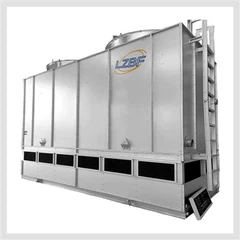
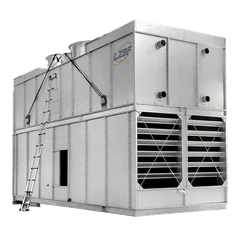
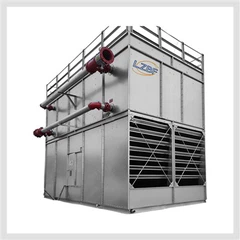
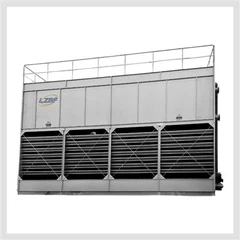
Closed-circuit cooling towers are efficient and energy-saving cooling equipment, widely used in cooling systems across industries such as electric power, chemical engineering, and iron and steel. Their working principle relies on a counterflow heat exchanger to facilitate heat exchange between cooling water and air, thereby reducing water temperature.
The structure of a closed-circuit cooling tower includes components such as an air inlet, packing layer, spray water tank, and water collection pan. The air inlet is used to introduce dry, low-temperature air; the packing layer increases the contact area between air and water; the spray water tank stores and distributes cooling water; and the water collection pan collects and drains cooling water.
During the operation of a closed-circuit cooling tower, cooling water is sprayed from the spray water tank into the packing layer, where it undergoes heat exchange with the upward-flowing (countercurrent) air. As air passes through the packing layer, it is evenly distributed and dispersed, increasing the contact time with water droplets and thus improving heat exchange efficiency. Meanwhile, the presence of the packing layer also expands the contact area between air and water, further enhancing heat exchange efficiency.
Compared with traditional open-circuit cooling towers, closed-circuit counterflow cooling towers offer higher cooling efficiency, lower energy consumption, and better stability. Their closed structure prevents water pollution and evaporation loss, while also avoiding issues such as packing blockage and fan wear that are common in traditional open-circuit cooling towers. Additionally, closed-circuit counterflow cooling towers feature water conservation, environmental friendliness, and low noise, enabling enterprises to reduce energy and maintenance costs.
The energy-saving potential of the spray water system in closed-circuit cooling towers is a topic worthy of in-depth exploration. Below is a detailed analysis of this potential:
Working Principle of the Spray Water System in Closed-Circuit Cooling Towers
The spray water system of a closed-circuit cooling tower uses a spray pump to draw water from the water collection pan, deliver it to the upper part of the heat exchange coil, and spray it evenly onto the coil surface through nozzles. Heat exchange occurs between the water and the coil wall, and the heat is discharged outside the tower by a fan. Un-evaporated water droplets return to the water collection pan via a water eliminator, enabling water recycling.
Energy-Saving Potential of the Spray Water System
Reducing Evaporation Loss
Due to its closed structure, the spray water system of closed-circuit cooling towers minimizes water evaporation loss, thereby conserving water resources. Compared with open-circuit cooling towers, closed-circuit cooling towers can save up to 70% of water.
Reducing evaporation loss not only helps conserve water but also lowers the energy consumed for water replenishment.
Optimizing Spray Efficiency
By improving the structure and layout of spray devices-such as adopting more efficient nozzles and optimizing the pressure and flow rate of spray water-the utilization efficiency of spray water can be enhanced, and unnecessary waste can be reduced.
An optimized spray system enables more effective heat exchange with the coil, improving cooling efficiency.
Application of Variable Frequency Technology
Applying variable frequency technology to spray pumps allows dynamic adjustment of the flow rate and pressure of spray water based on actual needs, avoiding unnecessary energy waste.
Variable frequency technology also enables soft start and soft stop of spray pumps, reducing the impact on the power grid during startup and shutdown, and improving equipment stability and service life.
Intelligent Control Systems
Introducing intelligent control systems enables real-time monitoring of the spray water system's operating status, including parameters such as spray water flow rate, pressure, and temperature.
Based on the monitored data, the intelligent control system can automatically adjust the speed of the spray pump and the flow rate of spray water to achieve optimal cooling effects and energy utilization efficiency.
Approaches to Realizing Energy-Saving Potential
Technological Upgrading and Transformation
Conduct technological upgrades and transformations on existing spray water systems, such as replacing them with more efficient nozzles and optimizing the structure of spray devices.
Introduce advanced variable frequency technology and intelligent control systems to improve the energy utilization efficiency of spray pumps.
Operational Management Optimization
Strengthen the operational management of the spray water system, conduct regular inspections and cleaning of spray devices to ensure their normal operation and efficient utilization.
Develop reasonable operation plans for the spray water system based on actual needs to avoid unnecessary energy waste.
Maintenance
Perform regular maintenance on components such as spray pumps and nozzles to ensure they are in good working condition.
Promptly replace damaged or aging components to prevent impacts on the normal operation and energy-saving effects of the spray water system.
Conclusion
The spray water system in closed-circuit cooling towers has significant energy-saving potential. Through measures such as technological upgrading and transformation, operational management optimization, and maintenance, the energy utilization efficiency of the spray water system can be further improved, and energy consumption can be reduced. This not only helps achieve the goals of energy conservation and emission reduction but also enhances the economic and social benefits of enterprises. Therefore, in practical applications, full attention should be paid to the energy-saving potential of the spray water system in closed-circuit cooling towers, and effective measures should be taken to realize this potential.
Send Inquiry