

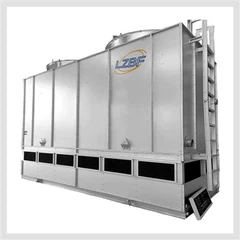
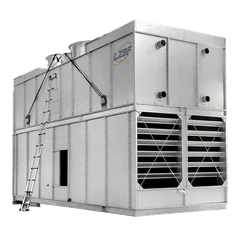
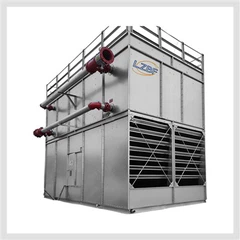
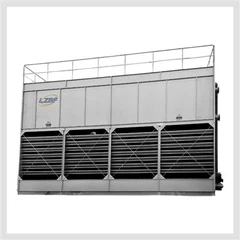

A Comprehensive Guide To Closed-Circuit Cooling Towers: Principles, Advantages, And Applications
Aug 31, 2026
Leave a message

In modern industrial and commercial facilities, efficient thermal management is critical to ensuring operational stability, protecting expensive equipment, and meeting sustainability goals. Among the various cooling solutions available, the closed-circuit cooling tower (also known as a closed-loop cooling tower) has emerged as a premier choice for applications demanding high water quality, energy efficiency, and reliable performance. This guide explores the fundamental principles, core advantages, and diverse applications of closed-circuit cooling towers.

How Closed-Circuit Cooling Towers Work
Unlike traditional open cooling towers where process water is directly exposed to the atmosphere, a closed-circuit cooling tower utilizes an indirect heat exchange process. The system consists of two separate fluid loops:
1.Internal Loop (Process Fluid):
The hot process fluid (which can be water, glycol, oil, or other chemicals) circulates through a sealed coil or heat exchanger inside the tower. This fluid never comes into direct contact with the outside air.
2.External Loop (Spray Water & Air):
A spray system continuously wets the exterior of the internal coil. A fan draws ambient air across the wetted coil, causing a small portion of the spray water to evaporate. The evaporation process absorbs latent heat from the coil, effectively cooling the process fluid inside.
This dual-loop design ensures that the process fluid remains completely isolated from environmental contaminants, making it ideal for sensitive applications.

Core Advantages Over Open Systems
The closed-loop architecture offers several distinct benefits that justify its higher initial investment:
●Superior Water Quality & Equipment Protection:
By keeping the process fluid in a closed loop, the system prevents the ingress of dust, algae, bacteria, and other airborne pollutants. This eliminates scaling, fouling, and corrosion inside the process equipment, significantly extending the lifespan of critical machinery like chillers, CNC machines, and reactors.
●Enhanced Energy & Water Efficiency:
Closed-circuit towers can operate in "dry mode" during cooler weather, relying solely on air convection without activating the spray pump, which drastically reduces energy consumption. Furthermore, because the external spray water is recirculated and only a small fraction evaporates, water consumption is typically 90% lower than that of open cooling towers.
●Operational Reliability & Low Maintenance:
The absence of direct air-water contact in the process loop minimizes the risk of blockages and biological growth. Combined with automated control systems that adjust fan speed and spray rates based on real-time load, these towers offer stable, unattended operation with reduced maintenance downtime.
●Versatility in Cooling Media:
Beyond water, closed-circuit towers can safely cool a wide range of fluids, including quenching oils, alcohol solutions, and corrosive chemical mixtures, without the risk of evaporation or environmental contamination.

Key Industry Applications
The adaptability of closed-circuit cooling towers has led to widespread adoption across multiple sectors:
●Data Centers:
As server densities increase, closed-loop systems provide reliable, water-efficient cooling for liquid-cooled racks and high-density computing environments, aligning with green data center initiatives.
●Power Generation & Renewable Energy:
Used for cooling turbine lubricating oil, transformer oil, and auxiliary systems in thermal, nuclear, and solar power plants, as well as battery energy storage systems (BESS).
●Chemical & Pharmaceutical Processing:
Ensures the purity of process fluids in reactors, distillation columns, and condensation systems where contamination could compromise product quality or safety.
●Manufacturing & Metallurgy:
Provides precise temperature control for induction heating, injection molding, laser cutting, and steel rolling mills, ensuring consistent product quality.
●HVAC & Commercial Buildings:
Serves as a clean cooling source for large-scale central chiller plants in hospitals, airports, and high-rise buildings where water treatment and Legionella prevention are paramount.

Critical Selection & Maintenance Considerations
Selecting the right closed-circuit cooling tower requires careful evaluation of several factors:
●Accurate Load Calculation: Determine the precise heat load (kW or BTU/h) and required flow rate, adding a 10–15% safety margin for peak conditions. Always base sizing on the local design wet-bulb temperature.
●Material Compatibility: Choose coil materials (e.g., 304/316L stainless steel, copper, or titanium) that are compatible with the process fluid and local water chemistry to prevent galvanic corrosion.
●Winterization & Freeze Protection: In cold climates, integrate automatic drain systems, electric basin heaters, or glycol solutions to prevent coil freezing. Smart control strategies can also modulate fan speed to maintain safe operating temperatures during low-load winter conditions.
●Proactive Maintenance: Although maintenance is lower than open systems, regular inspection of spray nozzles, strainers, and fan belts is essential. Periodic cleaning of the coil exterior and water treatment of the external spray loop will maintain optimal heat transfer efficiency.

Conclusion
Closed-circuit cooling towers represent a strategic investment in operational excellence. By combining the efficiency of evaporative cooling with the safety and cleanliness of a closed loop, they offer a future-proof solution for industries facing stricter environmental regulations, rising utility costs, and the need for uncompromising process reliability. As global markets increasingly prioritize sustainability and resource conservation, the role of closed-circuit cooling technology will continue to expand, driving innovation in smart controls, modular design, and ultra-efficient heat transfer.
Send Inquiry