


What is the impact of corrosion on evaporative condensers?
Sep 15, 2025
Leave a message
Corrosion is a natural process that can have far - reaching consequences on various industrial equipment, and evaporative condensers are no exception. As a supplier of Condensadores Evaporativo, I have witnessed firsthand the detrimental effects of corrosion on these crucial pieces of equipment. In this blog, we will delve into the impact of corrosion on evaporative condensers and explore how it can affect their performance, longevity, and overall efficiency.
How Corrosion Occurs in Evaporative Condensers
Evaporative condensers operate by using water evaporation to remove heat from the refrigerant. This process involves a complex interaction between water, air, and the metal components of the condenser. Several factors contribute to the onset of corrosion in these systems.
Firstly, the water used in evaporative condensers often contains dissolved salts, minerals, and other impurities. When water evaporates, these impurities become concentrated, increasing the likelihood of corrosion. For example, chloride ions in the water can break down the protective oxide layer on metal surfaces, making them more susceptible to corrosion.
Secondly, the presence of oxygen in the air and water is another significant factor. Oxygen reacts with metal surfaces, leading to the formation of metal oxides, which is the basic mechanism of corrosion. In an evaporative condenser, the constant circulation of air and water exposes the metal components to oxygen continuously, accelerating the corrosion process.
Finally, the pH level of the water can also play a role. If the water is too acidic or too alkaline, it can promote corrosion. An acidic environment can dissolve the protective coatings on metal surfaces, while an alkaline environment can cause certain types of metals to corrode through a process known as caustic embrittlement.
Impact on Performance
One of the most immediate impacts of corrosion on evaporative condensers is a decline in performance. Corrosion can cause the formation of scale and deposits on the heat transfer surfaces. These deposits act as insulators, reducing the efficiency of heat transfer between the refrigerant and the water - air mixture. As a result, the condenser has to work harder to achieve the same level of cooling, leading to increased energy consumption.
For instance, if the tubes in an evaporative condenser are corroded, the flow of refrigerant through them can be restricted. This restriction not only reduces the heat transfer rate but also increases the pressure drop across the tubes. Higher pressure drops require more energy to pump the refrigerant, which can significantly increase operating costs over time.
In addition, corrosion can damage the fan blades and other moving parts of the evaporative condenser. Rust and pitting on the fan blades can disrupt the smooth flow of air, reducing the air - water contact and thus the evaporation rate. This can further compromise the cooling capacity of the condenser and lead to inefficient operation.
Impact on Longevity
Corrosion can also have a profound impact on the longevity of evaporative condensers. Over time, continuous corrosion can weaken the structural integrity of the condenser. Metal components that are severely corroded may develop cracks or holes, which can lead to refrigerant leaks. Refrigerant leaks not only pose environmental risks but also render the condenser ineffective.
The cost of repairing or replacing a corroded evaporative condenser can be substantial. In some cases, if the corrosion has advanced to a critical stage, the entire condenser may need to be replaced. This not only incurs significant capital expenditure but also results in downtime for the industrial process that relies on the condenser, leading to lost production and revenue.
Impact on Maintenance
Corrosion increases the maintenance requirements of evaporative condensers. Regular inspections are necessary to detect early signs of corrosion and take preventive measures. Maintenance personnel need to clean the heat transfer surfaces more frequently to remove scale and deposits caused by corrosion. This can be a time - consuming and labor - intensive process.
Moreover, corroded components may need to be repaired or replaced more often. The cost of replacement parts and the labor for installation can add up quickly. In some cases, corrosion can also cause damage to other parts of the system that are in contact with the corroded components, further increasing the maintenance complexity and cost.
Preventive Measures
As a supplier of Condensadores Evaporativo, we understand the importance of preventing corrosion in these systems. One of the most effective ways to prevent corrosion is through water treatment. By using water treatment chemicals, we can control the pH level of the water, remove dissolved salts and minerals, and inhibit the growth of bacteria and algae. This can significantly reduce the risk of corrosion and extend the lifespan of the condenser.
Another preventive measure is the use of corrosion - resistant materials in the construction of evaporative condensers. For example, stainless steel and coated metals are more resistant to corrosion than traditional carbon steel. Although these materials may be more expensive initially, they can save money in the long run by reducing maintenance and replacement costs.
Regular maintenance and inspection are also crucial. By monitoring the performance of the condenser and checking for signs of corrosion on a regular basis, we can detect problems early and take corrective action before they become severe.
Our Products and Their Resistance to Corrosion
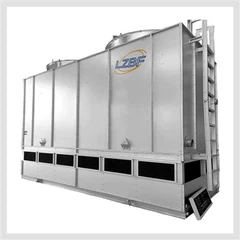
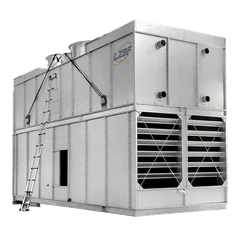
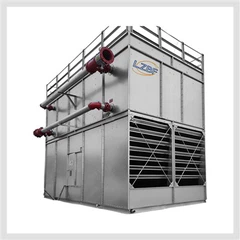
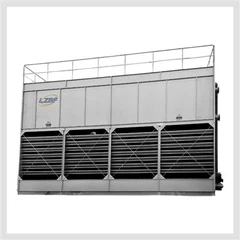
At our company, we offer a range of high - quality evaporative condensers, including Evaporative Type Condenser, Dry - wet Condenser, and Evaporative Condensing Unit. Our products are designed with corrosion resistance in mind.
We use advanced manufacturing techniques and high - grade materials to ensure that our condensers can withstand the harsh operating conditions. For example, our heat transfer tubes are made of corrosion - resistant alloys, and the outer shells are coated with protective layers to prevent rust and corrosion.


In addition, we provide comprehensive water treatment solutions and maintenance services to our customers. Our team of experts can help customers optimize the operation of their evaporative condensers and minimize the risk of corrosion.
Conclusion
Corrosion can have a significant impact on the performance, longevity, and maintenance of evaporative condensers. It can lead to reduced efficiency, increased operating costs, and shortened equipment lifespan. However, by taking preventive measures such as water treatment, using corrosion - resistant materials, and regular maintenance, we can mitigate these risks.
As a leading supplier of Condensadores Evaporativo, we are committed to providing our customers with high - quality, corrosion - resistant products and comprehensive solutions. If you are in the market for an evaporative condenser or need to improve the performance of your existing system, we invite you to contact us for a consultation. Our team of experts will be happy to discuss your specific needs and provide you with the best possible solutions.
References
- Fontana, M. G. (1986). Corrosion Engineering. McGraw - Hill.
- Uhlig, H. H., & Revie, R. W. (1985). Corrosion and Corrosion Control. Wiley - Interscience.
- ASHRAE Handbook - HVAC Systems and Equipment. American Society of Heating, Refrigerating and Air - Conditioning Engineers.
Send Inquiry