


How to calculate the heat transfer rate of a Closed System Cooling Tower?
Oct 29, 2025
Leave a message
Hey there! As a supplier of Closed System Cooling Towers, I often get asked about how to calculate the heat transfer rate of these nifty devices. It's a crucial aspect, especially for those looking to optimize their cooling systems and make informed decisions. So, let's dive right in and break it down step by step.
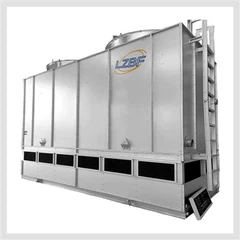
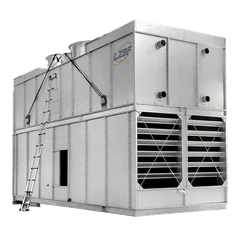
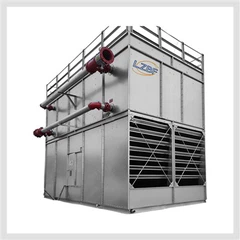
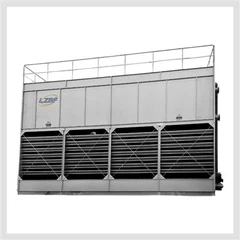
First off, let's understand what a Closed System Cooling Tower is. It's a type of cooling equipment that uses a closed-loop system to transfer heat from a process fluid to the atmosphere. This is different from an open cooling tower, where the process fluid is exposed to the environment. Closed System Cooling Towers are great because they prevent contamination of the process fluid, reduce water consumption, and are more efficient in many cases. You can learn more about Industrial Closed Circuit Cooling Tower on our website.
Now, onto the main topic: calculating the heat transfer rate. The heat transfer rate, often denoted as Q, is the amount of heat that is transferred from the hot fluid (usually the process fluid) to the cooling medium (usually air or water) per unit of time. It's measured in units like watts (W) or British thermal units per hour (BTU/hr).
There are a few different methods to calculate the heat transfer rate, and the one you choose depends on the information you have available and the level of accuracy you need. One of the most common methods is using the energy balance equation.
Energy Balance Method
The energy balance equation states that the heat lost by the hot fluid is equal to the heat gained by the cooling medium. Mathematically, it can be written as:
Q = m * Cp * ΔT
Where:
- Q is the heat transfer rate (in watts or BTU/hr)
- m is the mass flow rate of the hot fluid (in kg/s or lb/hr)
- Cp is the specific heat capacity of the hot fluid (in J/kg·K or BTU/lb·°F)
- ΔT is the temperature difference between the inlet and outlet of the hot fluid (in K or °F)
Let's break this down further. The mass flow rate, m, is simply how much of the hot fluid is flowing through the cooling tower per unit of time. You can measure this using flow meters or calculate it based on the pump capacity and system design.
The specific heat capacity, Cp, is a property of the fluid that tells you how much heat is required to raise the temperature of a unit mass of the fluid by one degree. Different fluids have different specific heat capacities. For example, water has a relatively high specific heat capacity, which means it can absorb a lot of heat without a significant increase in temperature.
The temperature difference, ΔT, is the difference between the temperature of the hot fluid when it enters the cooling tower and when it leaves. You can measure these temperatures using thermometers or temperature sensors.
Let's say you have a process fluid with a mass flow rate of 10 kg/s, a specific heat capacity of 4200 J/kg·K, and a temperature difference of 10 K. Using the energy balance equation, you can calculate the heat transfer rate as follows:
Q = 10 kg/s * 4200 J/kg·K * 10 K = 420,000 W or 420 kW


This means that the cooling tower needs to transfer 420,000 watts of heat from the process fluid to the cooling medium to achieve the desired temperature drop.
Logarithmic Mean Temperature Difference (LMTD) Method
Another method to calculate the heat transfer rate is using the Logarithmic Mean Temperature Difference (LMTD) method. This method is more accurate when the temperature of the hot and cold fluids changes along the length of the heat exchanger in the cooling tower.
The LMTD method uses the following equation:
Q = U * A * LMTD
Where:
- Q is the heat transfer rate (in watts or BTU/hr)
- U is the overall heat transfer coefficient (in W/m²·K or BTU/hr·ft²·°F)
- A is the heat transfer area (in m² or ft²)
- LMTD is the logarithmic mean temperature difference (in K or °F)
The overall heat transfer coefficient, U, takes into account the resistance to heat transfer in the hot fluid, the cooling medium, and the heat exchanger surface. It depends on factors like the fluid properties, flow rates, and the design of the heat exchanger.
The heat transfer area, A, is the surface area of the heat exchanger that is in contact with the hot and cold fluids. It can be calculated based on the dimensions of the heat exchanger.
The logarithmic mean temperature difference, LMTD, is a more complex calculation that takes into account the temperature difference between the hot and cold fluids at the inlet and outlet of the heat exchanger. It's calculated using the following formula:
LMTD = (ΔT1 - ΔT2) / ln(ΔT1 / ΔT2)
Where:
- ΔT1 is the temperature difference between the hot and cold fluids at one end of the heat exchanger
- ΔT2 is the temperature difference between the hot and cold fluids at the other end of the heat exchanger
Let's say you have a heat exchanger with an overall heat transfer coefficient of 500 W/m²·K, a heat transfer area of 20 m², and a logarithmic mean temperature difference of 20 K. Using the LMTD method, you can calculate the heat transfer rate as follows:
Q = 500 W/m²·K * 20 m² * 20 K = 200,000 W or 200 kW
This means that the cooling tower needs to transfer 200,000 watts of heat from the process fluid to the cooling medium to achieve the desired temperature drop.
Factors Affecting Heat Transfer Rate
There are several factors that can affect the heat transfer rate in a Closed System Cooling Tower. Some of these factors include:
- Fluid Properties: The specific heat capacity, density, and viscosity of the hot and cold fluids can all affect the heat transfer rate. For example, fluids with higher specific heat capacities can absorb more heat without a significant increase in temperature.
- Flow Rates: The mass flow rates of the hot and cold fluids can also affect the heat transfer rate. Higher flow rates generally result in higher heat transfer rates, but they also require more energy to pump the fluids.
- Temperature Difference: The larger the temperature difference between the hot and cold fluids, the higher the heat transfer rate. However, there are practical limits to how large the temperature difference can be.
- Heat Exchanger Design: The design of the heat exchanger, including the type of heat exchanger (e.g., shell and tube, plate and frame), the surface area, and the flow configuration, can all affect the heat transfer rate.
Importance of Calculating Heat Transfer Rate
Calculating the heat transfer rate is important for several reasons. First, it helps you determine the size and capacity of the cooling tower you need for your application. If you underestimate the heat transfer rate, the cooling tower may not be able to cool the process fluid effectively, leading to overheating and potential damage to your equipment. On the other hand, if you overestimate the heat transfer rate, you may end up with a larger and more expensive cooling tower than you actually need.
Second, calculating the heat transfer rate allows you to optimize the performance of your cooling tower. By understanding how different factors affect the heat transfer rate, you can make adjustments to your system to improve efficiency and reduce energy consumption.
Finally, calculating the heat transfer rate is important for compliance with environmental regulations. Many industries are required to limit their energy consumption and water usage, and a well-designed cooling tower can help you meet these requirements.
Conclusion
Calculating the heat transfer rate of a Closed System Cooling Tower is an important step in designing and operating an efficient cooling system. There are several methods available, including the energy balance method and the LMTD method, and the one you choose depends on the information you have available and the level of accuracy you need. By understanding the factors that affect the heat transfer rate and how to calculate it, you can make informed decisions about the size and capacity of your cooling tower, optimize its performance, and ensure compliance with environmental regulations.
If you're interested in learning more about Closed Circuit Cooling System or Indirect Evaporative Cooling Tower, or if you're looking to purchase a Closed System Cooling Tower for your application, feel free to reach out to us. We're here to help you find the right solution for your needs.
References
- Incropera, F. P., DeWitt, D. P., Bergman, T. L., & Lavine, A. S. (2007). Fundamentals of Heat and Mass Transfer. John Wiley & Sons.
- Kreith, F., & Manglik, R. M. (2011). Principles of Heat Transfer. Cengage Learning.
Send Inquiry