


How does the spray system work in a Composite Closed Cooling Tower?
Dec 16, 2025
Leave a message
As a supplier of Composite Closed Cooling Towers, I'm often asked about the intricate workings of the spray system within these towers. In this blog, I'll delve into the science behind the spray system, explaining how it functions to ensure efficient cooling in our Composite Closed Cooling Towers.
The Basics of a Composite Closed Cooling Tower
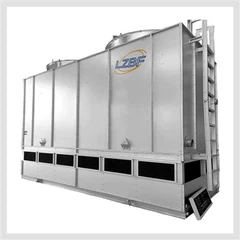
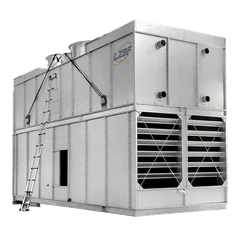
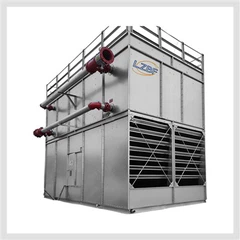
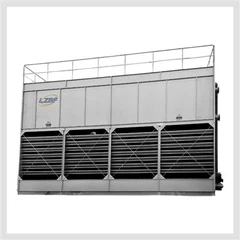
Before we jump into the spray system, let's briefly understand the overall concept of a Composite Closed Cooling Tower. These towers are designed to cool a fluid (usually water) by transferring heat from the fluid to the surrounding air. Unlike open cooling towers, where the fluid is directly exposed to the air, closed cooling towers keep the fluid within a closed-loop system. This prevents contamination of the fluid and reduces water loss through evaporation.
The Composite Closed Cooling Tower consists of several key components, including a heat exchanger, a fan, a water distribution system, and the spray system. The spray system plays a crucial role in enhancing the heat transfer process and maintaining the tower's efficiency.
How the Spray System Works
The spray system in a Composite Closed Cooling Tower is responsible for distributing water over the heat exchanger. This water forms a thin film on the surface of the heat exchanger, which helps to transfer heat from the hot fluid inside the heat exchanger to the air passing through the tower.
Water Supply
The spray system begins with a water supply. This water is typically sourced from a reservoir or a recirculation system within the tower. The water is pumped to the top of the tower and enters the spray headers.
Spray Headers
The spray headers are horizontal pipes located above the heat exchanger. They are equipped with nozzles that are designed to break the water into small droplets. These droplets are then sprayed evenly over the heat exchanger.
Nozzles
The nozzles are a critical component of the spray system. They determine the size and distribution of the water droplets. Different types of nozzles can be used depending on the specific requirements of the cooling tower. For example, some nozzles are designed to produce a fine mist, while others create larger droplets.


The size of the water droplets is important because it affects the surface area of the water film on the heat exchanger. Smaller droplets have a larger surface area, which allows for more efficient heat transfer. However, if the droplets are too small, they may be carried away by the air flow, resulting in water loss.
Heat Transfer
Once the water droplets are sprayed onto the heat exchanger, they form a thin film. As the hot fluid inside the heat exchanger transfers heat to the water film, the water absorbs the heat and evaporates. This evaporation process removes a significant amount of heat from the fluid, cooling it down.
At the same time, the air passing through the tower picks up the heat and moisture from the water film. The fan in the tower helps to draw the hot, moist air out of the tower, while fresh air is drawn in to replace it. This continuous cycle of heat transfer and air circulation ensures that the fluid is effectively cooled.
Water Collection and Recirculation
After the water has passed over the heat exchanger, it falls to the bottom of the tower and is collected in a sump. From the sump, the water is pumped back to the spray headers to be reused. This recirculation system helps to conserve water and reduce operating costs.
Benefits of the Spray System
The spray system in a Composite Closed Cooling Tower offers several benefits:
Enhanced Heat Transfer
The thin water film created by the spray system increases the surface area available for heat transfer. This results in more efficient cooling and lower energy consumption.
Reduced Water Loss
By keeping the fluid within a closed-loop system and reusing the water, the spray system helps to minimize water loss through evaporation. This is especially important in areas where water is scarce.
Improved Airflow
The spray system helps to improve the airflow through the tower. The water droplets create a cooling effect, which reduces the temperature of the air passing through the tower. This, in turn, increases the density of the air, making it easier for the fan to move the air through the tower.
Protection of the Heat Exchanger
The water film on the heat exchanger helps to protect it from corrosion and fouling. It also helps to prevent the formation of scale, which can reduce the efficiency of the heat exchanger.
Applications of Composite Closed Cooling Towers
Composite Closed Cooling Towers with spray systems are used in a wide range of industries, including:
Industrial Processes
In industrial processes, such as manufacturing, chemical processing, and power generation, Composite Closed Cooling Towers are used to cool equipment and processes. The spray system ensures that the cooling process is efficient and reliable, even in harsh industrial environments.
HVAC Systems
In commercial and residential buildings, Composite Closed Cooling Towers are used in HVAC systems to cool the chilled water. The spray system helps to maintain a consistent temperature and humidity level in the building, providing a comfortable environment for occupants.
Data Centers
Data centers generate a large amount of heat, which needs to be removed to prevent equipment damage. Composite Closed Cooling Towers with spray systems are used to cool the servers and other equipment in data centers. The efficient cooling provided by the spray system helps to ensure the reliability and performance of the data center.
Conclusion
The spray system is a vital component of a Composite Closed Cooling Tower. It plays a crucial role in enhancing the heat transfer process, reducing water loss, and improving the overall efficiency of the tower. By understanding how the spray system works, you can make informed decisions when choosing a Composite Closed Cooling Tower for your specific application.
If you're interested in learning more about our Composite Closed Cooling Towers or have any questions about the spray system, please don't hesitate to contact us. We're here to help you find the right cooling solution for your needs. Whether you're looking for a Closed-loop Fluid Cooler, a Dry and Wet Closed Cooling Tower, or a Cross Flow Stainless Steel Closed Circuit Evaporative Cooling Cooler, we have the expertise and experience to provide you with a high-quality product. Contact us today to start the procurement discussion and find the perfect cooling tower for your project.
References
- ASHRAE Handbook of Fundamentals.
- Cooling Tower Institute (CTI) Standards.
- Technical literature on Composite Closed Cooling Towers from industry manufacturers.
Send Inquiry