


Is the water tank necessary for a closed-loop cooling tower?
Apr 17, 2026
Leave a message
Lvzhou Bingfeng Fluid Equipment Co., Ltd.
Our free service hotline:0310-3178005

15
years
We have been working in the industry since2003
32
certificates
We have obtained most of the professional certificates in the industry and insist on international standards of production.
18
awards
We have won a lot of awards for strong creativity
Products Description

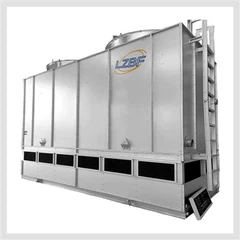
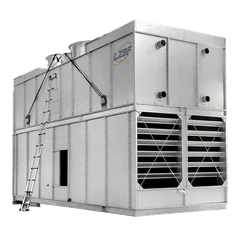
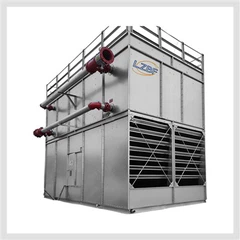
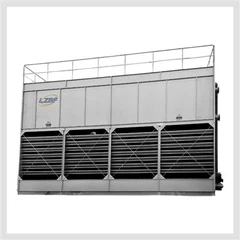
Closed cooling towers are widely used in industrial refrigeration, central air conditioning, chemical cooling, and other fields due to their advantages such as high heat exchange efficiency, clean water quality, and simple operation and maintenance. In practical selection and installation, many users wonder whether a water tank is a mandatory component for closed cooling towers.
The answer is clear: a water tank is not a mandatory standard feature, but in the vast majority of engineering scenarios, equipping an appropriate water tank is a core measure to ensure stable system operation and reduce energy consumption. Its necessity must be comprehensively assessed based on system scale, operating conditions, and pipeline layout.
Products Description
From the working principle perspective, the core of a closed-loop cooling tower relies on heat exchange between the fluid inside the coils and the spray water/air. Theoretically, water circulation can be completed solely with the built-in water collection tray of the tower. For small-scale closed-loop cooling towers (typically with low heat dissipation, short pipelines, and low head pressure), adopting the direct supply pump mode of the tower tray eliminates the need for an additional water tank.


These systems feature simple structures and low investment, making them suitable for temporary operating conditions, cooling of small equipment, or scenarios with extremely limited space. However, due to the limited capacity of the tower tray, it can only meet basic water storage requirements and cannot address flow fluctuations, pressure variations, or issues related to water return during shutdown. As a result, such systems are confined to micro-scale and simplified applications.
Products Description
In mainstream industrial and commercial applications, the configuration of a low-position 304 circulating water tank has become an industry-standard solution, with its necessity reflected in three core benefits. First, it prevents high-position backflow and safeguards system safety.
Closed cooling towers are often installed on rooftops or elevated locations, where significant water backflow occurs in pipelines during shutdown. Without a low-position tank to intercept it, issues like water hammer, pipe bursts, and pump reversal may arise.

Custom Notebook Solutions

The low-position tank rapidly collects backflow, effectively eliminating the risk of high-position backflow at the source. Second, it significantly reduces energy consumption. Pumps directly draw water from the low-position tank, eliminating the need to overcome high-position pressure differentials and drastically lowering head requirements.
Compared to direct supply modes without tanks, power consumption can be reduced by 15%-30%, delivering notable economic benefits over long-term operation. Finally, it stabilizes system conditions by buffering flow fluctuations, eliminating bubbles, and maintaining steady water pressure. This prevents pump cavitation and ensures continuous stable operation, meeting the demands of 24-hour uninterrupted industrial production.
Products Description
The high-level expansion tank (make-up tank) is also non-essential but mandatory for closed-loop water circulation systems. In small open systems, it can be replaced by an automatic make-up valve, while closed sealed systems must be equipped with an expansion tank or a constant-pressure make-up unit to accommodate the thermal expansion of water, maintain stable system pressure, prevent overpressure relief or negative pressure air intake, and ensure heat exchange efficiency and pipeline safety.
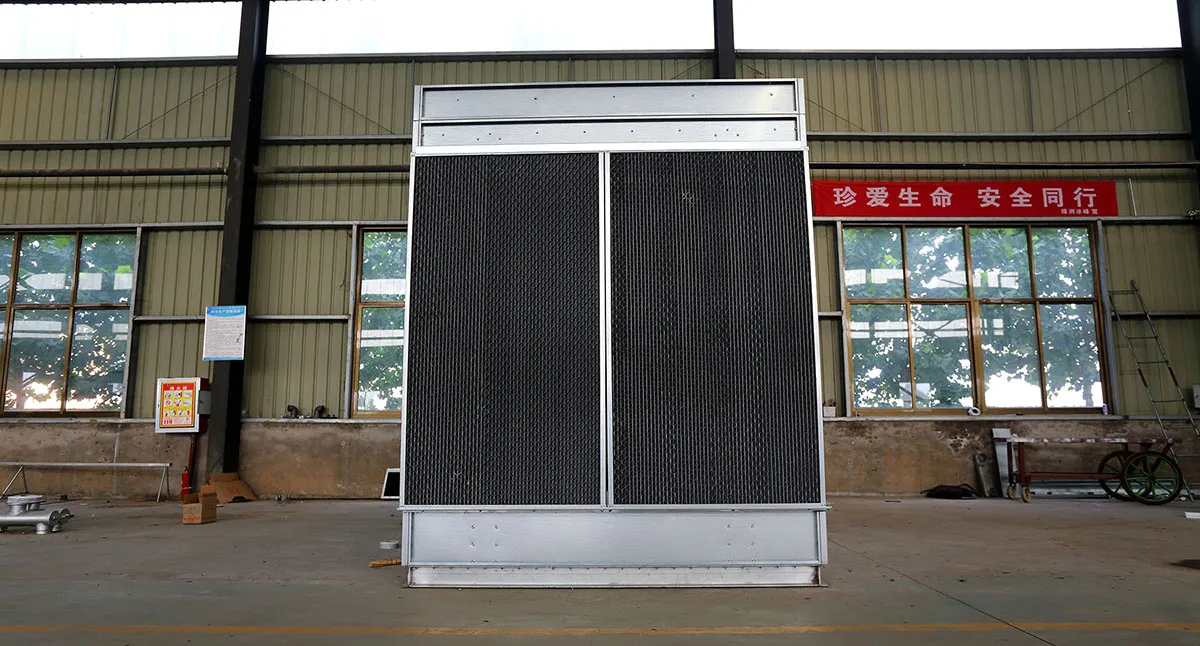
In summary, closed cooling towers do not inherently require mandatory water tanks, and small-scale simple systems can operate solely with the tower basin. However, for medium to large systems, elevated installations, continuous operation, and energy-saving scenarios, a low-positioned 304 stainless steel circulating water tank is an essential configuration to ensure safety, reduce costs, and improve efficiency.
Expansion tanks should be selected based on system sealing and pressure stabilization requirements. In engineering design, water tanks should not be blindly omitted but rather chosen rationally according to operational conditions to achieve the optimal balance of safety, stability, and economic efficiency.
Certifications
Create a comprehensive solution for efficient human theft manag

Certificate name
Certificate name
Certificate name
Certificate name
Certificate name
Certificate name
Send Inquiry