


Disadvantages Of Closed-Loop Cooling Systems
Dec 25, 2025
Leave a message

Disadvantages Of Closed-Loop Cooling Systems
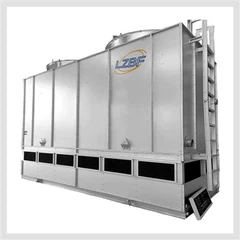
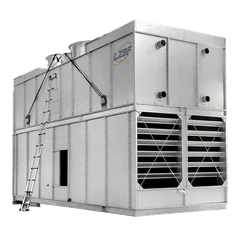
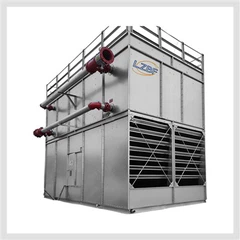
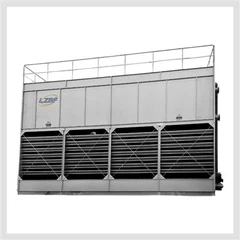
Closed-loop cooling systems feature a cooling medium that does not come into direct contact with air, boasting advantages such as stable water quality, reduced equipment corrosion and scaling, and extended maintenance cycles. However, they also have distinct drawbacks, which are detailed as follows:
High Initial Investment Cost
Closed-loop cooling systems have a more complex structure than open-loop systems. In addition to core components like circulation pumps and heat exchangers, they require auxiliary equipment including expansion tanks, make-up pumps, temperature control valves, and precision filters. For certain operating conditions, cooling towers or chillers must also be installed as secondary cooling sources. The costs of equipment procurement, system integration, installation, and commissioning are significantly higher than those of open-loop systems. For small and medium-sized enterprises or low-load cooling scenarios, the cost-effectiveness of the initial investment is relatively low.

High System Operation Energy Consumption
The cooling medium in closed-loop systems circulates within sealed pipelines, and heat transfer relies on heat exchangers to exchange heat with the external environment. The heat exchange efficiency is lower compared to the spray evaporation heat dissipation of open-loop systems. To ensure cooling effectiveness, circulation pumps need higher lift to overcome the resistance of pipelines and heat exchangers, consuming more electrical energy during long-term operation. If equipped with chillers, the continuous operation of compressors will further increase energy consumption, leading to higher overall operating costs.


Difficult Fault Diagnosis and High Maintenance Costs
Since the system is fully sealed, the internal operating status of pipelines and equipment cannot be directly observed. In the event of issues such as medium leakage, heat exchanger blockage, or temperature control component malfunction, professional instruments like pressure gauges, thermometers, and flow meters are required for detection and location, making the troubleshooting process complex and time-consuming. In addition, the replacement of vulnerable parts in core equipment-such as gaskets in plate heat exchangers and diaphragms in expansion tanks-requires shutdown and disassembly, which not only disrupts production schedules but also incurs substantial maintenance and spare parts costs.

Stringent Requirements for Medium and Water Quality
Although the medium in closed-loop systems is not easily contaminated by external factors, strict control over the physical and chemical indicators of the medium is still necessary. When using softened water or specialized coolants, parameters such as pH value, conductivity, and rust inhibitor concentration must be regularly tested, with timely medium replenishment or replacement to prevent pipeline corrosion or reduced heat exchange efficiency of heat exchangers caused by medium degradation. Compared to the convenience of directly supplementing tap water in open-loop systems, medium maintenance for closed-loop systems is more cumbersome, and the procurement cost of specialized coolants is higher than that of ordinary water treatment agents.


Poor System Expansion Flexibility
The specifications of pipelines, heat exchangers, circulation pumps, and other equipment in closed-loop cooling systems are designed based on the initial cooling load, ensuring high overall system compatibility. When subsequent production processes are adjusted and the cooling load increases significantly, it is necessary to replace core equipment with larger specifications-such as heat exchangers and circulation pumps-or even redesign the pipeline layout. The expansion and modification process is difficult and costly, far less flexible than open-loop systems, which can achieve capacity expansion simply by adding equipment like cooling tower fans and spray pumps.

Risk of Freezing and Blockage in Low-temperature Environments
In low-temperature winter conditions or during system shutdown, if the cooling medium in the system is not drained in a timely manner and no thermal tracing or insulation devices are installed, the medium inside the pipelines is prone to freezing and expansion, leading to pipeline rupture, heat exchanger deformation, and other faults. Especially in cold northern regions, additional investment is required for winter antifreeze measures in closed-loop systems, increasing the complexity of system operation and maintenance.
Send Inquiry