


Detailed Explanation of Composite Flow Closed-Circuit Cooling Tower
Feb 04, 2026
Leave a message
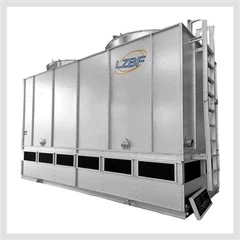
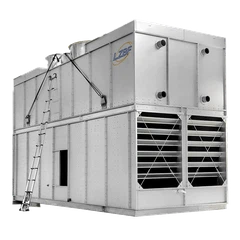
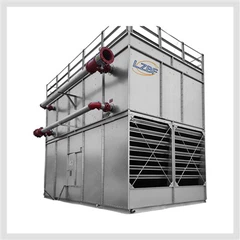
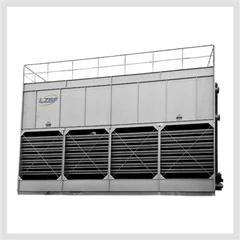
The composite flow closed-circuit cooling tower (also known as the mixed flow closed-circuit cooling tower) is an efficient cooling device that integrates the dual flow patterns of cross flow and counter flow. It combines the advantages of closed coil heat exchange and enhanced packing heat exchange.
With its strong adaptability and high heat exchange efficiency, it is widely used in industrial high heat load scenarios and suitable for cooling various process media.

Core Structure and Working Principle
The core of the equipment consists of a dual-circulation system and key components, with a structural design that balances heat exchange efficiency and water-saving performance.
The main components include a closed internal circulation heat exchange coil, a spray system, a PVC packing layer, a fan and wind cylinder, a water collector, a sump, a spray pump, and an intelligent control system. The air flow is cross flow in the coil section and counter flow in the packing section, forming a composite heat exchange flow pattern.

The dual-circulation process is its core working logic: in the internal circulation, the process water, lubricating oil and other media to be cooled flow in the closed coil, without contact with the outside world throughout the process, avoiding impurity pollution and medium loss, and heat is transferred to the spray water film outside the pipe through the coil wall; in the external circulation, the spray pump extracts water from the sump and uniformly sprays it on the surface of the coil to form a water film.
When the water film flows through the packing layer, it fully contacts the air entering from the side or bottom, and heat is taken away through water evaporation and sensible heat exchange.

The humid and hot air is discharged by the top fan, and the cooled spray water flows back to the sump for recycling, requiring only a small amount of supplementary water for evaporation and drift loss.
The water collector can effectively intercept water mist in the air, control the drift rate below 0.001%, and balance water saving and equipment protection.
Key Advantages and Application Limitations

Compared with pure cross-flow and pure counter-flow closed-circuit cooling towers, the composite flow type has prominent advantages. Firstly, it has high heat exchange efficiency. The superposition of dual flow patterns and enhanced packing effect increases the heat exchange efficiency by 10%-20% compared with pure cross-flow towers, making it suitable for high-temperature and high-load working conditions.

Secondly, it has wide medium adaptability. The closed coil can handle various process media such as clean water, oil, and brine, avoiding medium oxidation and deterioration. Thirdly, it saves water and energy. The circulating spray design greatly reduces water consumption, and the fan can be equipped with frequency conversion control to adjust the speed on demand and reduce energy consumption. Fourthly, it has flexible floor space.
Compared with counter-flow towers with the same load, it has a smaller horizontal size and is suitable for scenarios with limited space.

Its limitations are mainly concentrated in cost and maintenance: the equipment structure is more complex, and the manufacturing cost is higher than that of ordinary closed-circuit cooling towers; the dual structure of packing and coil requires regular maintenance, including cleaning packing scaling and checking coil corrosion, resulting in slightly higher maintenance workload and cost; it is not suitable for harsh environments containing a lot of dust and corrosive gases, which may easily cause packing blockage and coil damage.
Applicable Scenarios and Industrial Applications
Due to its high efficiency and medium protection, the composite flow closed-circuit cooling tower is widely used in various industrial fields.

In the power industry, it is used for oil cooling of generators and transformers and circulating water temperature reduction;
in the chemical industry, it is suitable for cooling process media of reaction kettles and condensers to avoid medium pollution;
in the metallurgical and machinery industries, it is used for cooling hydraulic oil and lubricating oil to ensure stable operation of equipment;
in addition, it is also applicable to central air conditioning systems, new energy battery energy storage cooling and other scenarios,especially suitable for working conditions requiring high cooling efficiency and closed medium protection.

In general, the composite flow closed-circuit cooling tower balances heat exchange efficiency and site adaptability through structural optimization. Although it has higher cost and maintenance requirements, it is still a cost-effective preferred equipment in high-load and multi-medium cooling scenarios. With the upgrading of energy-saving technology, its improvement directions such as frequency conversion control and anti-corrosion optimization will further expand the application scope.
Send Inquiry