

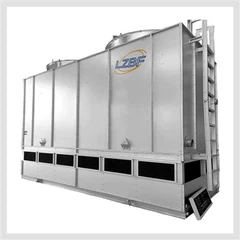
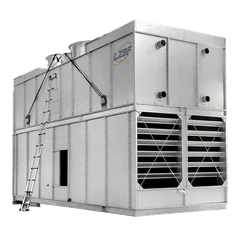
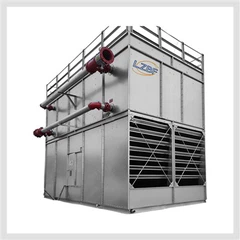
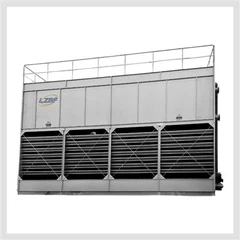

Closed-loop evaporative cooler usage precautions
Jul 16, 2025
Leave a message
Closed-loop evaporative coolers are highly efficient heat exchange devices widely used in industrial cooling, air conditioning, and other fields. They achieve cooling through indirect contact between water and air, offering advantages such as water conservation, energy conservation, and environmental protection. However, improper operation and maintenance can affect device performance and even shorten its service life. The following are key considerations when using closed-loop evaporative coolers.
1. Water Quality Management
Although closed-loop evaporative coolers utilize a closed-loop system, water quality still requires attention. Excessive impurities, corrosive substances, or microorganisms in the circulating water can cause scaling, corrosion, or blockage of heat exchange tubes. Therefore, it is recommended to:
Regularly test water quality to control pH (typically maintained between 7 and 8.5), hardness, and conductivity.
Use softened or deionized water to reduce scale formation.
Add corrosion and scale inhibitors to prevent corrosion and scaling of metal pipe walls.
Regularly clean the water tank and pipes to prevent impurity deposits that affect heat exchange efficiency. 2. Fan and Water Circulation System Maintenance
The cooling efficiency of a closed-loop evaporative cooler depends on the proper operation of the fan and water circulation system.
Check the fan's operating status to ensure there are no abnormal noise or vibration from the motor, and that the belt or coupling is not loose.
Regularly clean the fan blades and protective screen to prevent dust accumulation that could affect airflow.
Check the water pump's operation to ensure stable water circulation and avoid reduced heat exchange efficiency due to insufficient flow.
Check the spray system to ensure that the nozzles are unblocked and spray evenly to avoid localized overheating.
3. Environmental Factors
The performance of a closed-loop evaporative cooler is significantly affected by ambient temperature, humidity, and air quality.
Avoid operating in extremely high temperatures or low humidity environments, as this may significantly reduce cooling efficiency.
In environments with high dust content or corrosive gases, install an air filter or protective cover to prevent dust and chemicals from entering the unit. During winter temperatures, antifreeze measures are necessary, such as draining the water tank or using antifreeze to prevent freezing and damage to the pipes.
4. Regular Inspection and Maintenance
Regularly inspect the heat exchanger tubes for scaling, corrosion, or leaks, and clean or replace them if necessary.
Inspect seals and joints to prevent cooling water leaks that could affect equipment efficiency.
Inspect the electrical control system to ensure that sensors, thermostats, and automatic valves are functioning properly to avoid abnormal equipment operation due to control failure.
Record operating data, such as inlet and outlet water temperatures, and water flow rate, to facilitate analysis of performance trends.
5. Safety Operation Precautions
Avoid starting the fan without water, as this may cause overheating and damage to the heat exchanger tubes.
Ensure electrical equipment is properly grounded to prevent the risk of electrical leakage.
Operators should receive professional training and be familiar with the equipment's operating principles and emergency response procedures.
Conclusion
While closed-loop evaporative coolers provide efficient cooling, they also require certain operational and maintenance requirements. Through scientific water quality management, regular equipment inspections, reasonable environmental control, and standardized operation, long-term stable operation can be ensured, while energy consumption and maintenance costs can be reduced. Users should develop an appropriate maintenance plan based on the actual usage environment to extend the life of the equipment and ensure cooling effectiveness.
Send Inquiry