


Applicable Industries and Application Advantages of Closed Cooling Towers
Jun 23, 2026
Leave a message


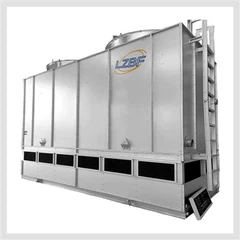
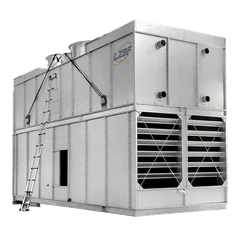
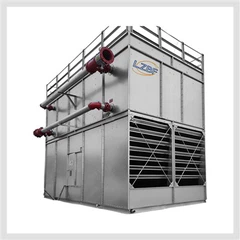
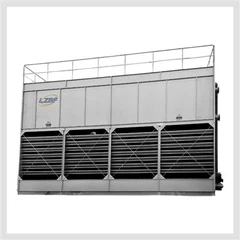
As high-efficiency, clean and energy-saving industrial cooling equipment, closed cooling towers differ from traditional open cooling towers with their core features including closed circulation, zero water pollution, stable cooling performance, water saving and scale prevention, as well as corrosion resistance.
They are perfectly suitable for various high-precision and high-cleanliness industrial scenarios, and widely used in industrial manufacturing, new energy, chemical, electric power, medical, food processing and many other industries, serving as the core supporting equipment of modern industrial temperature control systems.

The new energy industry currently sees the most extensive application and the largest market demand for closed cooling towers. In the industrial chains of photovoltaic, lithium battery, energy storage and wind power manufacturing, production equipment imposes extremely high requirements on cooling water quality and temperature stability.
Constant low-temperature cooling water is required for the coating, rolling and formation processes of lithium battery production as well as the temperature control system of energy storage power stations.
The closed circulation design of closed cooling towers prevents impurities and dust from entering pipelines, avoids scaling and blockage of equipment, and ensures the precision and safety of battery production.
 The cooling systems of single crystal furnaces and polycrystalline furnaces in photovoltaic silicon material and silicon wafer manufacturing realize precise temperature control with the support of closed cooling equipment, effectively improving product yield. Meanwhile, the test cooling systems of wind power gearboxes and new energy motors also rely heavily on the stable heat dissipation performance of closed cooling towers.
The chemical and pharmaceutical industries have stringent requirements for the cleanliness and safety of cooling equipment, making them core application scenarios for closed cooling towers. In fine chemical and petrochemical production, equipment such as reaction kettles, rectification towers and heat exchangers operates with large temperature fluctuations, and some media are corrosive.

Closed cooling towers achieve complete medium isolation, eliminating cross-contamination between cooling water and chemical raw materials, and their corrosion-resistant materials adapt to acid and alkali working conditions. In the pharmaceutical industry, production lines for sterile preparations, biopharmaceuticals and traditional Chinese medicine purification require an all-round clean production environment.
 Unlike open cooling towers that are prone to bacterial growth and impurity ingress, closed cooling systems feature a fully enclosed and dust-free structure, complying with GMP cleanliness standards for pharmaceutical production and ensuring drug safety.
The electric power and machinery manufacturing industries demand high stability of equipment heat dissipation. Core power equipment including generator sets, transformers and frequency converters in thermal power, hydropower and distributed power stations generates massive heat during operation.

Closed cooling towers provide 24-hour continuous and stable heat dissipation, preventing equipment overheating and overload, and greatly reducing the failure rate of unit equipment.
 In the fields of precision machinery, mold manufacturing and hardware processing, cooling systems for injection molding machines, CNC machine tools, laser cutting machines and die-casting equipment require constant-temperature cooling water to guarantee processing accuracy.
With small temperature control error and excellent scale resistance, closed cooling towers can effectively extend the service life of precision equipment and stabilize product quality.
In addition, closed cooling towers are widely applied in the food and beverage, medical and data center industries. The sterilization, fermentation and refrigeration processes in food and beverage production require clean and pollution-free cooling water, and closed systems avoid water pollution to ensure food safety.
The temperature control and heat dissipation of hospital operating rooms, nuclear magnetic resonance (NMR) equipment and medical purification systems rely on the low-noise, clean and stable performance of closed cooling towers.
The heat dissipation of server clusters in big data centers has extremely high requirements for temperature and environmental cleanliness. Closed cooling towers feature water and energy saving as well as efficient heat dissipation, which can effectively reduce computer room energy consumption and ensure stable operation of servers.

In conclusion, with the advantages of cleanliness, energy saving, stability and durability, closed cooling towers cover most high-end industrial and commercial scenarios. They are especially applicable to working conditions that require pollution prevention, scale inhibition, constant temperature and high precision, and have gradually replaced traditional open cooling towers as the preferred equipment for temperature control systems in various industries.
Send Inquiry