


5 Common Cooling Tower Mistakes That Lead to Costly Downtime
Sep 22, 2026
Leave a message

Cooling towers are designed to run reliably for years. But in practice, many facilities experience recurring problems-not because the equipment is flawed, but because small operational mistakes are allowed to compound over time.
The frustrating part is that most of these mistakes are easy to avoid. They don't require expensive upgrades or specialized expertise. They simply require awareness and consistent attention.
Here are the 5 most common cooling tower mistakes that lead to costly downtime-and what you can do to prevent them.
Mistake 1: Ignoring Water Treatment
 This is the single most common cause of cooling tower problems worldwide.
When water circulates through a cooling tower, it is constantly evaporating, concentrating minerals, and picking up contaminants from the air. Without proper water treatment, these minerals form scale on heat exchange surfaces, corrosion eats through metal components, and biological organisms grow unchecked.
The consequences are predictable:
Reduced heat transfer efficiency
Increased energy consumption
Clogged spray nozzles and fill media
Corroded coils, pipes, and structural components
Premature equipment failure
How to avoid it:
Implement a regular water treatment program that includes chemical dosing, blowdown control, and periodic water quality testing. The specific treatment depends on your water source, system design, and operating conditions. Even a basic treatment program is far better than none at all.
Mistake 2: Skipping Routine Inspections
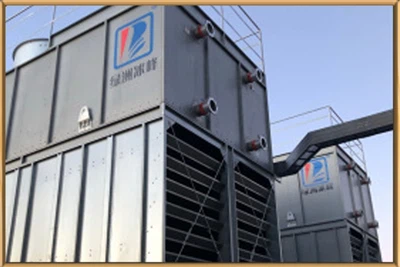 Many facilities operate their cooling towers on a "run until it breaks" philosophy. The problem is that by the time a failure becomes obvious, the damage has usually been building for weeks or months.
Common issues that go undetected without regular inspections:
Gradual scale buildup on coils
Worn motor bearings
Loose or damaged fan blades
Clogged spray nozzles
Drift eliminator degradation
Small leaks in the process loop
Corrosion at structural connection points
How to avoid it:
Establish a scheduled inspection routine-weekly for critical parameters, monthly for detailed checks, and annually for comprehensive assessments. Document findings over time so you can spot trends before they become failures.
Mistake 3: Running with Incorrect Water Levels
 Water level problems are surprisingly common and surprisingly damaging.
If the basin water level is too low, pumps can cavitate, spray distribution becomes uneven, and the system loses cooling capacity. If the water level is too high, you waste water through overflow and increase drift losses.
Both scenarios reduce efficiency and increase wear on components.
How to avoid it:
Check float valves, make-up water controls, and level sensors regularly. Ensure that automatic fill systems are functioning correctly. If you notice frequent water level fluctuations, investigate the root cause instead of adjusting the system repeatedly.
Mistake 4: Neglecting Airflow
 Cooling towers need clean, unrestricted airflow to function properly. Yet many installations allow debris, vegetation, dust, or stored materials to block air intake areas.
Reduced airflow leads to:
Higher leaving water temperatures
Increased fan energy consumption
Uneven cooling across the coil or fill
Potential motor overload from restricted operation
How to avoid it:
Keep the area around the cooling tower clear. Inspect air intake louvers regularly and remove any debris. If the tower is located near trees, construction areas, or dusty environments, increase the inspection frequency accordingly.
Mistake 5: Delaying Small Repairs
 A loose belt, a slightly noisy bearing, a minor leak, or a small crack in a spray nozzle may seem insignificant. But in a cooling tower, small problems rarely stay small.
A worn bearing can seize a motor within days. A small coil leak can contaminate an entire process loop. A cracked nozzle can create uneven spray patterns that lead to localized freezing in winter.
The cost of addressing a minor issue during scheduled maintenance is almost always a fraction of the cost of an emergency repair after a failure.
How to avoid it:
Create a simple system for tracking and prioritizing maintenance items. Address small issues promptly. Keep critical spare parts on hand so that minor repairs don't turn into extended downtime.
The Pattern Behind Most Failures
Notice a common theme across all five mistakes? They all involve delayed attention.
The cooling tower itself is usually not the problem. The problem is the gap between when an issue first appears and when someone takes action. Closing that gap is the most effective way to reduce downtime, extend equipment life, and lower total operating costs.
 A Simple Prevention Framework
Treat the water consistently
Inspect the system on a regular schedule
Monitor key parameters like temperature, pressure, water level, and noise
Document findings and track trends over time
Act on small issues before they become large ones
These five practices will not eliminate every possible problem, but they will catch the vast majority of issues long before they cause expensive downtime.
Need help setting up a maintenance schedule or diagnosing a recurring issue with your cooling tower? Contact our technical support team for guidance.

Send Inquiry