

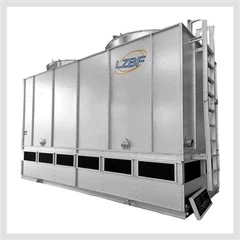
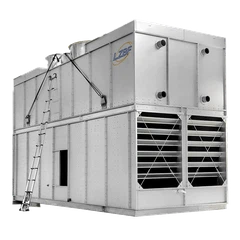
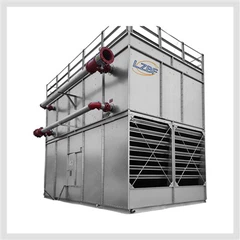
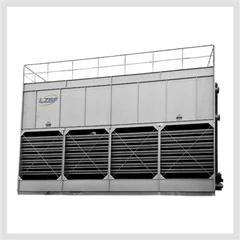


Indirect Heat Exchanger
Product Type: Tubular Type & Plate Type
Heat Exchange Mode: Sensible Heat Exchange
Circulation Mode: Closed-Loop Circulation
Product Function: Cooling the circulating medium
Temperature Drop Limit: Fluctuating around the wet-bulb temperature
Coil Material: Stainless steel, copper tube, etc.
Products Description
Indirect Heat Exchanger, as the core equipment in industrial heat exchange systems, relies on the conduction of an intermediate heat transfer medium to realize heat exchange between hot and cold fluids, with Indirect Heat Exchanger ensuring that the two fluids do not come into direct contact throughout the entire process. This core characteristic enables the Indirect Heat Exchanger to fundamentally avoid the risk of cross-contamination between fluids, making it the preferred equipment for numerous industries with strict requirements for medium purity. In industrial production scenarios, the role of Indirect Heat Exchanger is indispensable. Whether it is precise temperature control in chemical processes or waste heat recovery in energy production, the stable operation of Indirect Heat Exchanger is directly related to the overall production efficiency and the quality of final products.

Compared with direct contact heat exchangers, Indirect Heat Exchanger has particularly significant advantages in handling fluids under special working conditions. For example, when dealing with highly corrosive, easily contaminated, or composition-sensitive fluids, Indirect Heat Exchanger can stably perform its heat exchange function without damaging the fluid properties. This is also the core reason why Indirect Heat Exchanger is widely used in high-precision industries such as pharmaceuticals, food, and electronics. In pharmaceutical production, Indirect Heat Exchanger can accurately control the reaction temperature of materials, while preventing contamination of materials by cooling media, thus ensuring the safety and purity of drugs. In the manufacturing process of electronic components, Indirect Heat Exchanger can provide a constant cooling environment for precision components, effectively avoiding the adverse effects of temperature fluctuations on component performance and helping to improve product qualification rates.

To adapt to the working condition requirements of different industries, Indirect Heat Exchanger has developed a variety of structural forms, including common shell-and-tube, plate, and fin types. Different types of Indirect Heat Exchanger have their own adaptive advantages, further expanding the application boundary of Indirect Heat Exchanger. It is worth mentioning that Indirect Heat Exchanger has an outstanding performance in the field of energy conservation and consumption reduction. By efficiently recovering and utilizing industrial waste heat, Indirect Heat Exchanger can significantly reduce the energy consumption costs of enterprises, which is in line with the current development trend of green and low-carbon production. With the continuous iteration and upgrading of industrial technology, the heat transfer efficiency of Indirect Heat Exchanger is constantly breaking through, and its structural design is becoming more compact and efficient. In the future, Indirect Heat Exchanger will surely exert its value in more emerging industrial fields and become an important equipment support for promoting industrial upgrading.
Hot Tags: indirect heat exchanger, China indirect heat exchanger manufacturers, suppliers, factory, Closed Loop Circuit Cooling Tower, Basic Closed Circuit Water Cooler, Closed Circuit Water Cooling System, Composite Closed Type Cooling Tower, Closed Circuit Fluid Cooler, Composite Flow Closed Cooling Tower
You Might Also Like


Send Inquiry