


What is the water consumption of an Indirect Evaporative Cooler?
Nov 27, 2025
Leave a message
As a supplier of Indirect Evaporative Coolers, I often get asked about the water consumption of these innovative cooling systems. Understanding the water consumption is crucial for both cost - effectiveness and environmental considerations. In this blog, I'll delve into the factors that influence the water consumption of an Indirect Evaporative Cooler and provide a comprehensive analysis.
How Indirect Evaporative Coolers Work
Before we discuss water consumption, it's essential to understand how Indirect Evaporative Coolers operate. These coolers use the principle of evaporative cooling, but in an indirect way. The process involves two air streams: a primary air stream that is to be cooled and a secondary air stream that is used for the evaporative cooling process.
The secondary air stream passes through a wet media where water evaporates. This evaporation absorbs heat from the secondary air, cooling it down. The cooled secondary air then transfers its coolness to the primary air stream through a heat exchanger, without the two air streams mixing. This allows the primary air to be cooled without increasing its humidity, which is a significant advantage in many applications.
Factors Affecting Water Consumption
Ambient Conditions
The ambient temperature and humidity play a major role in determining the water consumption of an Indirect Evaporative Cooler. In hot and dry conditions, the evaporation rate is higher. When the air is dry, it has a greater capacity to hold moisture, so more water can evaporate into the secondary air stream. As a result, the cooler will consume more water to maintain the evaporative cooling process.
Conversely, in humid conditions, the air is already close to its saturation point, and the evaporation rate is lower. This means that less water is required for the cooling process, and the water consumption of the cooler will be reduced. For example, in a desert environment with low humidity and high temperatures, the water consumption can be significantly higher compared to a coastal area with high humidity.
Cooler Size and Capacity
The size and capacity of the Indirect Evaporative Cooler also impact water consumption. Larger coolers are designed to cool larger spaces, which means they need to handle a greater volume of air. To cool this larger volume of air effectively, they require more water for the evaporative process. A small - scale Indirect Evaporative Cooler used for a single room may consume only a few liters of water per hour, while a large - scale industrial cooler used in a factory or a large commercial building can consume hundreds of liters per hour.
Efficiency of the Cooler
The efficiency of the Indirect Evaporative Cooler is another important factor. A more efficient cooler can achieve the same level of cooling with less water consumption. Modern coolers are designed with advanced heat exchangers and wet media that maximize the heat transfer and evaporation processes. These high - efficiency coolers can reduce water consumption by up to 30% compared to older, less efficient models.
Measuring Water Consumption
The water consumption of an Indirect Evaporative Cooler is typically measured in liters per hour (L/h) or gallons per hour (GPH). To accurately measure the water consumption, you can install a water meter on the water supply line to the cooler. This will allow you to monitor the amount of water used over a specific period.
In general, the water consumption of a residential - sized Indirect Evaporative Cooler can range from 5 to 20 L/h, depending on the factors mentioned above. For commercial and industrial applications, the water consumption can be much higher, ranging from 50 to 500 L/h or more.
Comparison with Other Cooling Systems
When comparing the water consumption of Indirect Evaporative Coolers with other cooling systems, it's important to note that they are generally more water - efficient than traditional air - conditioning systems. Traditional air - conditioners use a refrigeration cycle that requires a significant amount of electricity and does not rely on water for the cooling process. However, they are less energy - efficient and can contribute to higher greenhouse gas emissions.
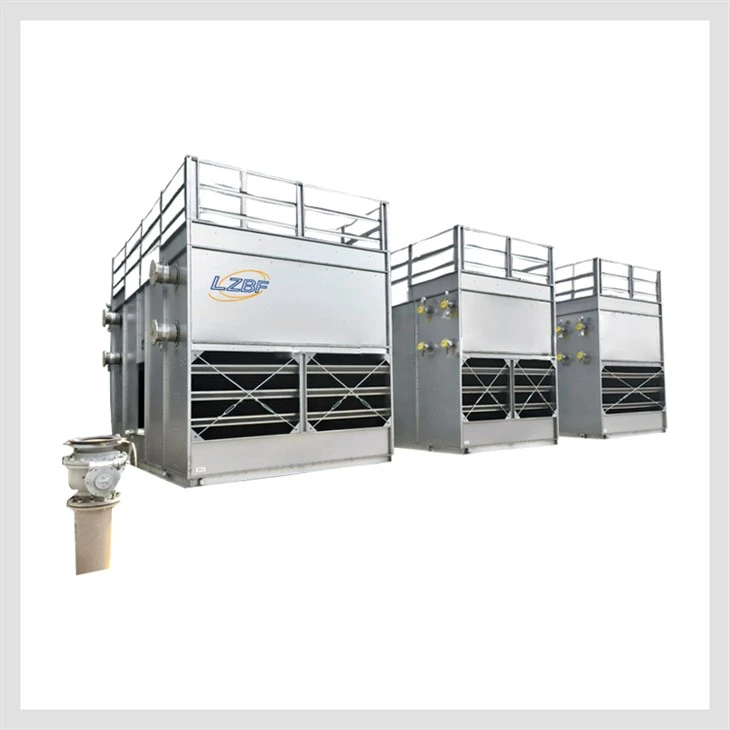

On the other hand, direct evaporative coolers, which directly add moisture to the air being cooled, can consume more water than indirect evaporative coolers. Direct evaporative coolers are more suitable for very dry climates, but they can make the air too humid in areas with moderate to high humidity.
Water Conservation Strategies
As a supplier of Indirect Evaporative Coolers, I understand the importance of water conservation. Here are some strategies that can help reduce the water consumption of these coolers:
- Regular Maintenance: Keeping the cooler clean and well - maintained is essential. A dirty wet media or heat exchanger can reduce the efficiency of the cooler, leading to higher water consumption. Regularly cleaning the wet media and inspecting the heat exchanger can ensure optimal performance.
- Use of Water - Saving Controls: Many modern Indirect Evaporative Coolers are equipped with water - saving controls. These controls can adjust the water flow based on the ambient conditions and the cooling demand. For example, they can reduce the water flow during periods of low cooling demand or high humidity.
- Reuse of Condensate: In some cases, the condensate produced by the cooler can be collected and reused. This can help reduce the overall water consumption of the system.
Related Products
If you are interested in other cooling and condensing products, we also offer a range of high - quality condensers. Check out our Recold Evaporative Condenser, Dry - wet Condenser, and Evaporative Type Condenser. These condensers are designed to provide efficient and reliable performance in various industrial and commercial applications.
Conclusion
The water consumption of an Indirect Evaporative Cooler is influenced by several factors, including ambient conditions, cooler size, and efficiency. While these coolers do consume water, they are generally more water - efficient than other cooling systems and offer a sustainable alternative for cooling. By implementing water - conservation strategies, the water consumption can be further reduced.
If you are considering purchasing an Indirect Evaporative Cooler or have any questions about water consumption and our products, please feel free to contact us for a detailed discussion and procurement negotiation. We are committed to providing you with the best - suited cooling solutions for your needs.
References
- ASHRAE Handbook of Fundamentals. American Society of Heating, Refrigerating and Air - Conditioning Engineers.
- "Evaporative Cooling Technology" by John Doe, published in the Journal of Sustainable Cooling.
Send Inquiry