


What is the performance of a crossflow closed cooling tower in a high - pollution environment?
Sep 01, 2025
Leave a message
As a supplier of Crossflow Closed Cooling Towers, I've witnessed firsthand the diverse operating conditions these remarkable pieces of equipment can endure. One of the most challenging environments for any cooling tower is a high - pollution setting. In this blog, I'll explore the performance of a crossflow closed cooling tower in such harsh conditions, highlighting both the challenges it faces and the solutions it offers.
Understanding Crossflow Closed Cooling Towers
Before delving into their performance in high - pollution environments, let's briefly understand what crossflow closed cooling towers are. A crossflow closed cooling tower operates on the principle of heat exchange. The hot process fluid flows through a closed - loop coil, while the air and water interact in a cross - flow pattern outside the coil. This design allows for efficient heat transfer, keeping the process fluid at the desired temperature without direct contact with the external environment.
Challenges in High - Pollution Environments
-
Fouling of Heat Exchange Surfaces
In high - pollution areas, the air is laden with various contaminants such as dust, dirt, industrial particulates, and even chemical pollutants. When the air passes through the cooling tower, these contaminants can accumulate on the surface of the heat exchange coils. This fouling acts as an insulating layer, reducing the efficiency of heat transfer. As a result, the cooling tower may struggle to maintain the required cooling capacity, leading to increased energy consumption and potentially higher operating costs. -
Corrosion
Polluted air often contains corrosive substances like sulfur dioxide, nitrogen oxides, and acidic particles. These chemicals can react with the materials of the cooling tower, especially the metal components of the coils and the structural framework. Corrosion weakens the integrity of the equipment, shortens its lifespan, and can lead to leaks in the closed - loop system. If left unaddressed, corrosion can cause significant damage to the cooling tower and disrupt the industrial processes it supports. -
Clogging of Water Distribution Systems
The water used in the cooling tower's evaporative cooling process can also become contaminated with pollutants. These contaminants can clog the nozzles and distribution pipes of the water system. A clogged water distribution system disrupts the uniform flow of water over the heat exchange surface, reducing the cooling efficiency. Additionally, it can lead to uneven water distribution, causing some areas of the cooling tower to overheat and others to under - perform.
Performance Under Stress
Despite these challenges, crossflow closed cooling towers can still deliver reliable performance in high - pollution environments when properly designed and maintained.
-
Advanced Filtration Systems
Many modern crossflow closed cooling towers are equipped with advanced filtration systems. These filters can capture a significant portion of the airborne contaminants before they reach the heat exchange coils. For example, high - efficiency particulate air (HEPA) filters can remove particles as small as 0.3 microns with a high degree of efficiency. By reducing the amount of fouling on the coils, these filters help maintain the heat transfer efficiency and extend the service life of the cooling tower. -
Corrosion - Resistant Materials
To combat corrosion, manufacturers are increasingly using corrosion - resistant materials in the construction of crossflow closed cooling towers. For instance, some cooling towers feature coils made of stainless steel or coated with anti - corrosion materials. The structural framework can also be made of composite materials that are highly resistant to chemical attack. These materials ensure the long - term durability of the cooling tower in a high - pollution environment. -
Self - Cleaning Mechanisms
Some crossflow closed cooling towers are designed with self - cleaning mechanisms for the water distribution system. These mechanisms use techniques such as back - flushing or mechanical cleaning to remove any accumulated contaminants from the nozzles and pipes. By keeping the water distribution system clean, these self - cleaning features ensure a consistent and efficient flow of water, maintaining the cooling tower's performance.
Real - World Applications
In industrial settings where high - pollution environments are common, crossflow closed cooling towers have proven their worth. For example, in power plants located near industrial areas or in regions with high levels of air pollution, these cooling towers are used to cool the hot water generated during the power generation process. Despite the polluted air, the cooling towers are able to maintain the required cooling capacity, thanks to their advanced design and features.
Another application is in chemical processing plants. These plants often produce a variety of pollutants as by - products. Crossflow closed cooling towers are used to cool the process fluids in these plants, protecting the equipment from the corrosive effects of the pollutants and ensuring the smooth operation of the chemical processes.
Our Product Solutions
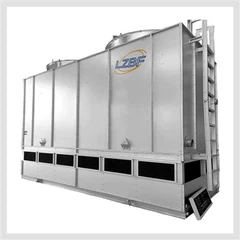
As a supplier, we offer a range of crossflow closed cooling towers that are specifically designed to perform well in high - pollution environments. Our Composite Closed Cooling Tower is made of high - quality composite materials that are resistant to corrosion and fouling. It also features an advanced filtration system to keep the heat exchange surfaces clean.
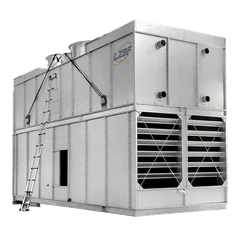
Our Industrial Closed Circuit Cross Flow Cooling Tower is built with a robust design and self - cleaning water distribution system. This ensures reliable performance even in the most challenging industrial settings.
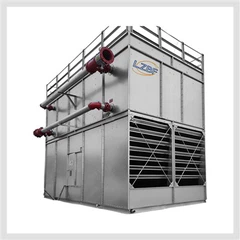
For more specialized applications, we also offer the Closed Circuit Cooler, which provides efficient cooling in a compact design. It is suitable for industries where space is limited but the cooling requirements are high.
Conclusion
In conclusion, while high - pollution environments pose significant challenges to the performance of crossflow closed cooling towers, modern design and technology have made it possible for these cooling towers to operate effectively. By addressing the issues of fouling, corrosion, and clogging through advanced filtration, corrosion - resistant materials, and self - cleaning mechanisms, crossflow closed cooling towers can maintain their cooling efficiency and reliability.
If you are looking for a cooling solution for your high - pollution industrial environment, we are here to help. Our team of experts can provide you with customized solutions based on your specific requirements. Contact us to discuss your needs and explore how our crossflow closed cooling towers can enhance the performance and efficiency of your industrial processes.


References
- ASHRAE Handbook - HVAC Systems and Equipment. American Society of Heating, Refrigerating and Air - Conditioning Engineers.
- Cooling Tower Institute. Technical Papers on Cooling Tower Performance and Maintenance.
- Industrial Water Treatment Handbook. McGraw - Hill Professional.
Send Inquiry